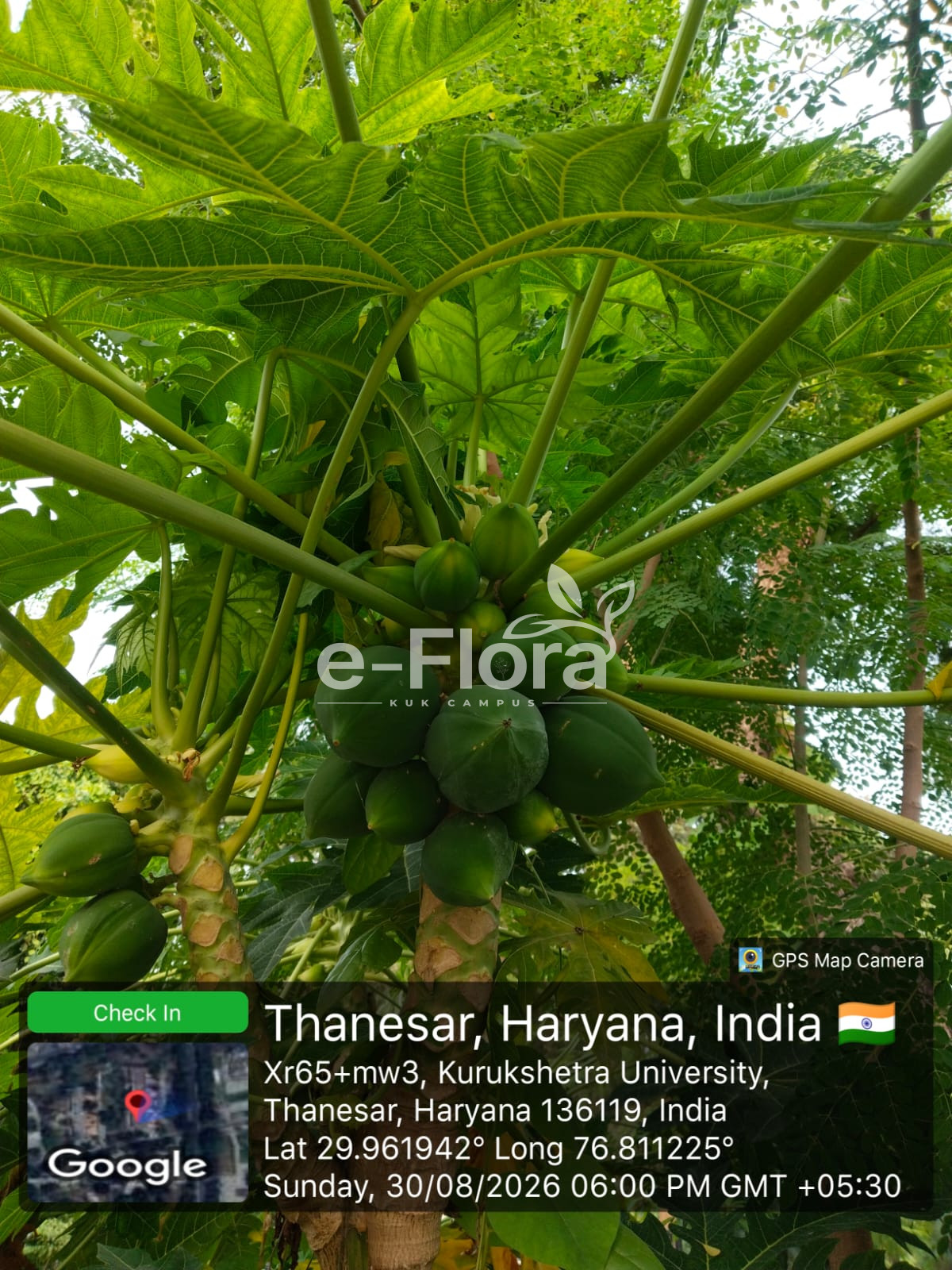
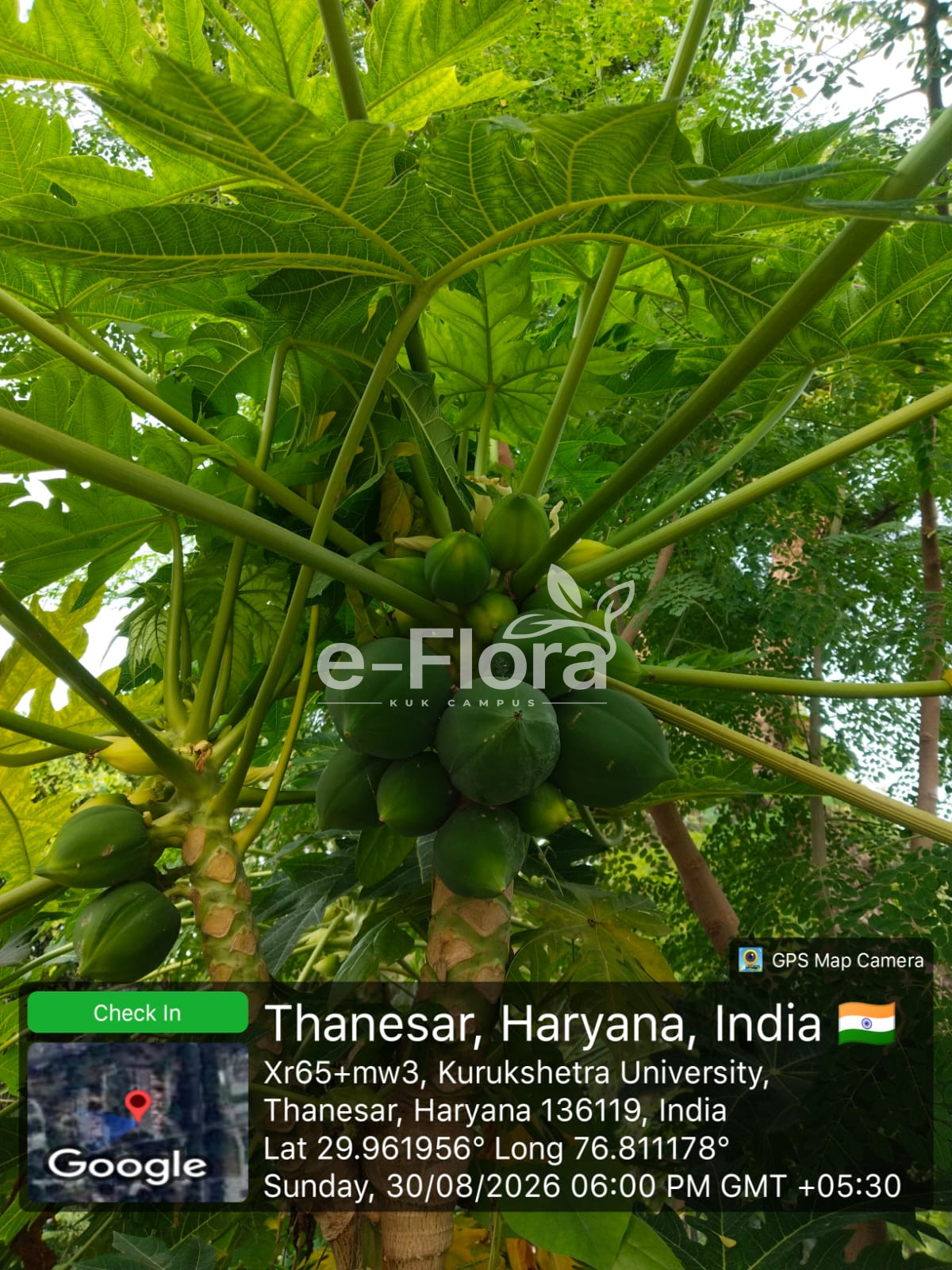
Carica papaya L.
Vernacular name: Papaya, Papita (Hindi: पपीता)
Species Name: Carica papaya L.
Family: Caricaceae
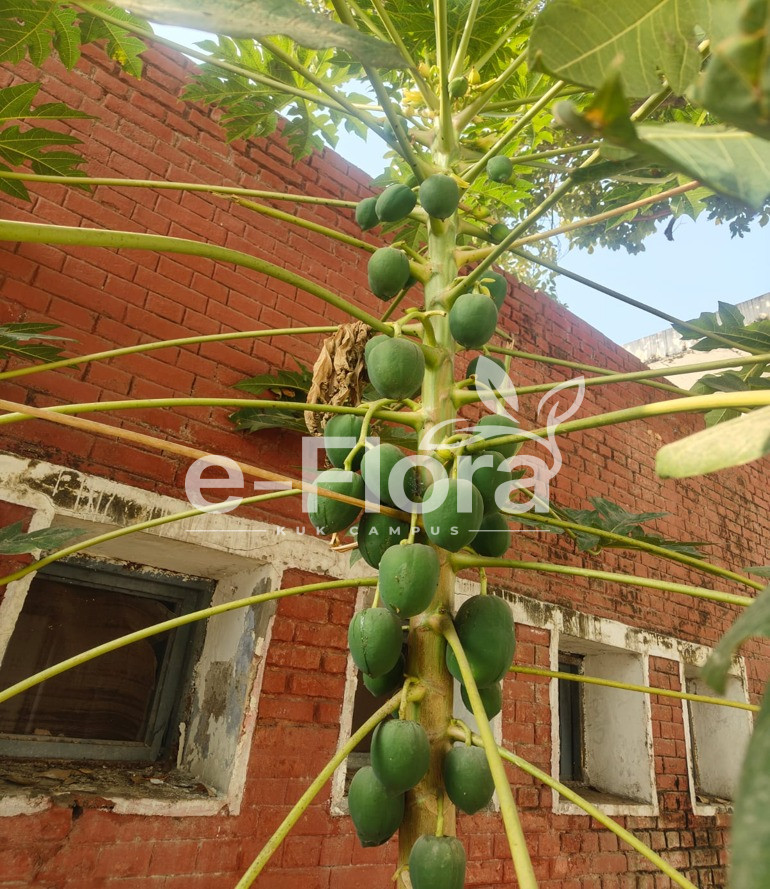
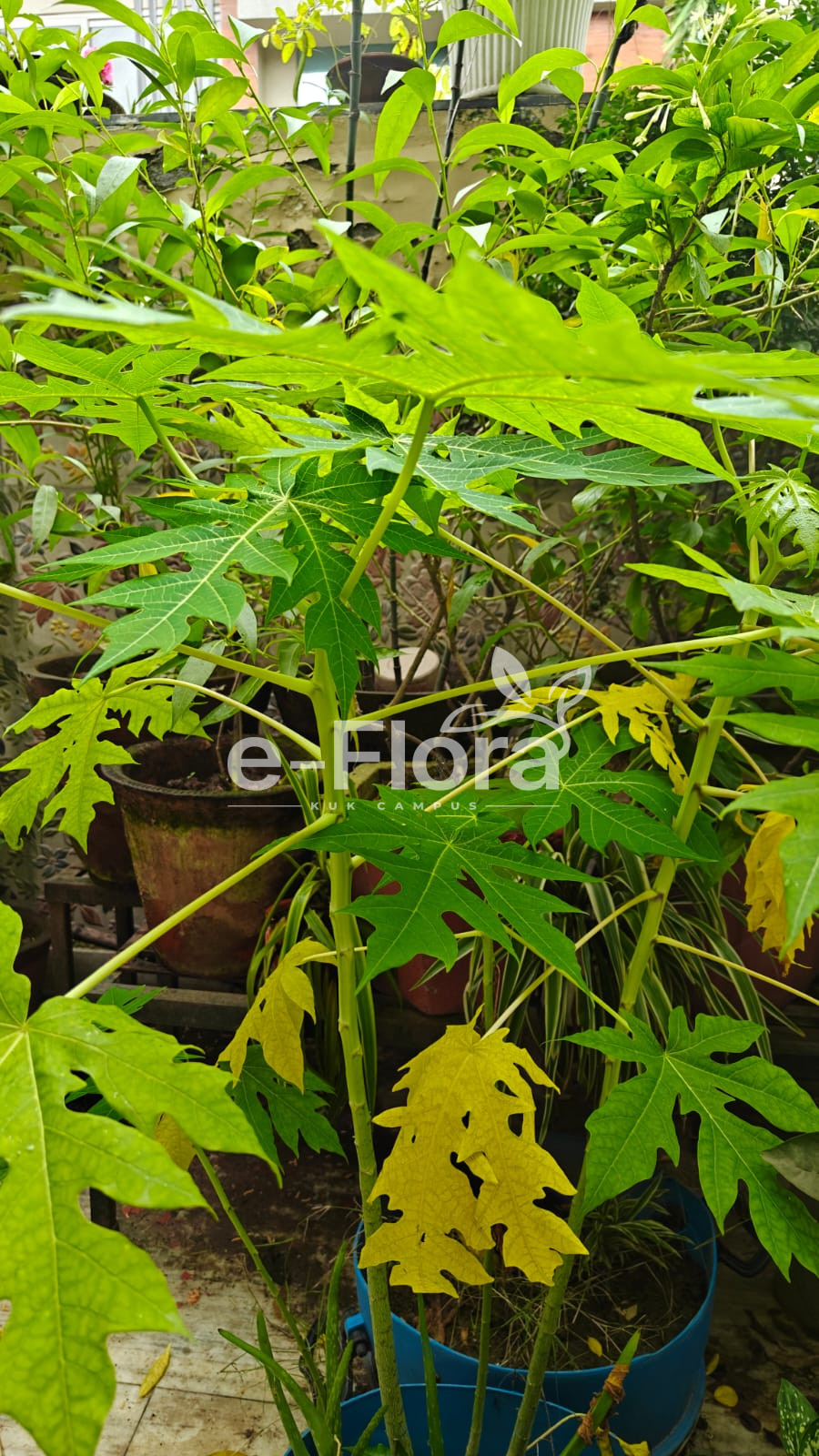
Habit: Fast-growing, evergreen, soft-wooded tree-like herb.
Stem: Erect, cylindrical, hollow to pithy, usually unbranched, 3–10 m tall; marked with prominent leaf scars and containing milky latex.
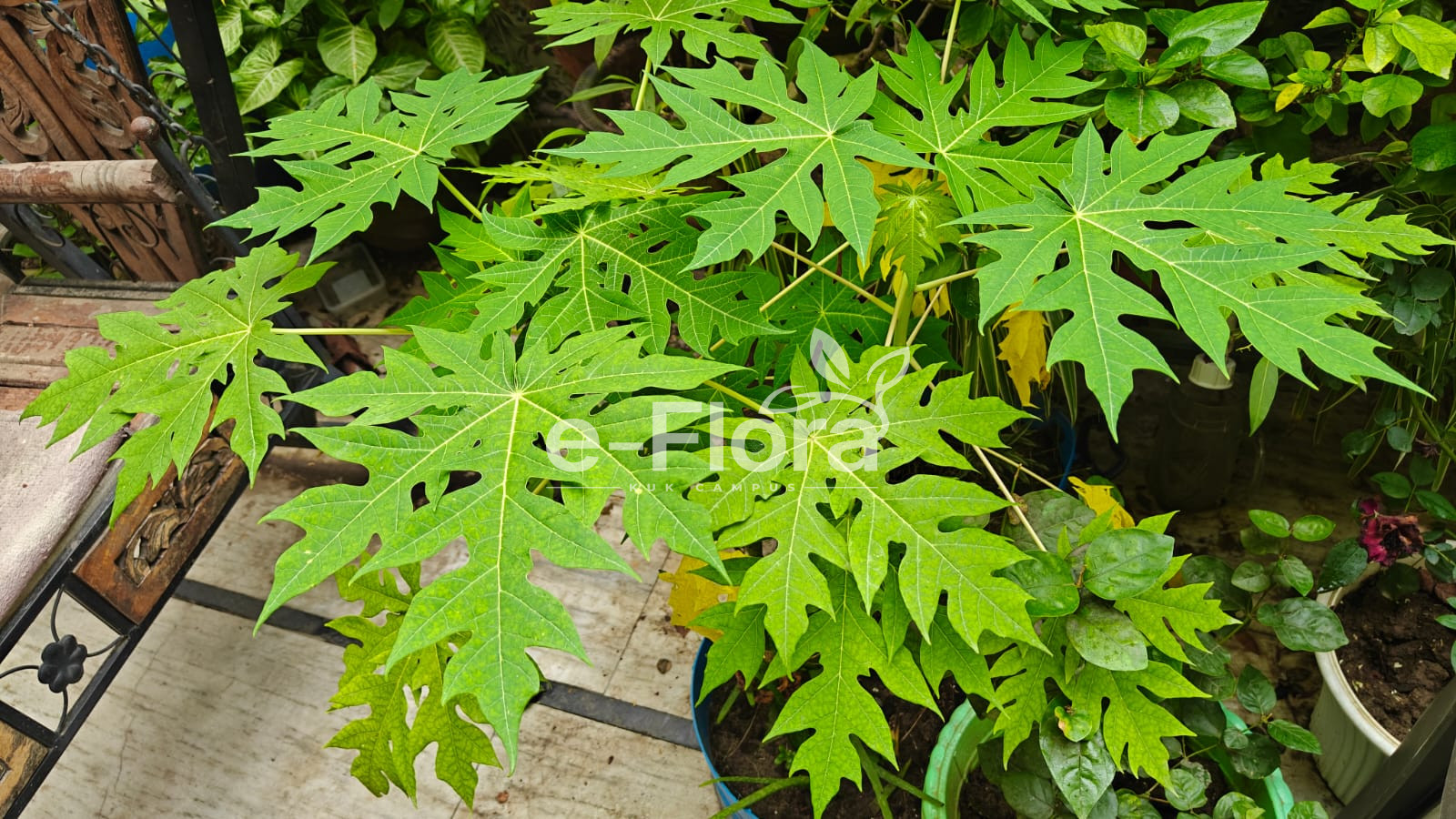
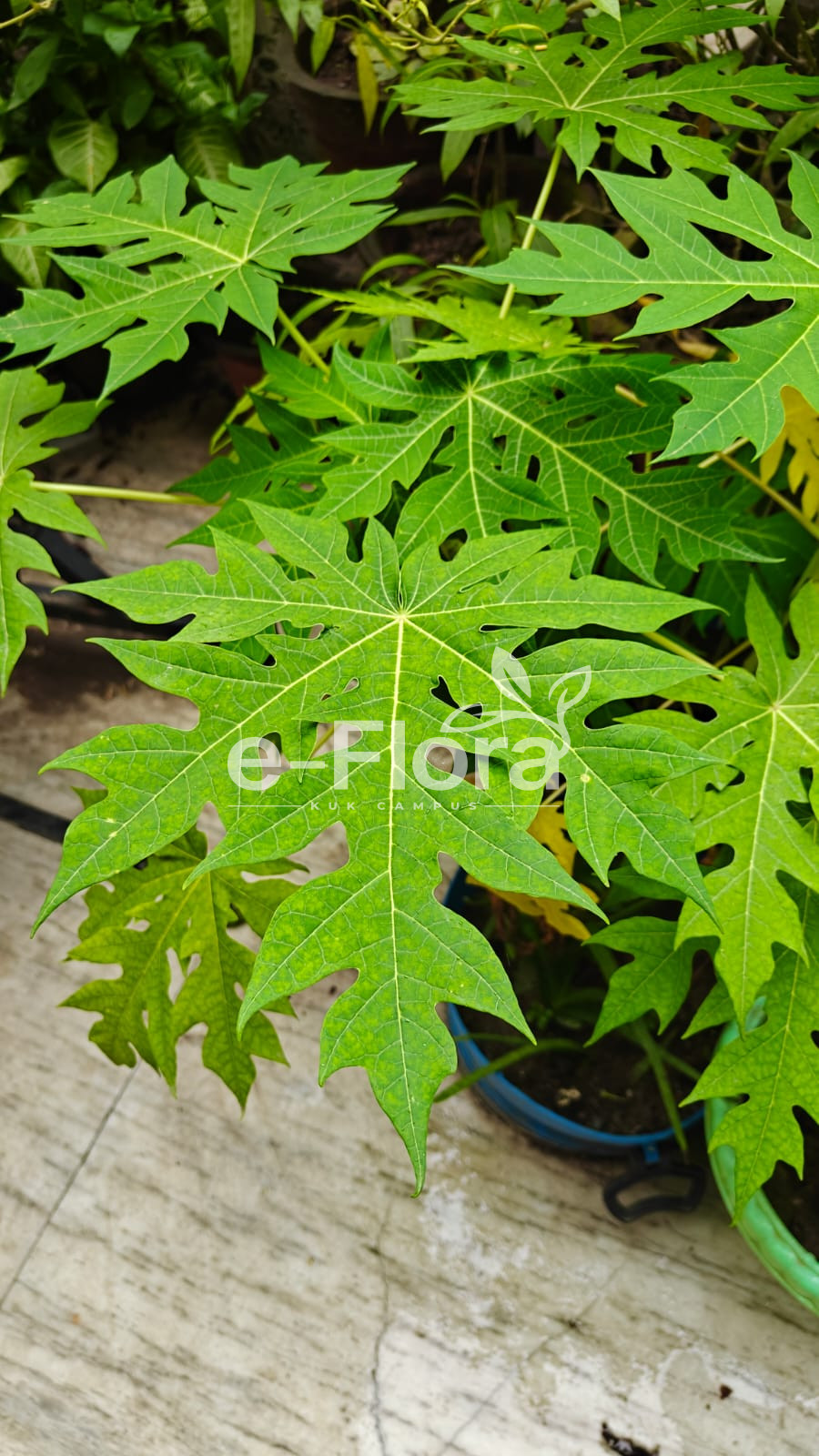
Leaf: Alternate, crowded near the apex, palmately 7–11-lobed, 25–75 cm broad, long-petiolate; lobes deeply divided, glabrous.
Flowering: Throughout the year under favourable tropical conditions.
Flowers: Usually dioecious or polygamous; male flowers small, numerous, creamy-white, borne in long pendulous panicles; female flowers larger, solitary or few, axillary, with a superior, unilocular ovary and 5-lobed corolla.
Fruit: Large fleshy berry, ovoid to oblong, green turning yellow-orange at maturity; pulp orange to reddish, containing numerous black, rounded seeds embedded in mucilage.
Uses:
- Folk practices uses extracts of leaves of papaya during dengue to increase blood platelet count.
- Fresh pulp or latex of plant contains healing, antiseptic and antimicrobial properties. Traditional folk medicines uses tropical applications of these poultices to treat rashes, wounds and minor skin burns.
- Seeds and leaves of papaya contains phytochemicals like benzyl isothiocyanate (BITC) and flavonoids that gives anti-inflammatory and antioxidant properties.
- Papaya latex and pulp contains papain, an important proteolytic enzyme used in food processing and pharmaceutical applications that break downs proteins and helps in digestion, relieve bloating and indigestion.
- Ripe papaya fruits contain fibers that supports gut motility and prevent constipation.
- The ripe fruit is widely eaten fresh and processed into juices and other food products, while unripe fruit is used as a vegetable. The fruit is also valued nutritionally as a rich source of vitamins, particularly vitamin C and provitamin A.
- Papain extracts from papaya is commercially used to tenderize meat.