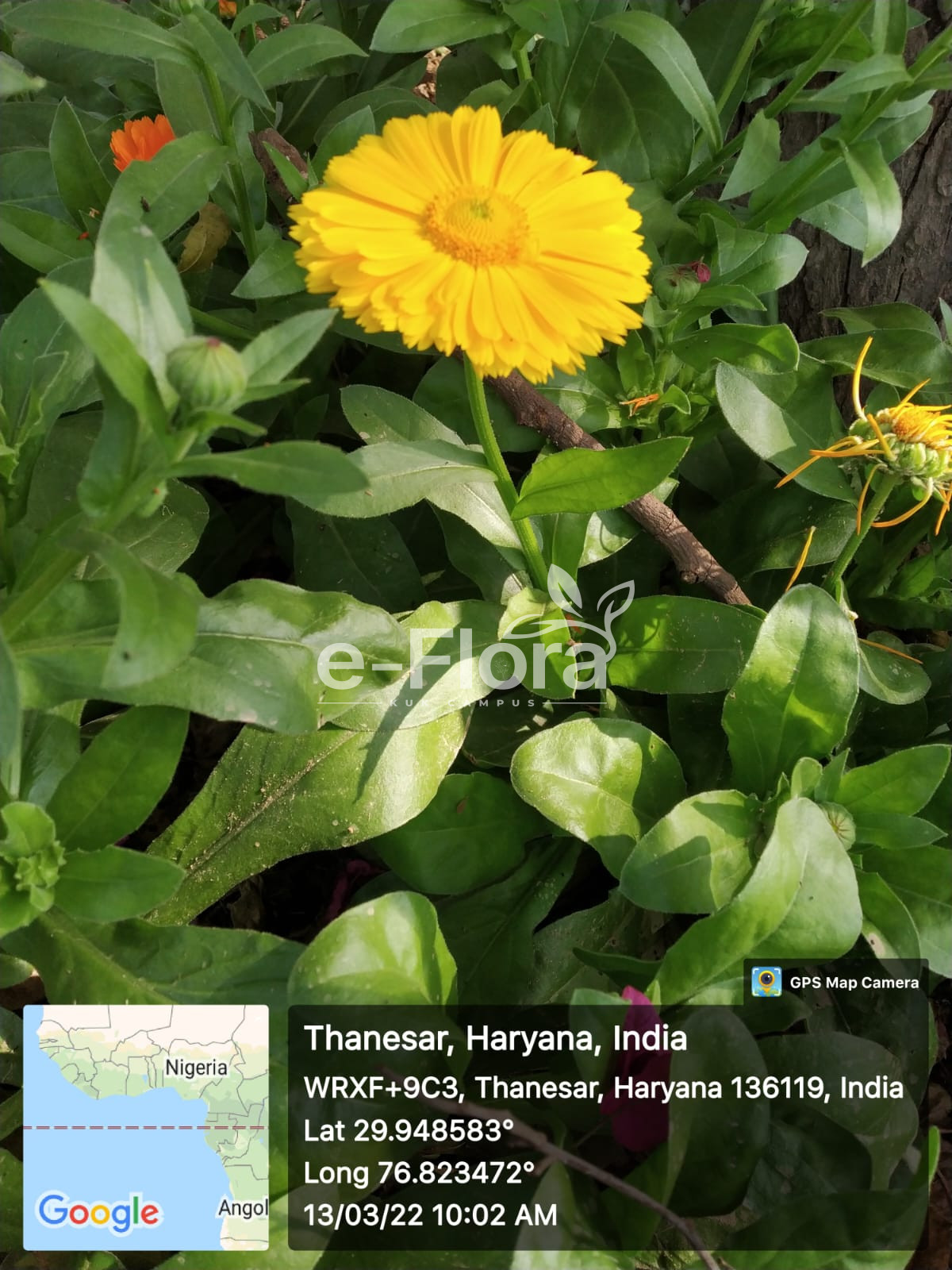
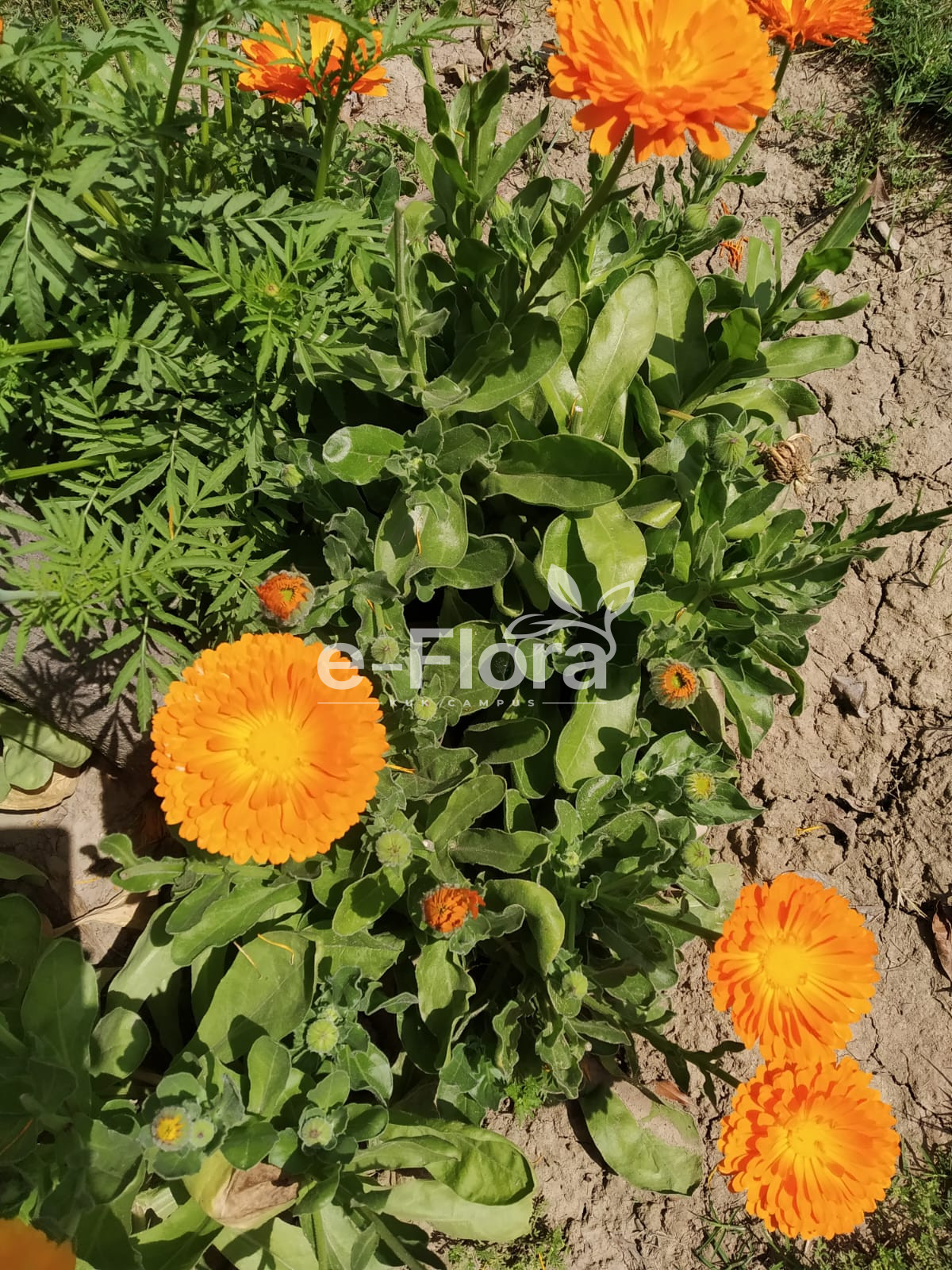
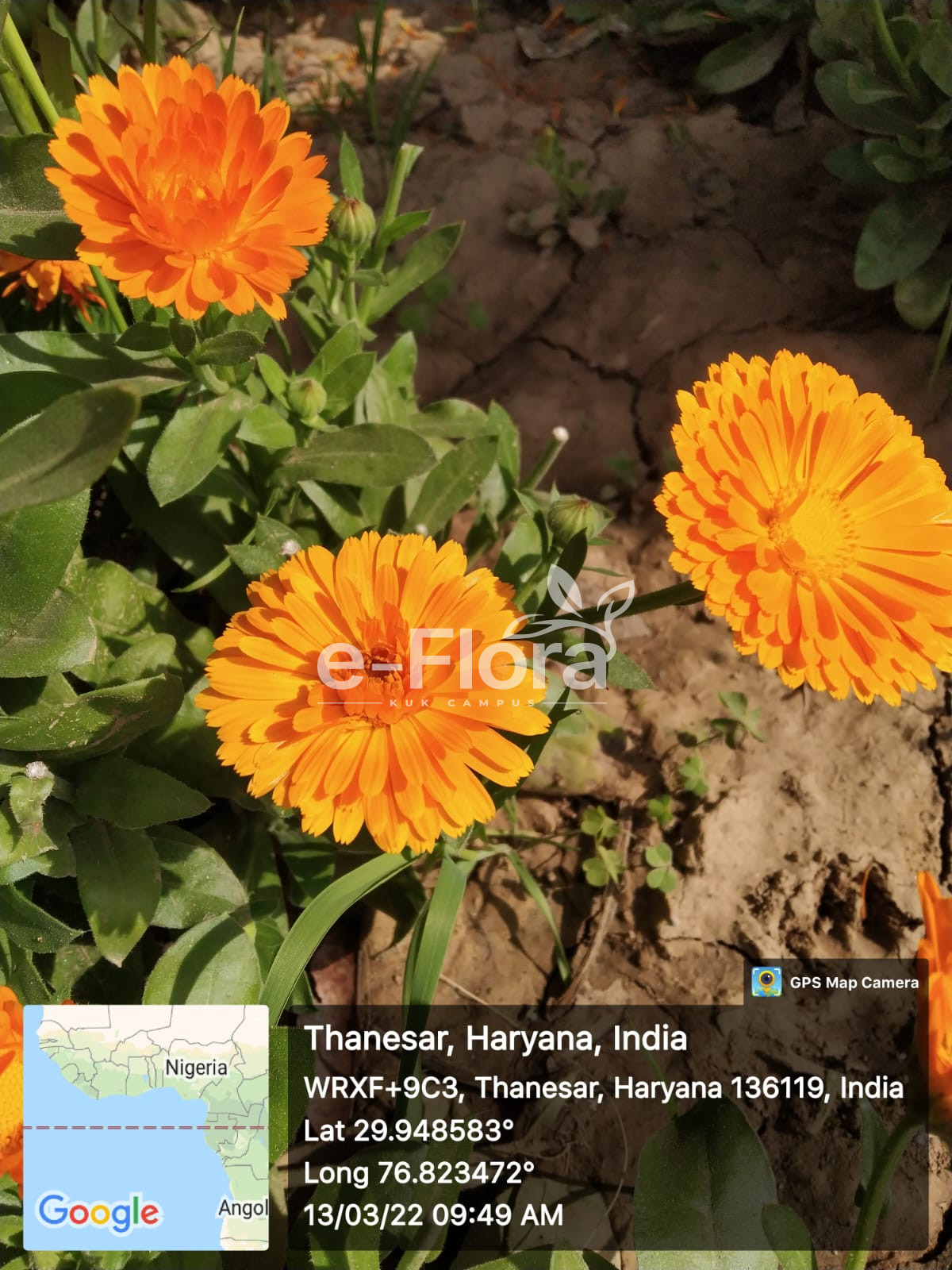
Calendula officinalis L.
Vernacular name: Calendula, Pot Marigold, Common Marigold, Genda, Gul-e-Ashrafi
Species Name: Calendula officinalis L.
Family: Asteraceae
Habit: Annual or short-lived perennial herb; commonly cultivated as an ornamental garden plant
Stem: Erect or spreading, herbaceous, branched, often glandular-hairy
Leaf: Simple, alternate, oblong to oblanceolate; lower leaves usually larger and stalked, upper leaves smaller and sessile; margins entire or slightly toothed; often hairy
Flowering: Mainly during the cool season
Flowers: Bright yellow to orange, conspicuous flower heads; ray florets female and ligulate, disc florets bisexual and tubular; involucral bracts arranged in several rows. Inflorescence capitulum (head), solitary and terminal on long stalks; what appears to be a single flower is actually a composite flower head characteristic of Asteraceae
Fruit: Dry, one-seeded achenes, with different forms occurring within the same head; generally lacking a conspicuous pappus
Uses:
- Traditional practices uses plant in the form of creams, ointments and diluted tinctures and applied tropically to treat minor cuts, scrapes and abrasions as plant has ability to help with tissue repair and accelerate healing. eFlora of India specifically records these traditional uses.
- Extracts of flowers is used in balms to treat and soothe diaper rashes, minor burns, inflamed skins and eczema.
- Flowers are steeped into infusions or brewed as tea and used to gargle to ease throat irritations. A mouthwash specially made by diluting the tincture of this plant that helps in the treatment of ulcers and gum soreness.
- Calendula is a rich source of linoleic acid and flavonoids that can help with prevent of proliferation and spreading of malignant cells during cancer. Calendula also increases the production of lymphocytes.
- It has antibacterial and antimicrobial properties and can be used to treat ear infection in children.
- Plant has ornamental value due to its pretty flowers and also widely used in floral arrangements.
- Petals of flowers are used in salads, tea and as a natural food dye or colouring agents.