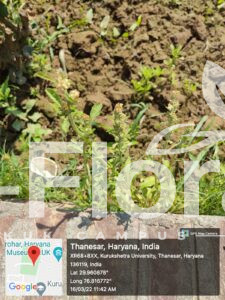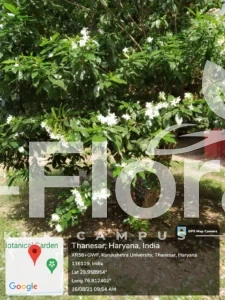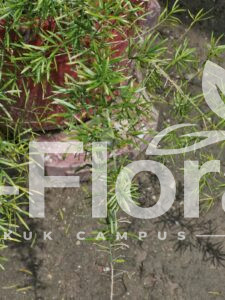
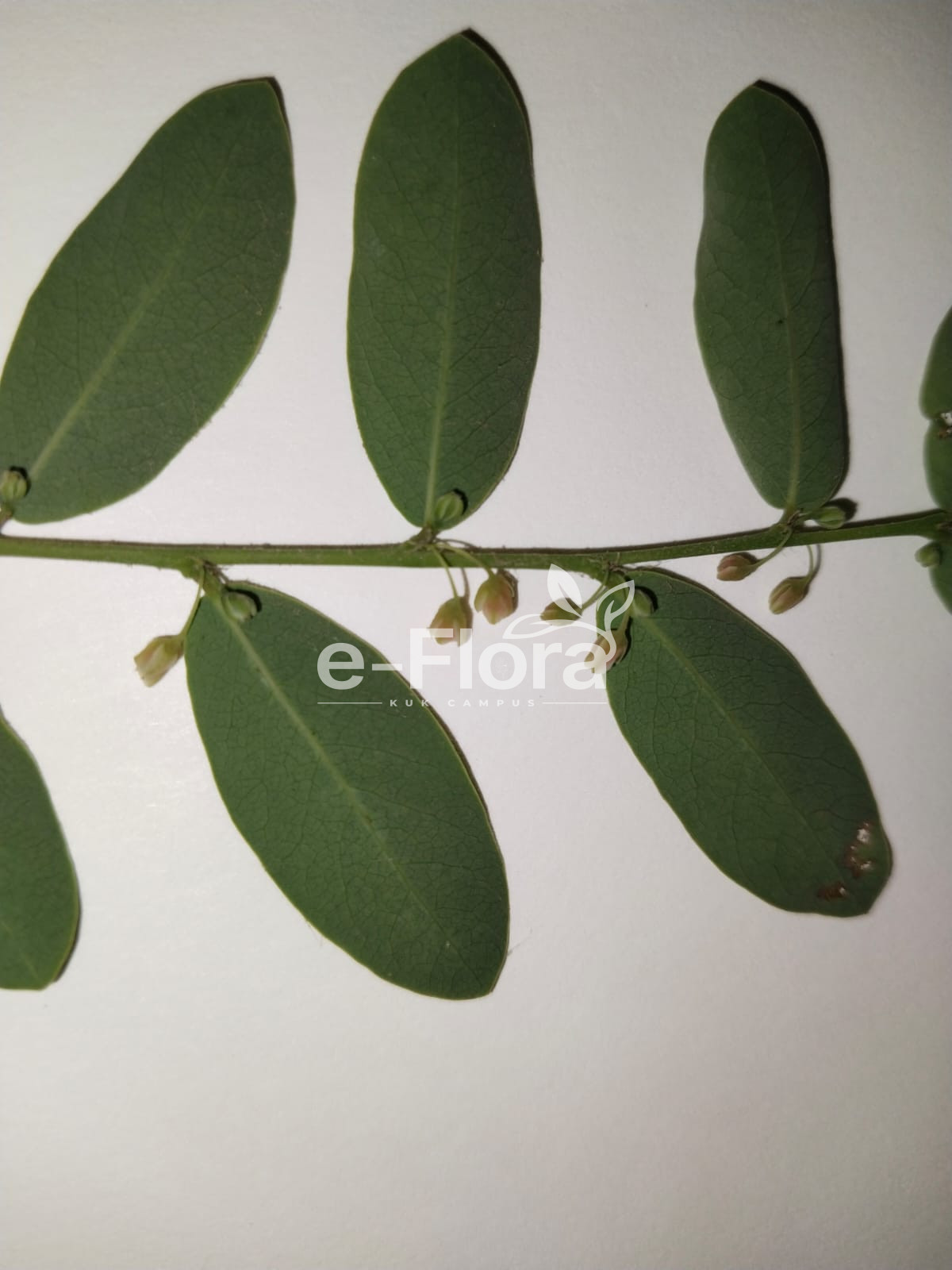
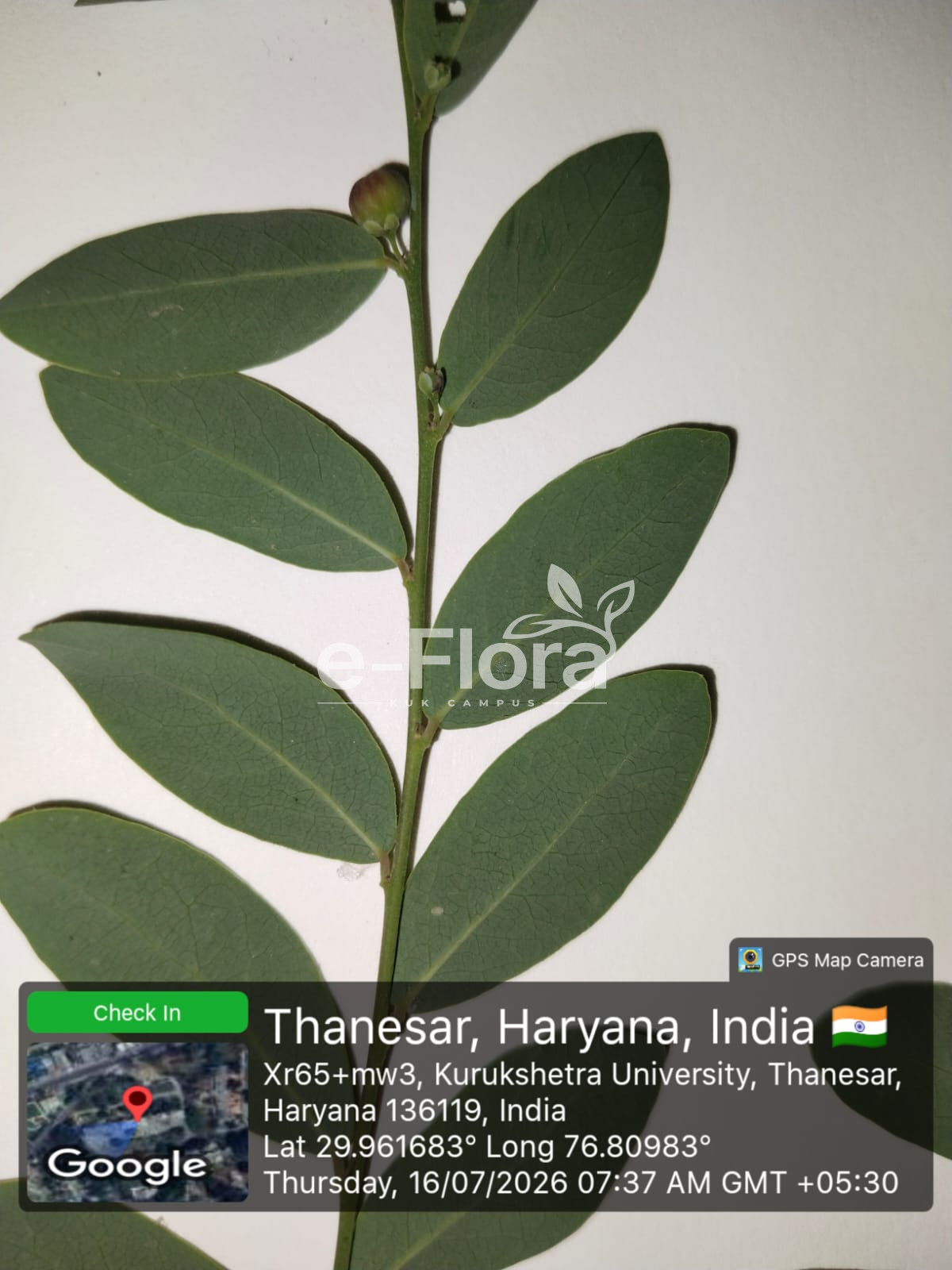
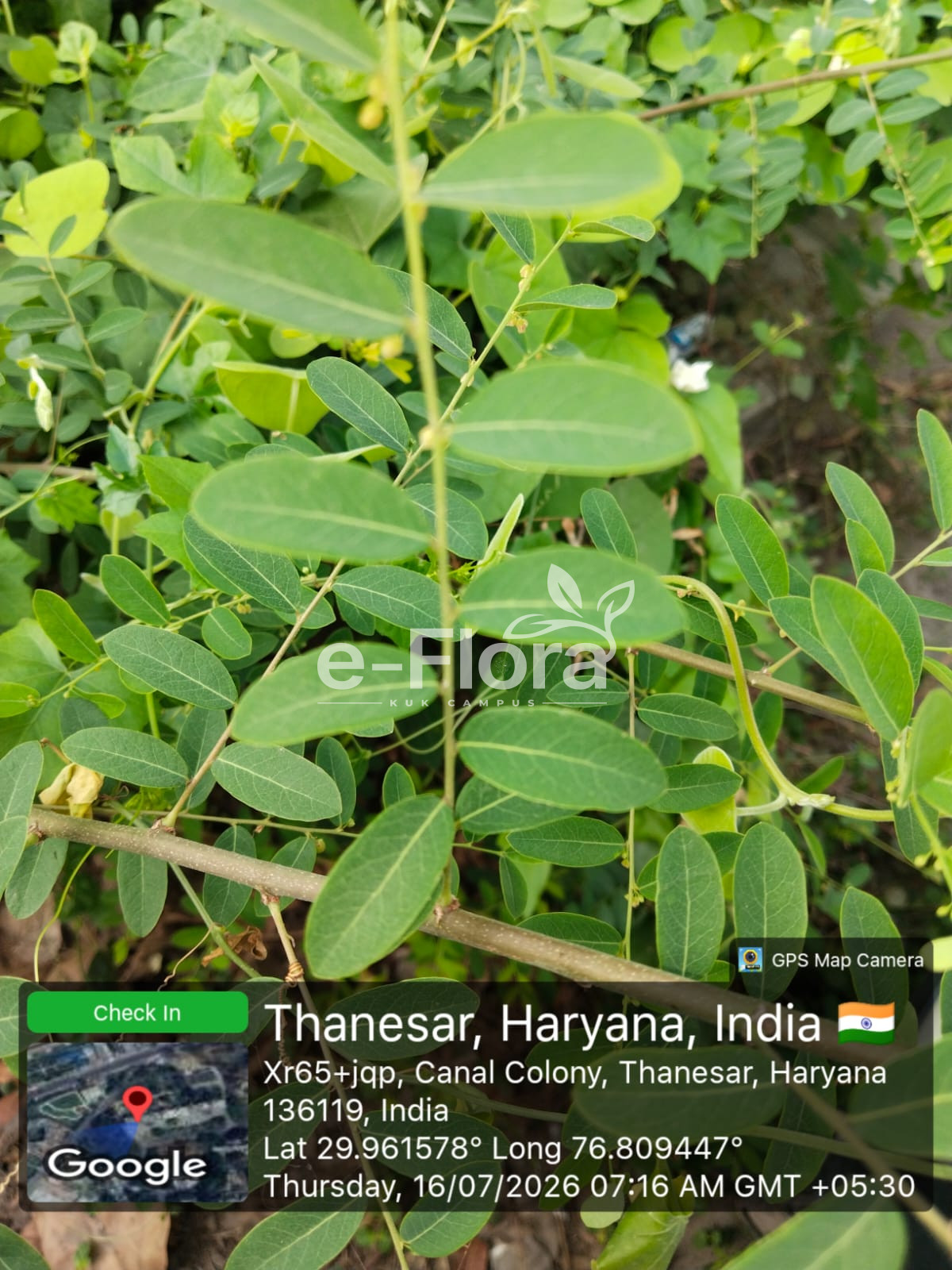
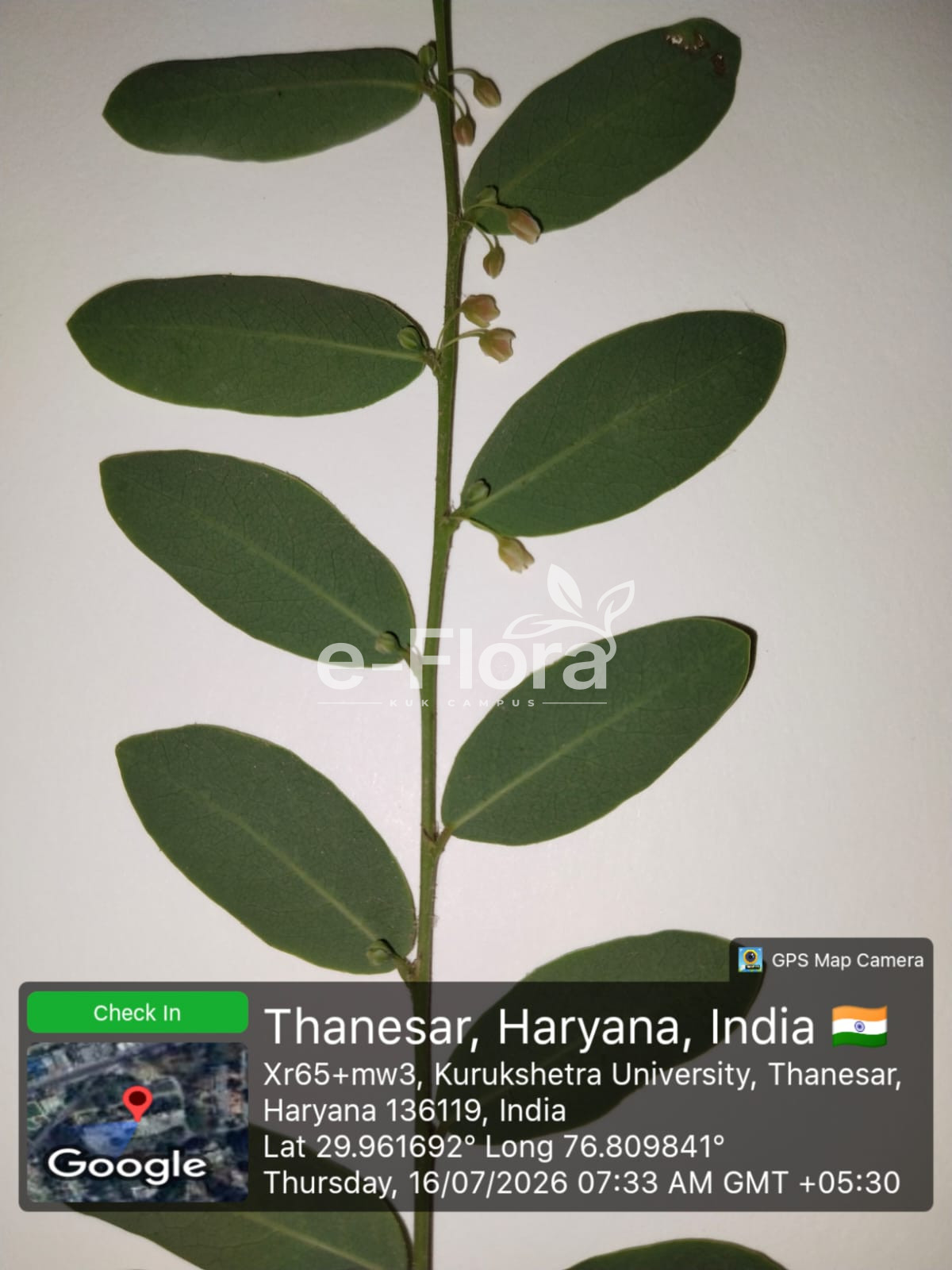
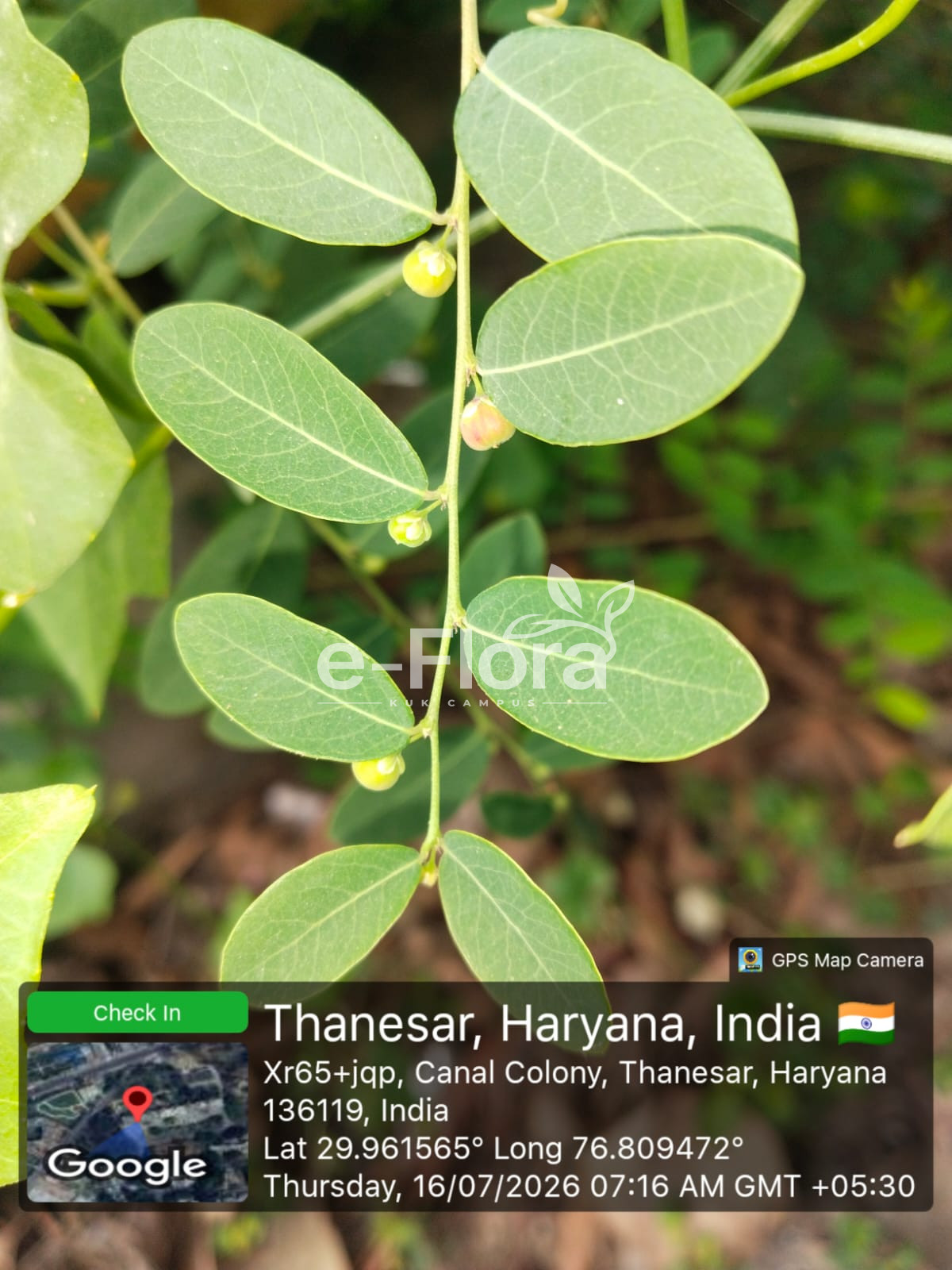
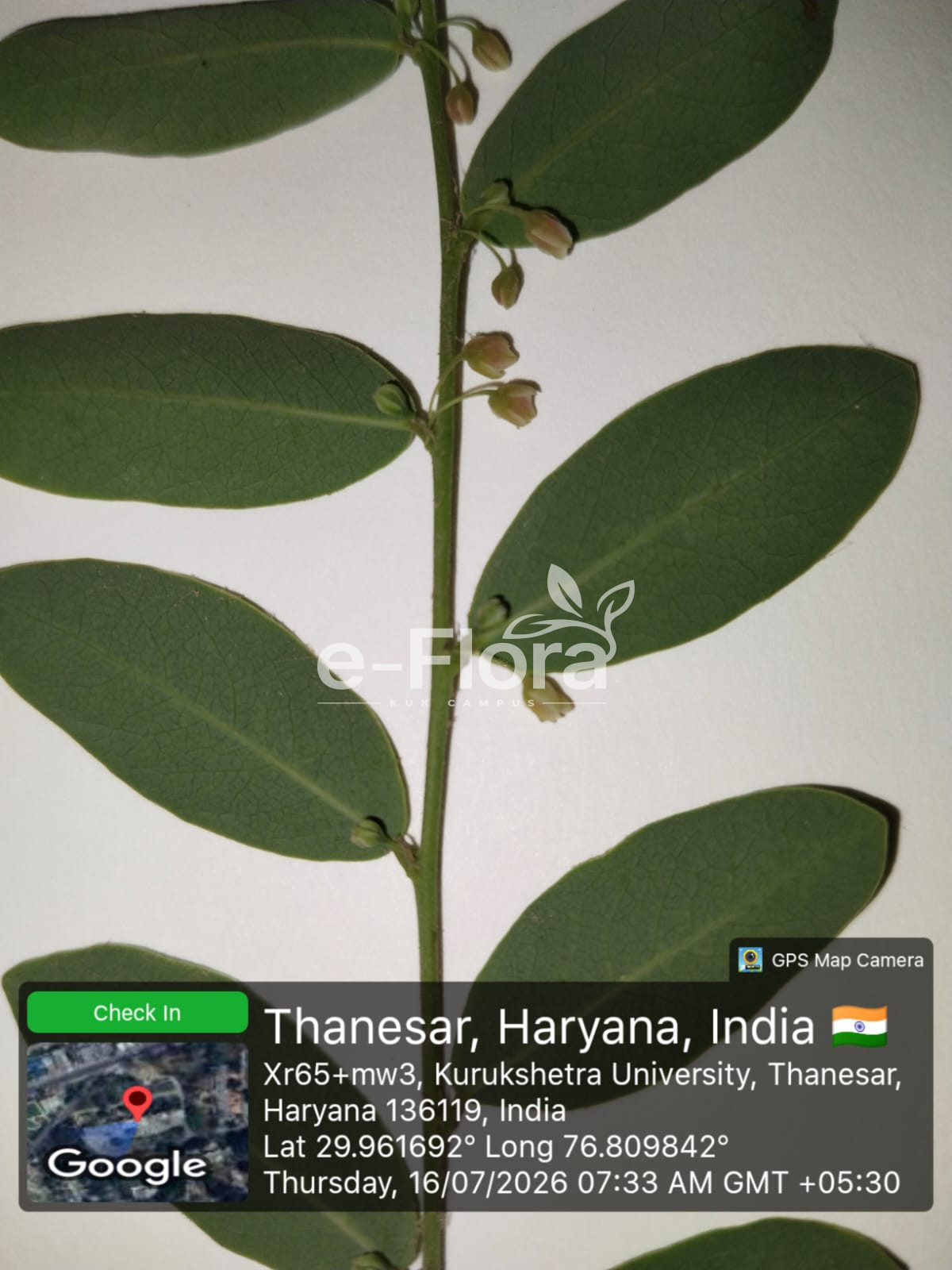
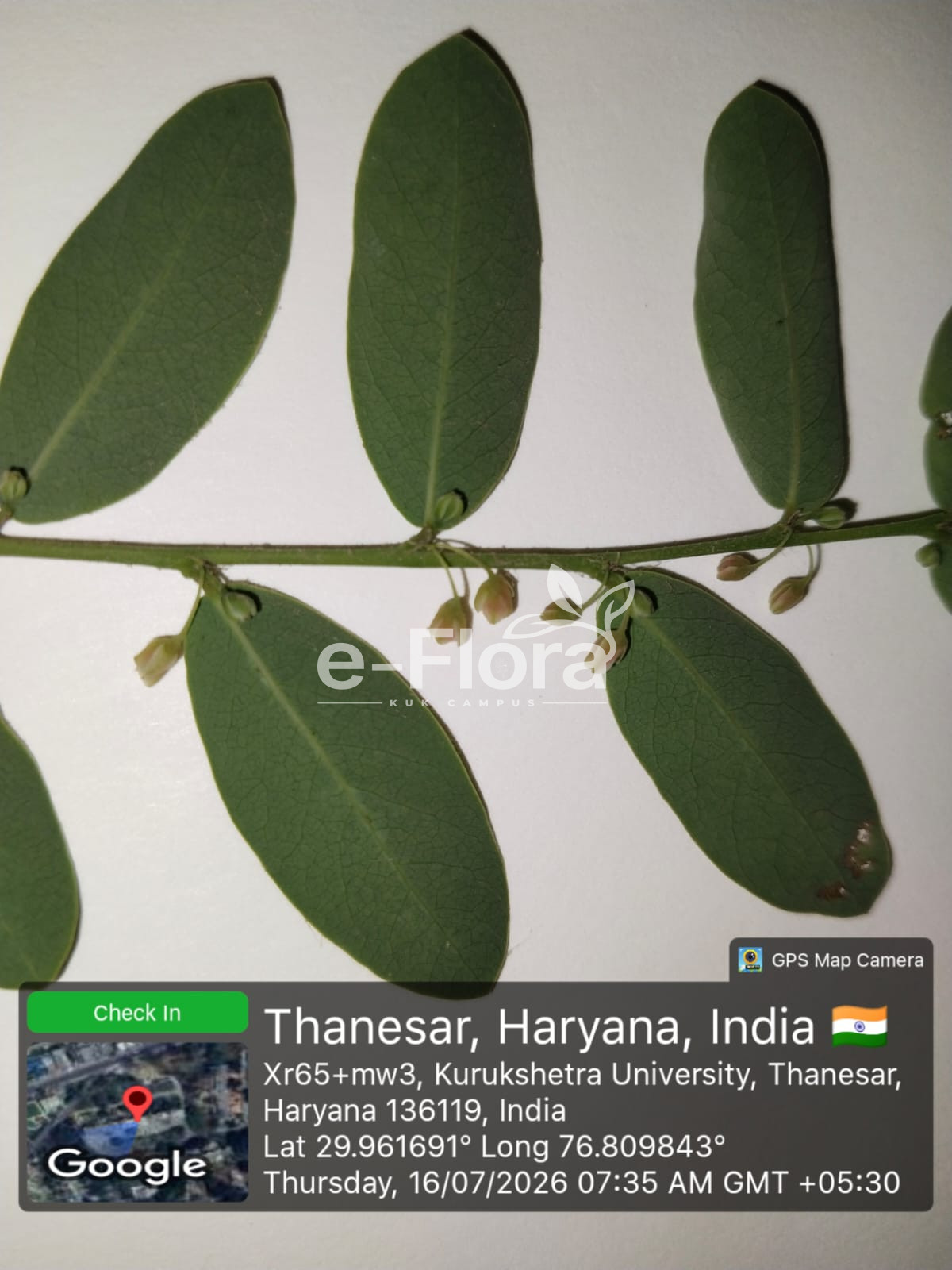
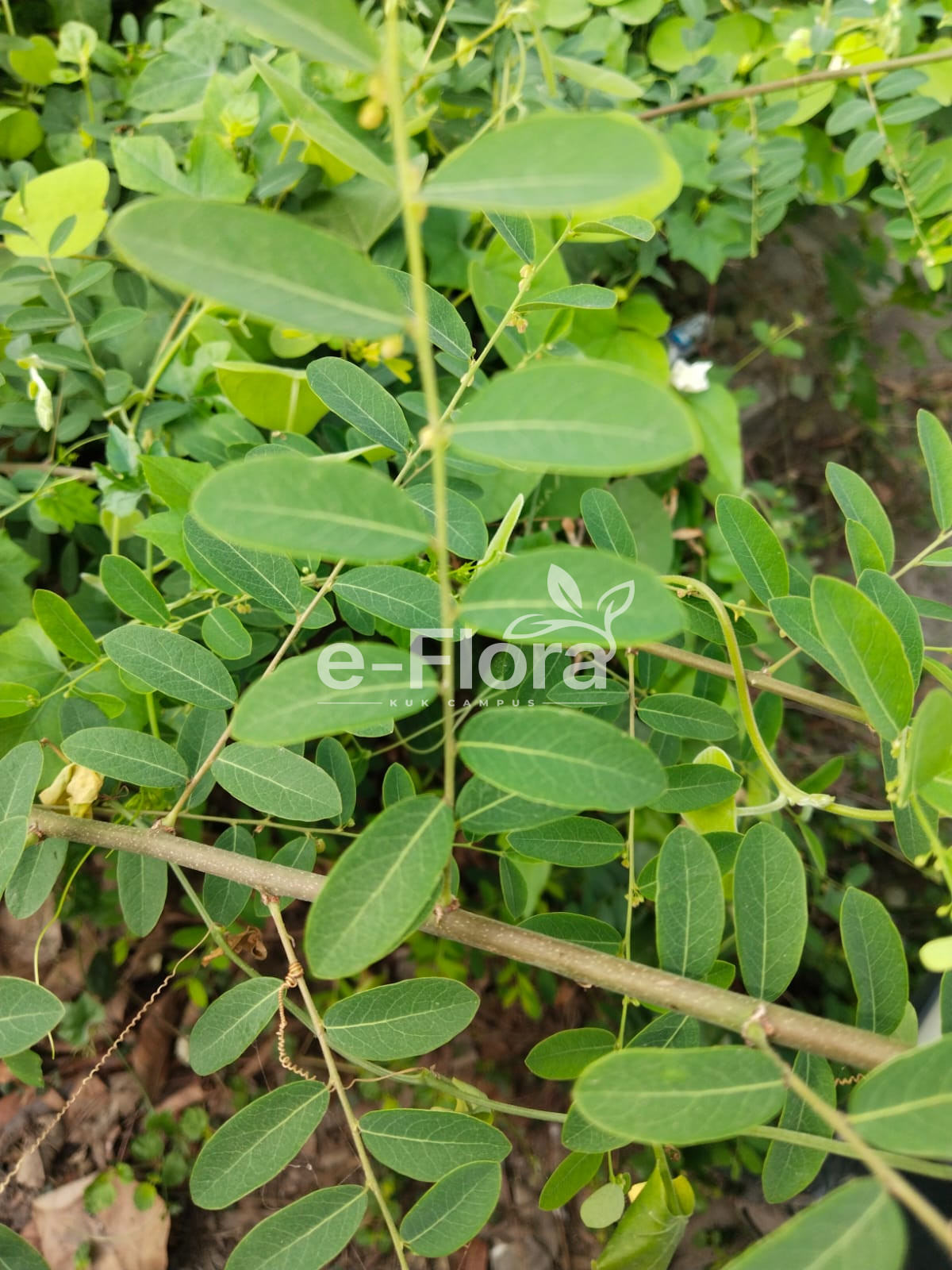
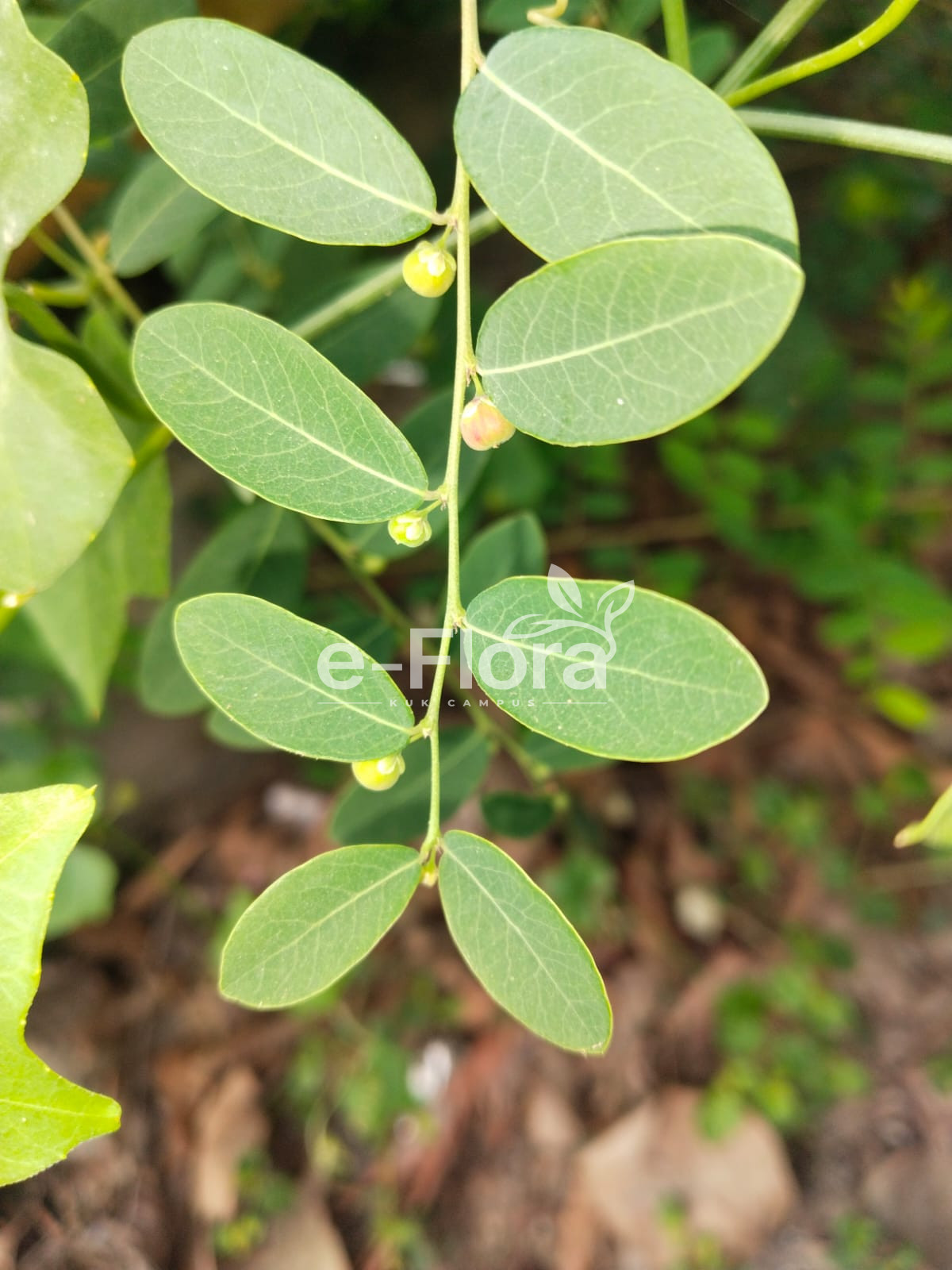
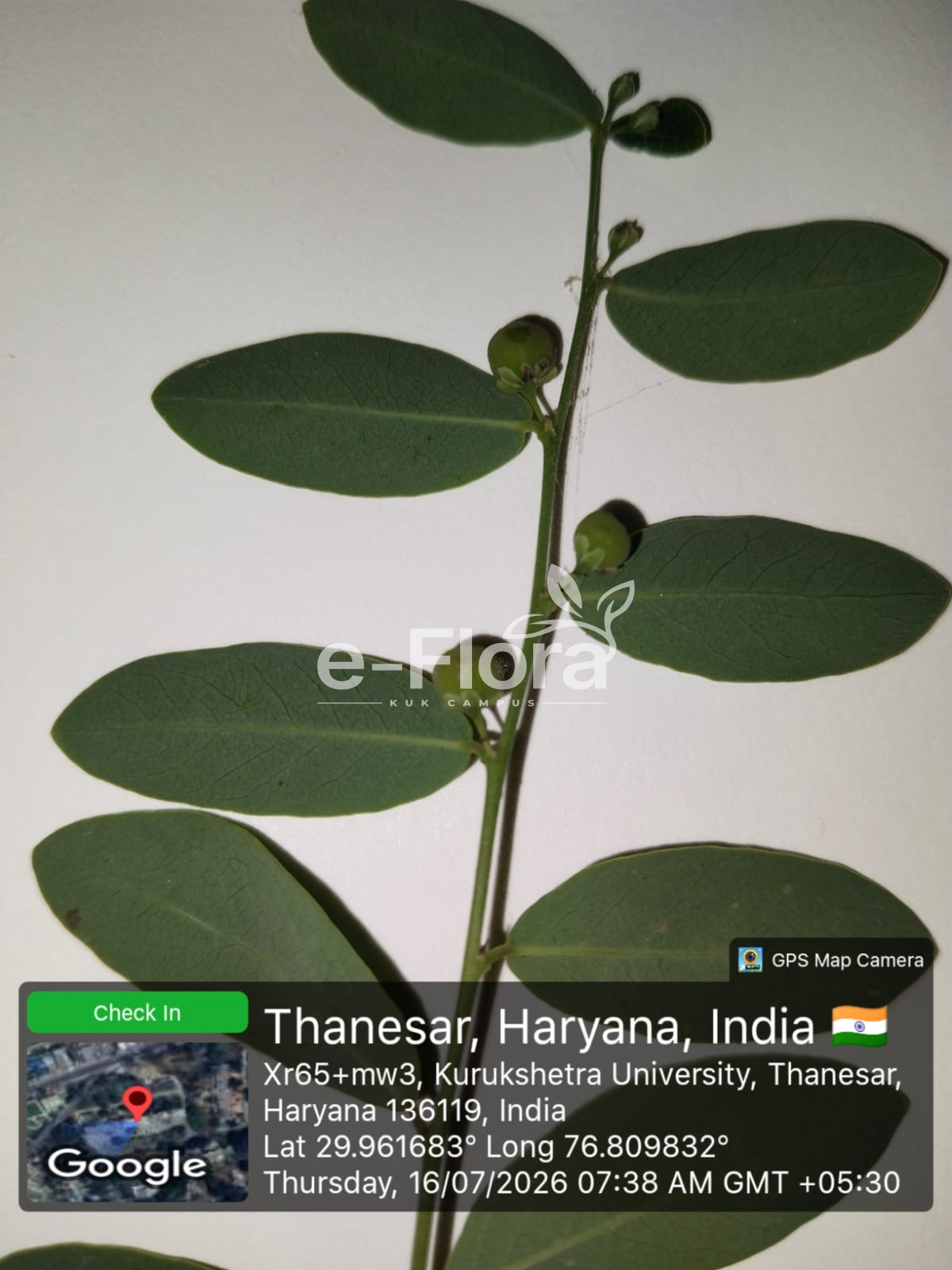
Phyllanthus reticulatus Poir.
Vernacular name: Black Honey Shrub, Panjuli (Hindi: पंजोली, काली भुई आँवला)
Species Name: Phyllanthus reticulatus Poir.
Family: Phyllanthaceae
Habit: Much-branched deciduous shrub or small tree.
Stem: Woody, 2–6 m tall; bark grey-brown; branchlets slender, often zig-zag, glabrous to sparsely pubescent.
Leaf: Alternate, distichous, elliptic to obovate, 1–4 × 0.5–2 cm, entire, rounded to obtuse at apex, short-petiolate.
Flowering: Spring–autumn.
Flowers: Small, greenish-yellow, unisexual, axillary, solitary or in fascicles; perianth 5–6 lobed; stamens 5 (male flowers); ovary superior, 3-carpellary (female flowers).
Fruit: Globose berry, 4–7 mm diameter, purplish-black when ripe, containing 6–8 seeds.
Uses:
- Plant exhibits antidiabetic, antiplasmodial, antioxidant, antiviral, antibacterial, anticancer, hepatoprotective and anti-inflammatory properties.
- Panjuli is used in Ayurveda, Siddha and folk healing traditional systems for its therapeutic properties.
- Plant helps in treatment of dysentery, diarrhea and stomach inflammations owing to its diuretic properties.
- Leaves, bark, roots and fruits decoctions are widely used in traditional medicine for skin diseases, urinary disorders, asthma, coughs, sore throat, smallpox and wound healing.
- Leaves are powdered to combine with cubebs and camphor to make tablets for bleeding gums.
- Leaf powered is externally applied to tret burns, sores, skin-chafes and suppurations.
- Roots decoction are used to treat hook worm infection, headaches, dysmenorrhea and as aphrodisiac to increase fertility of male.
- Decoction of root and leaf sap are mixed to act as antispastic. Plant is used to treat anaemia and intestinal haemorrhage.
- The black to dark purplish ripe fruits are edible but slightly astringent and are also consumed by birds. The shrub is commonly planted as a hedge and for ecological restoration.
- Timber is greyish-white to reddish, rough and hard and used to craft small domestic utensils. Wood is suitable as firewood and make good quality charcoal.
- Tender twigs and branches are used as natural toothbrush in local regions.
- Decoctions of stem and leaves are used in traditional dyeing processes and for roof binding in huts.
- Riped dark berries are used to derived a nature black ink and dye that can be used to dye cotton fabrics.