Oroxylum indicum (L.) Kurz
Vernacular name: Indian Trumpet Tree, Midnight Horror, Shyonaka (Hindi: श्योनक, सोनापाठा)
Species Name: Oroxylum indicum (L.) Kurz
Family: Bignoniaceae
Habit: Medium-sized deciduous tree.
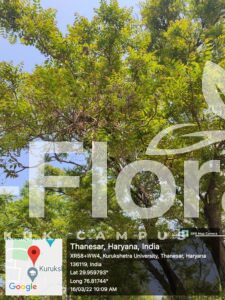
Stem: Straight trunk 8–15 m tall; bark grey-brown, soft and corky, branchlets stout with prominent leaf scars.
Leaf: Opposite, 2–3-pinnate, very large (50–150 cm long); leaflets ovate to elliptic, entire, glabrous, acuminate.
Flowering: Summer–monsoon (May–August).
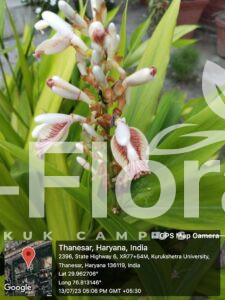
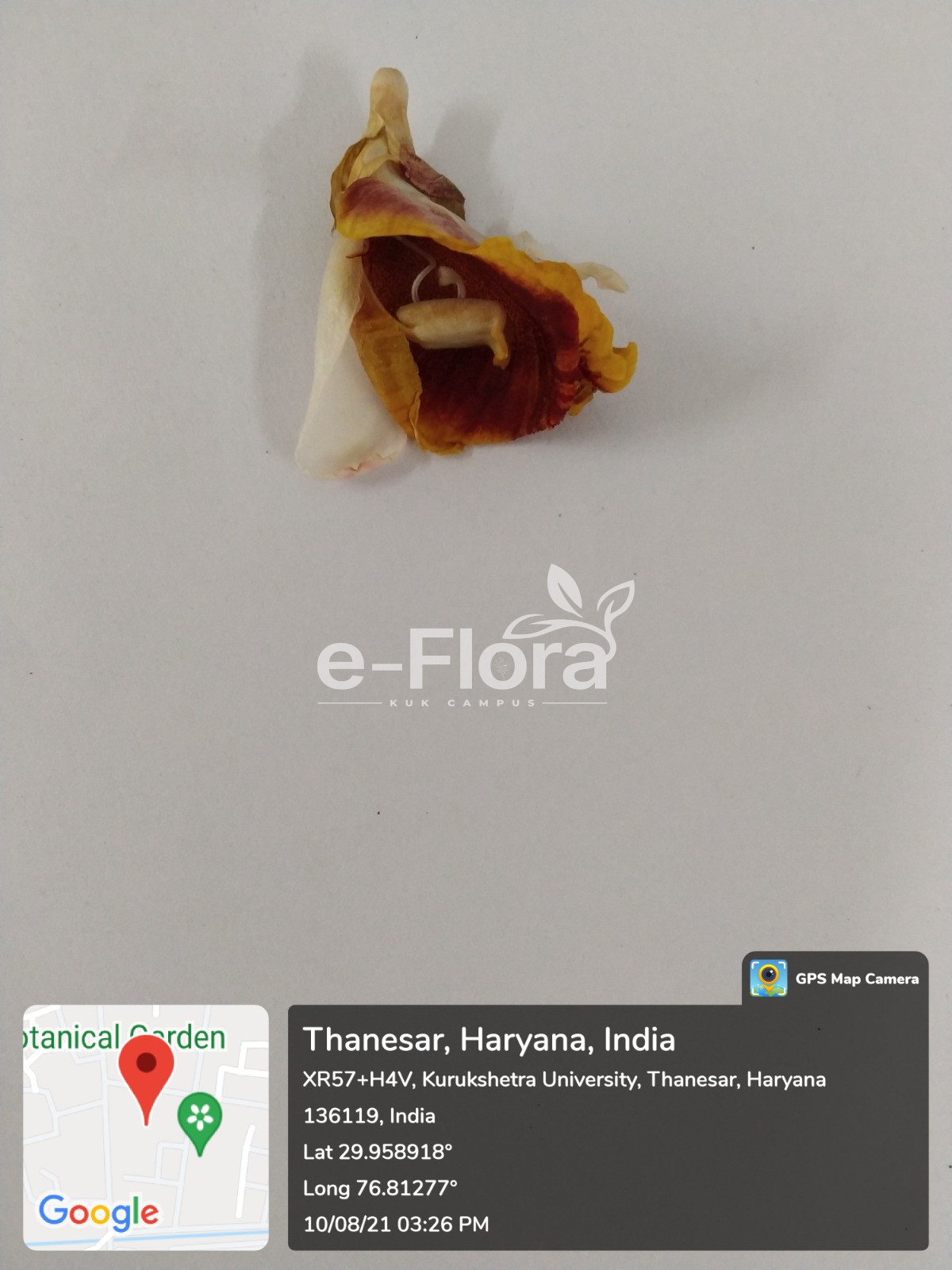
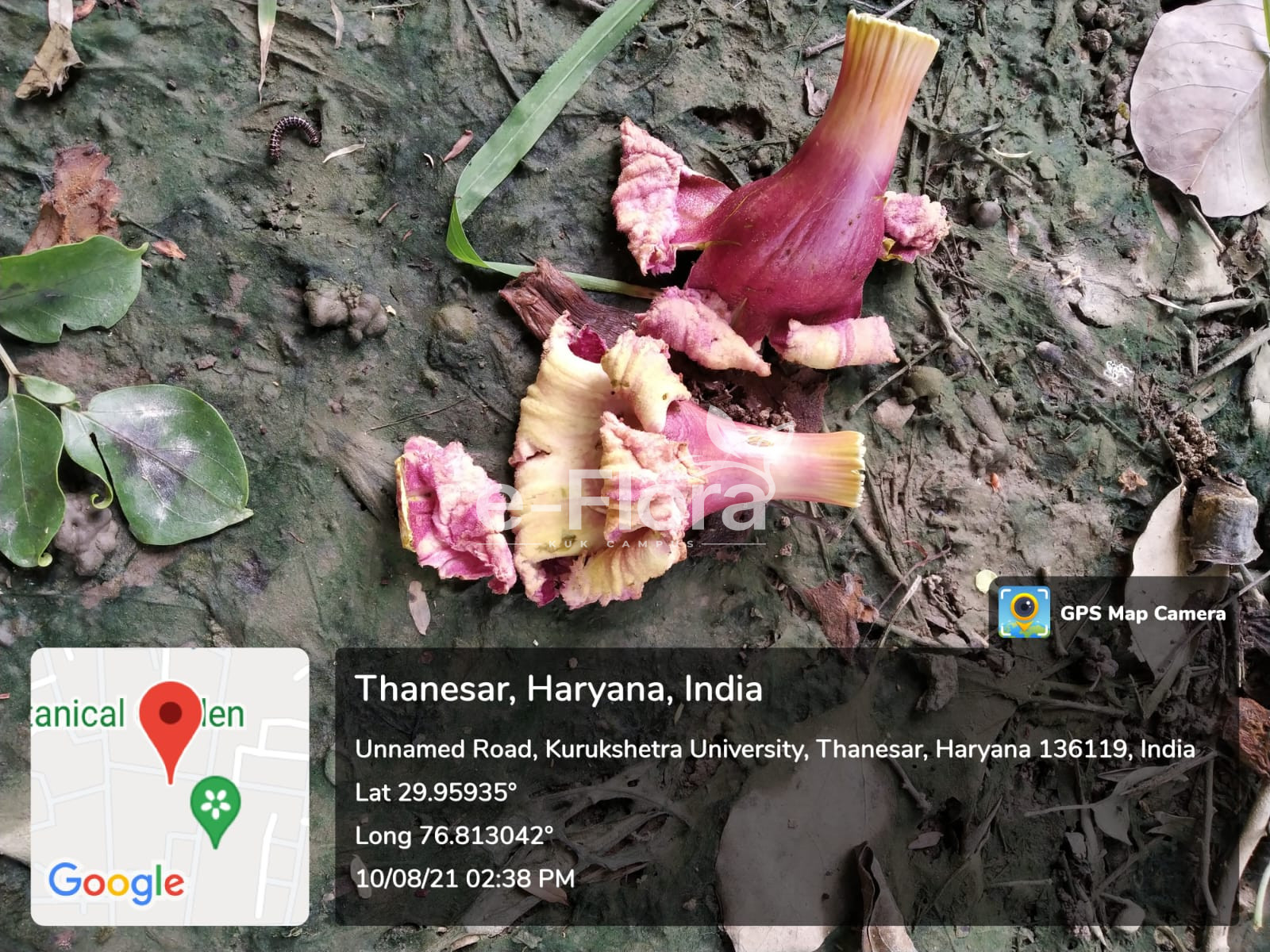
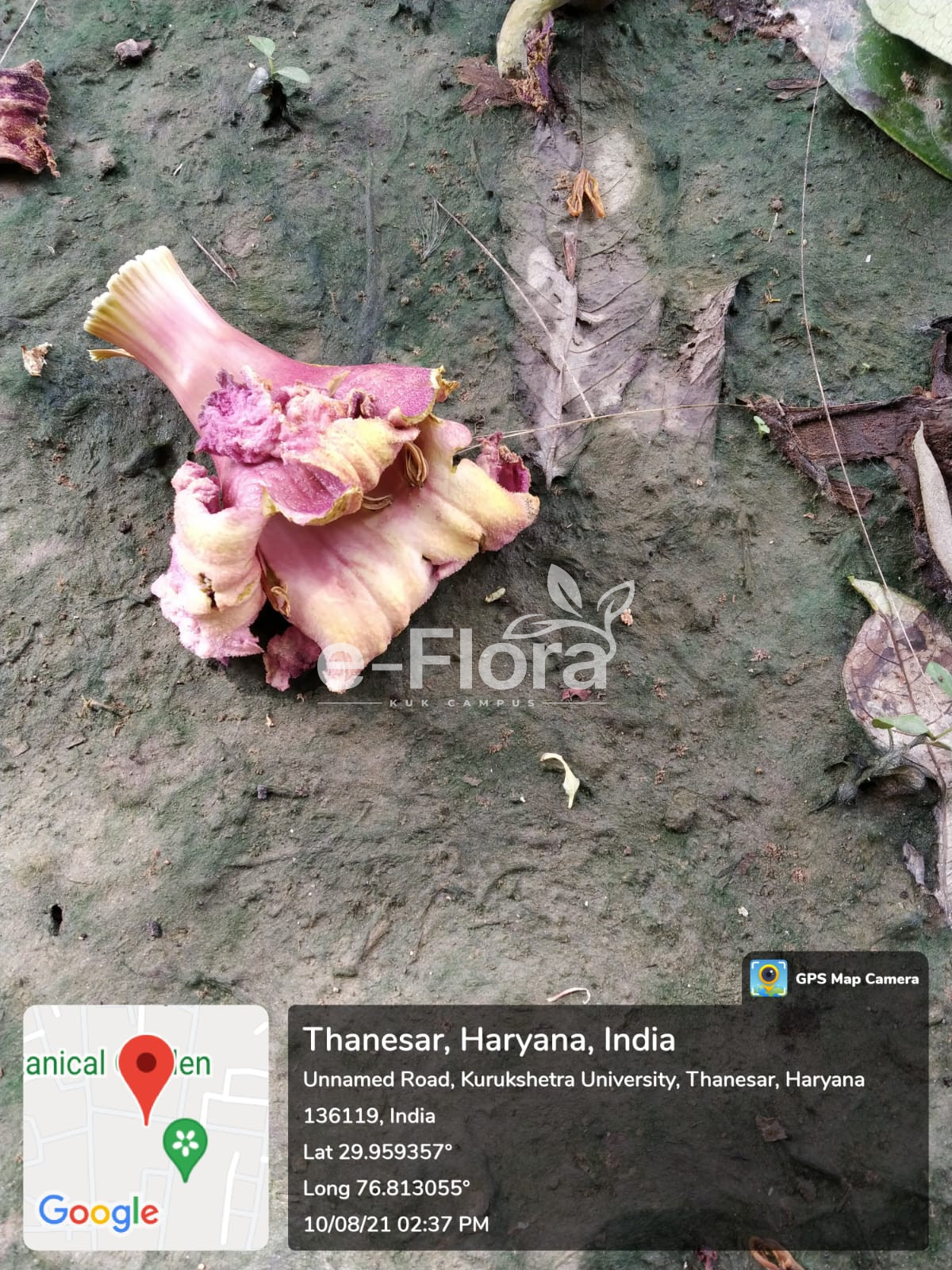
Flowers: Large, fragrant, dark purple to reddish outside and yellowish-white within, borne in terminal erect racemes; corolla campanulate, 5-lobed; stamens 5 (4 fertile, 1 staminode); ovary superior, bicarpellary.
Fruit: Long, flat, sword-shaped capsule, 30–100 cm long, pendulous, dehiscent; seeds numerous, flat, broadly winged.
Uses:
- Shyonaka contain many flavonoids like chrysin, baicalein and oroxylin that attributes plant with antimicrobial, anti-inflammatory, antioxidant and hepatoprotective properties.
- In Ayurveda, plant is one of ingredients of Dashamoola and helps to soothe asthma, bronchitis, cough, pharyngitis, pertussis and throat infections.
- Herbal medicines, uses plant in the form of bitter tonic for its diuretic properties to manage dysentery, diarrhea, treat intestinal worm infestations and improve appetite.
- In traditional medicines, plant help to relieve joint pain, general swelling and manage rheumatism.
- Bark juice or poultice is applied tropically to speed up healing of wounds, ulcers, treat skin issues and snakebites.
- Plant is also used to lower fever, regulate blood glucose levels and treat jaundice, hemorrhoids, chronic rhinitis, helminthiasis, anorexia and dropsy.
- Flowers open at night and emits a powerful stink that attracts bats (facilitate pollination) and earned it name “Midnight Horror” in Malaysia.
- Flowers, buds and pods are cooked and consumed as vegetable in many regions.
- It is cultivated as an ornamental plant due to its glossy foliage and substantial fruits and can also help in restoration of woodlands.
- Fruit and bark are processed to yield tannins and dye.
- Seeds has religious purposes and can be used as offering in Buddhism. Seeds are also used as lining of hats and umbrellas.
- Wood is soft and can be used to make paper and matchsticks.