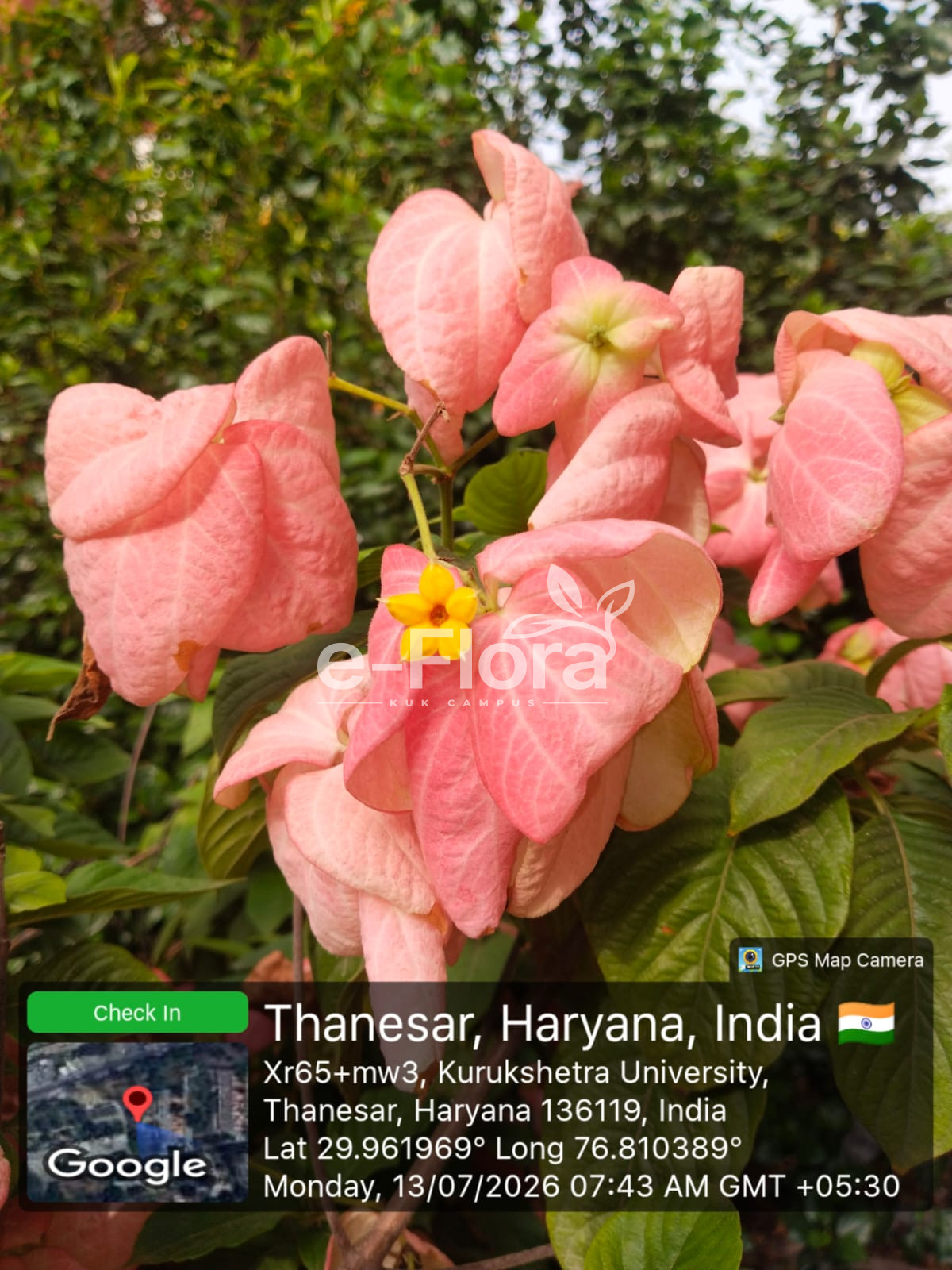
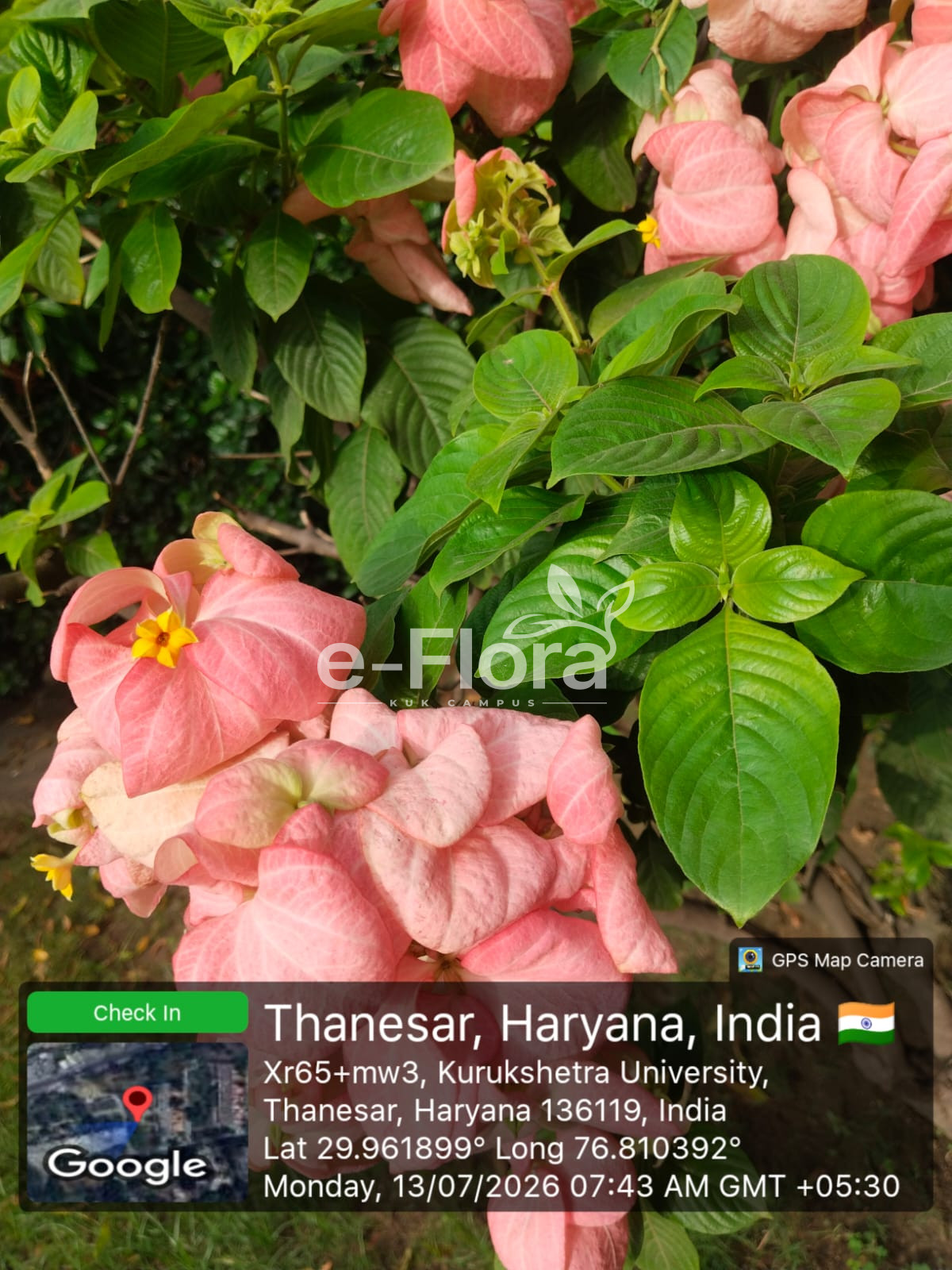
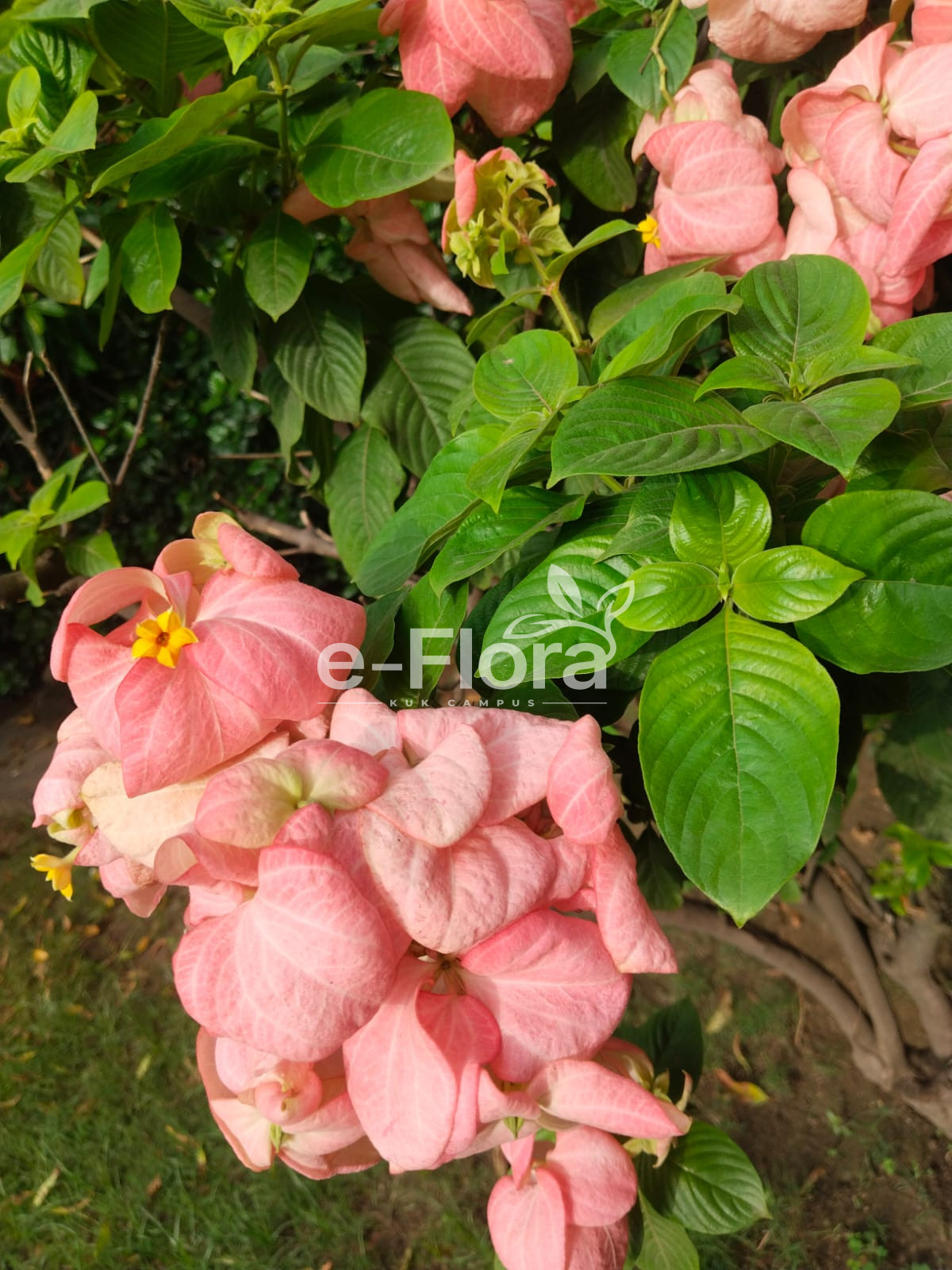
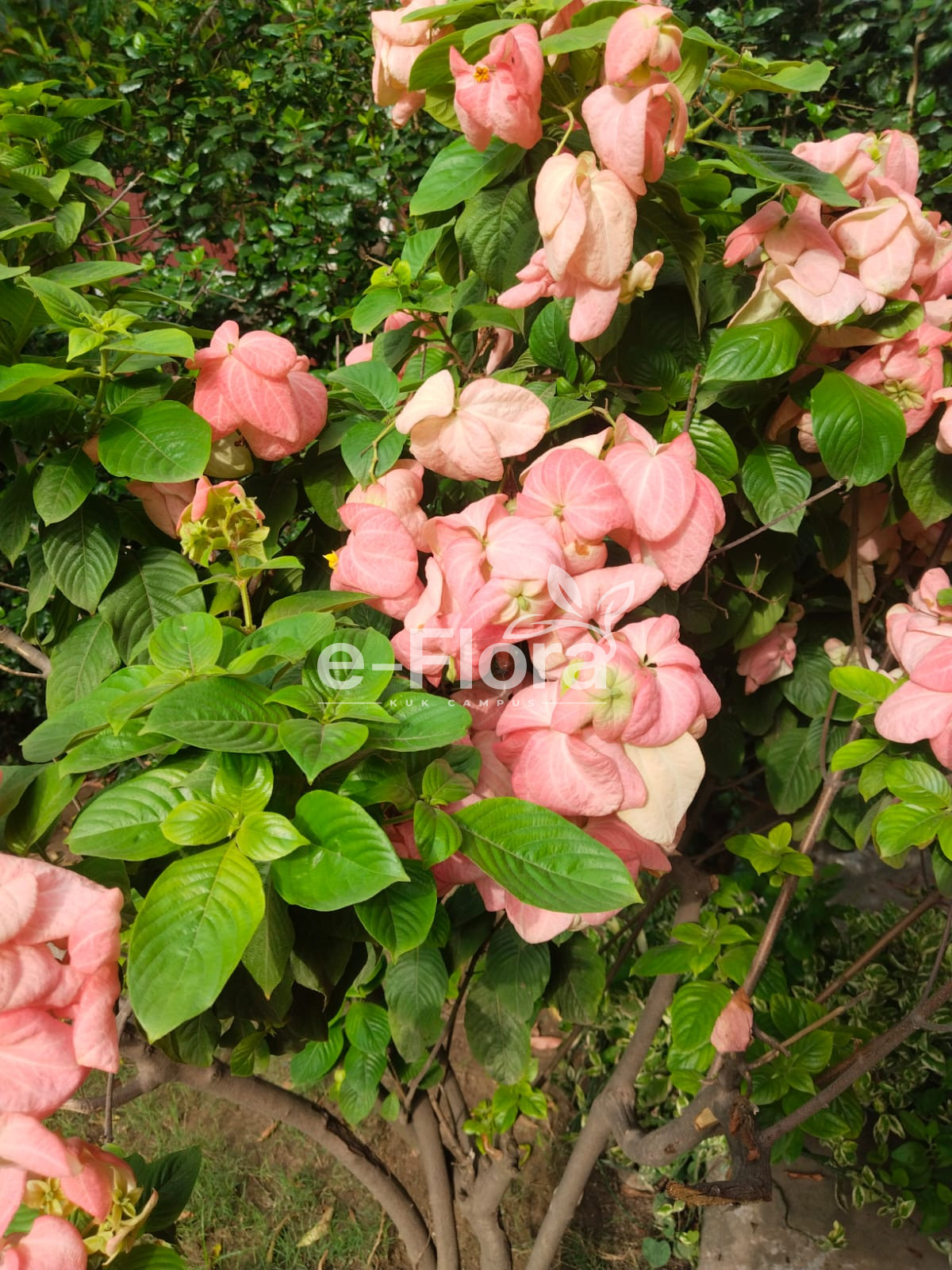
Mussaenda philippica A.Rich.
Vernacular name: Philippine Mussaenda, Queen Sirikit Mussaenda (Hindi: मुसेंडा)
Species Name: Mussaenda philippica A.Rich.
Family: Rubiaceae
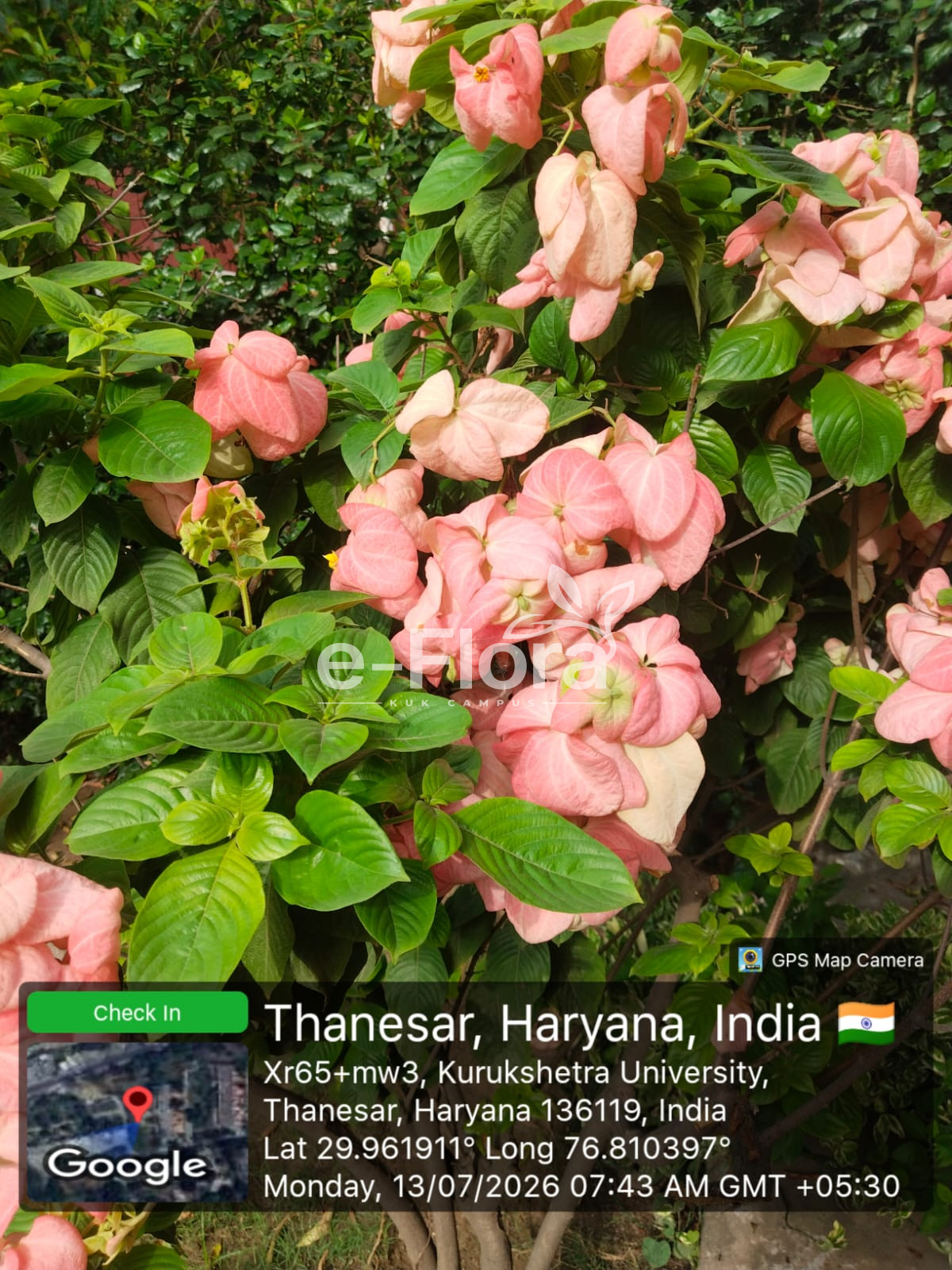
Habit: Evergreen shrub.
Stem: Erect, much-branched, 1–3 m tall; bark grey-brown; young branchlets pubescent.
Leaf: Opposite, ovate to elliptic, 8–20 × 4–10 cm, entire, acuminate, pubescent, short-petiolate.
Flowering: Nearly throughout the year, chiefly summer–autumn.
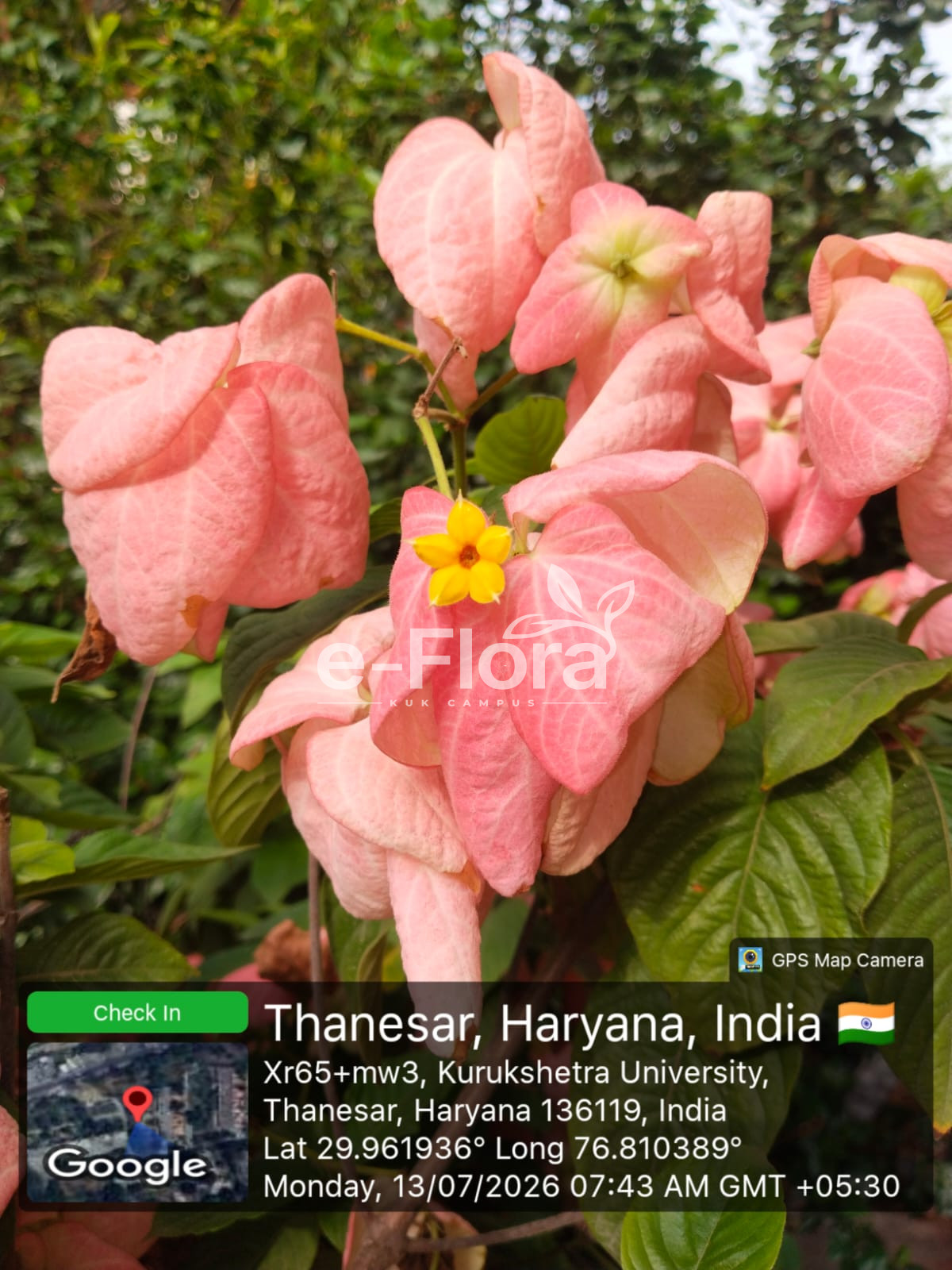
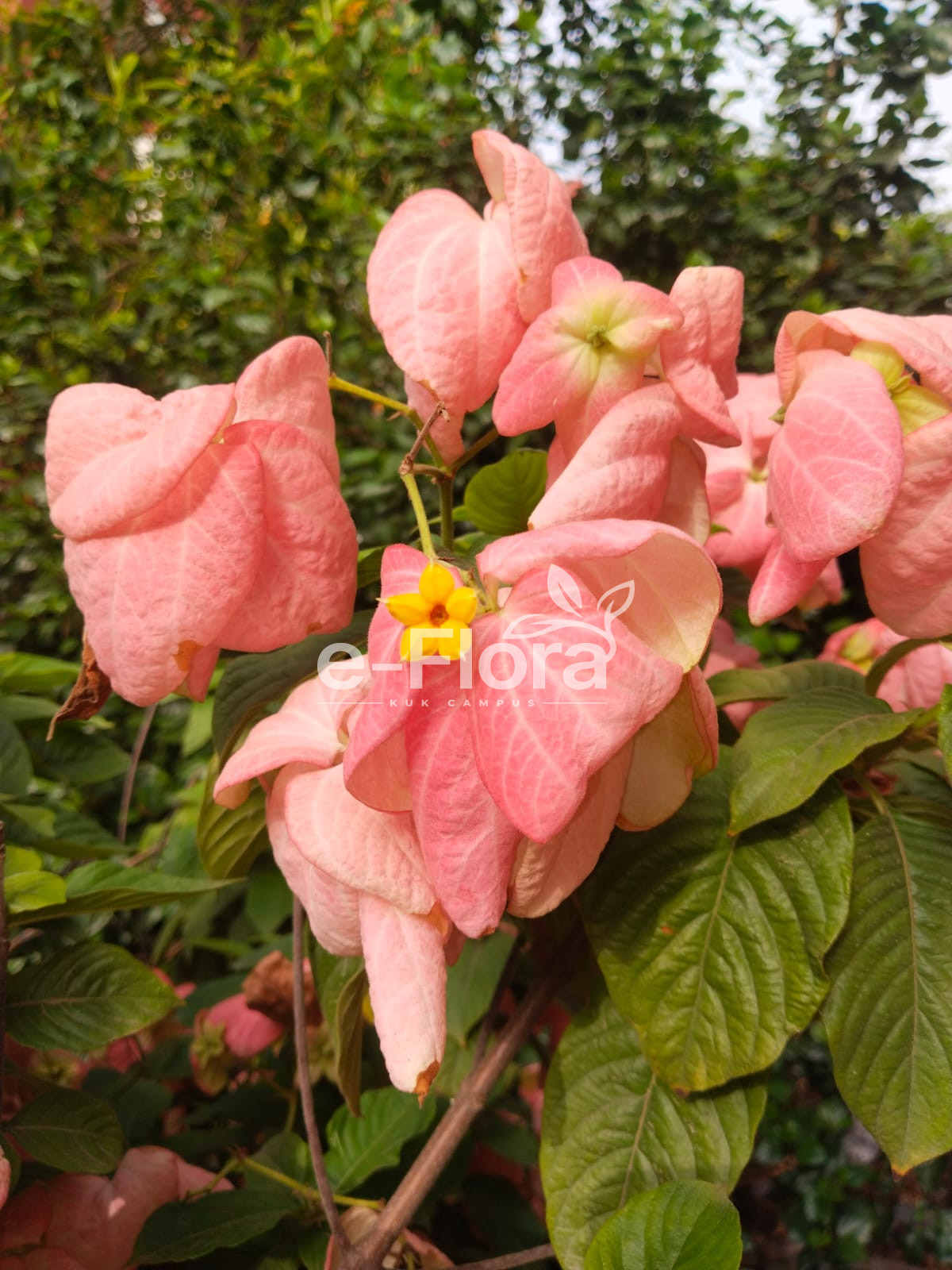
Flowers: Small, yellow to orange-yellow, tubular, borne in terminal cymose clusters; calyx 5-lobed with one sepal enlarged into a conspicuous white, pink, or red petaloid bract; corolla 5-lobed; stamens 5; ovary inferior, bicarpellary.
Fruit: Small globose berry, rarely produced in cultivated ornamental forms.
Uses:
- Herbal decoction of matured white sepals and roots are used to treat jaundice.
- Traditional medicines uses extracts of bark to treat dysentery, relieve stomach other and manage other minor stomach ailments.
- Decoction of leaves and roots are used to soothe congestion, chest and lung ailments.
- Folk remedies uses plant as an antidote for snake bite and in combination with other plants to treat influenza.
- Tropical application of crushed leaves as emollient soothes skin irritation and heals wounds.
- Plant contains flavonoids, terepenoids, glycosides, phenolics, saponins, steroids, tannins and fixed oil that collectively contribute to antioxidant, antimicrobial, anticonvulsant, antiulcer and hepatoprotective properties.
- Widely cultivated as an ornamental shrub for its colourful petaloid sepals and long flowering season. Commonly planted in gardens, parks, and hedges, attracting butterflies and other pollinators. Primarily valued for landscaping, with limited traditional medicinal use.