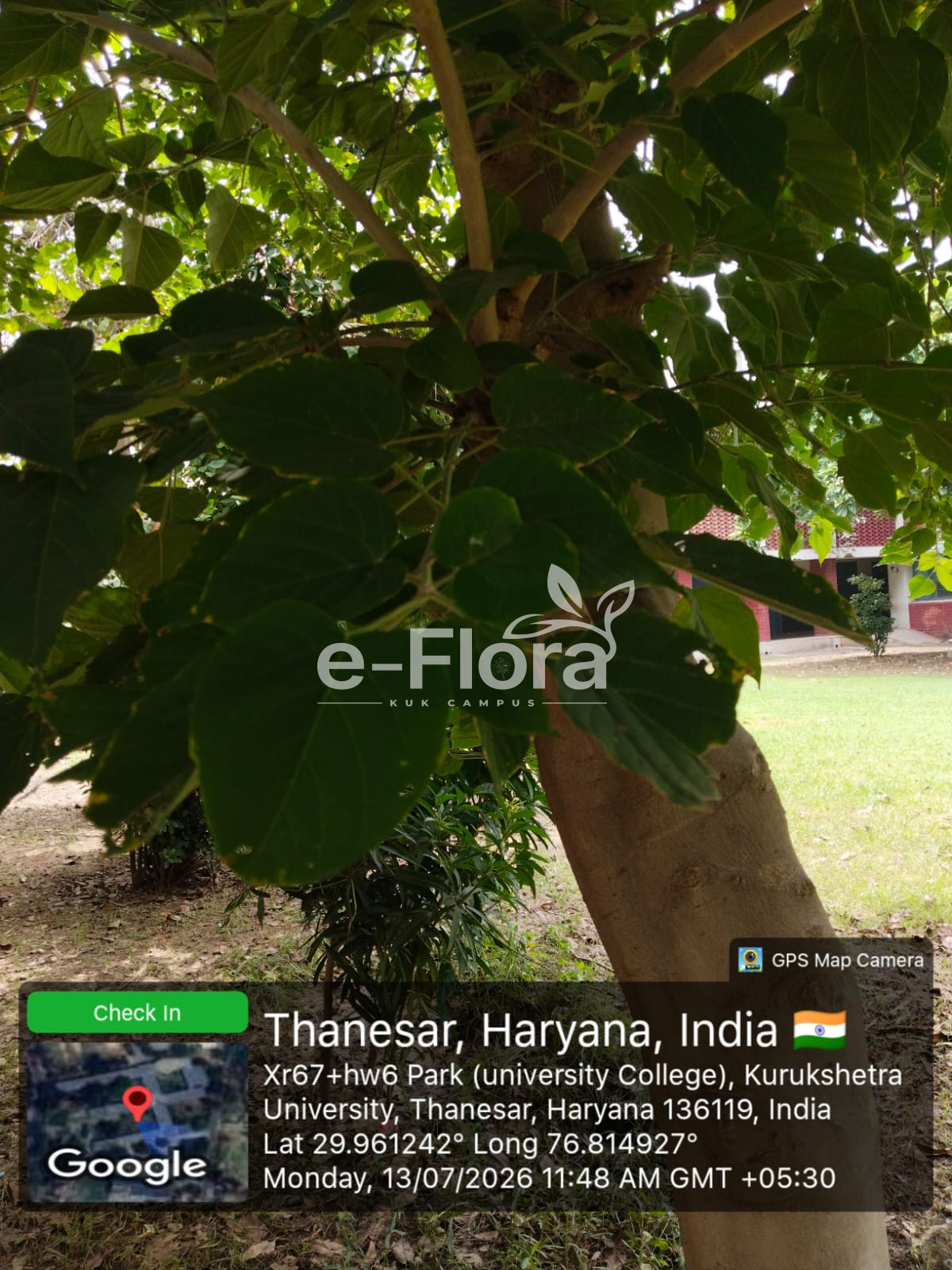
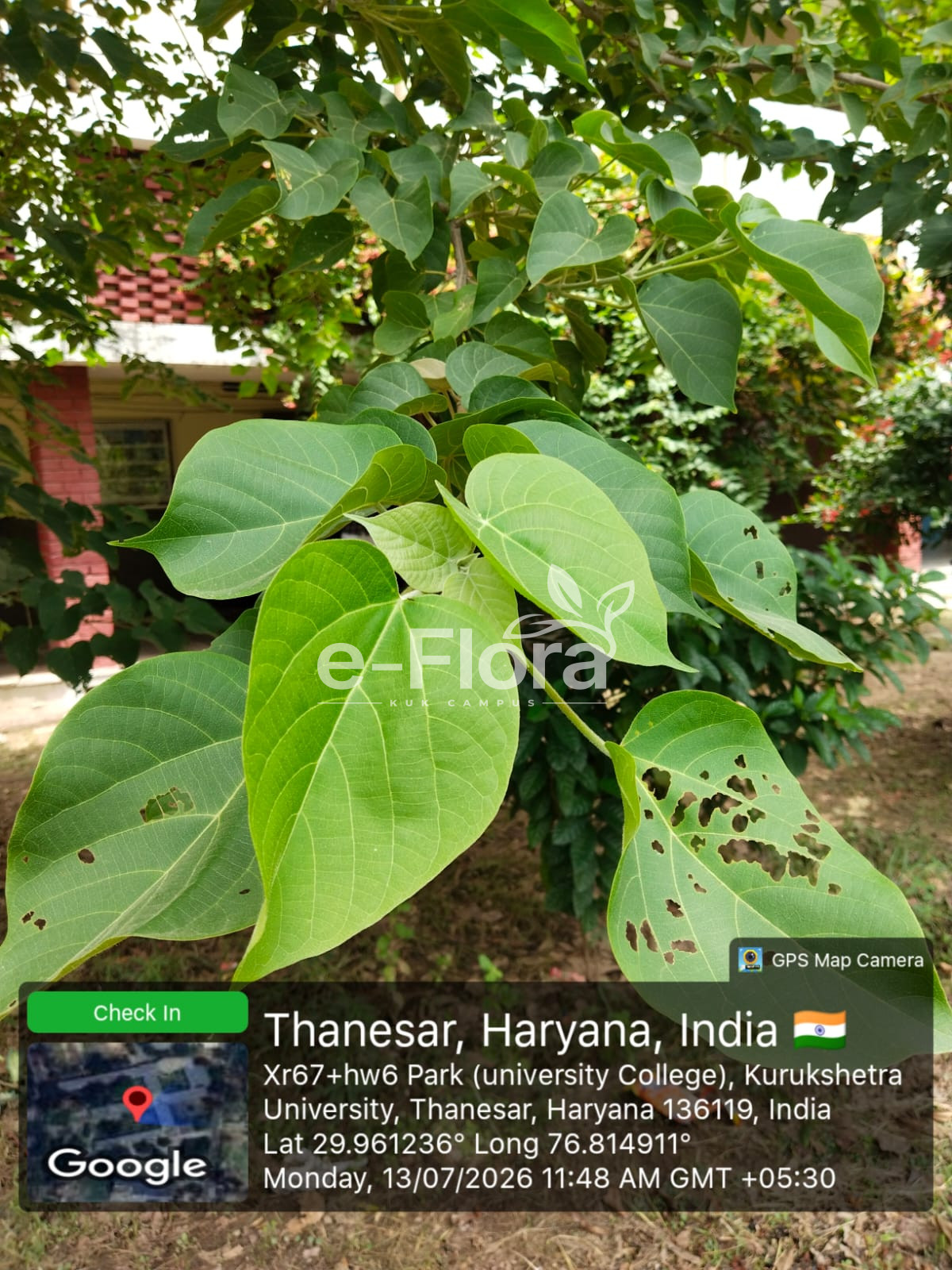
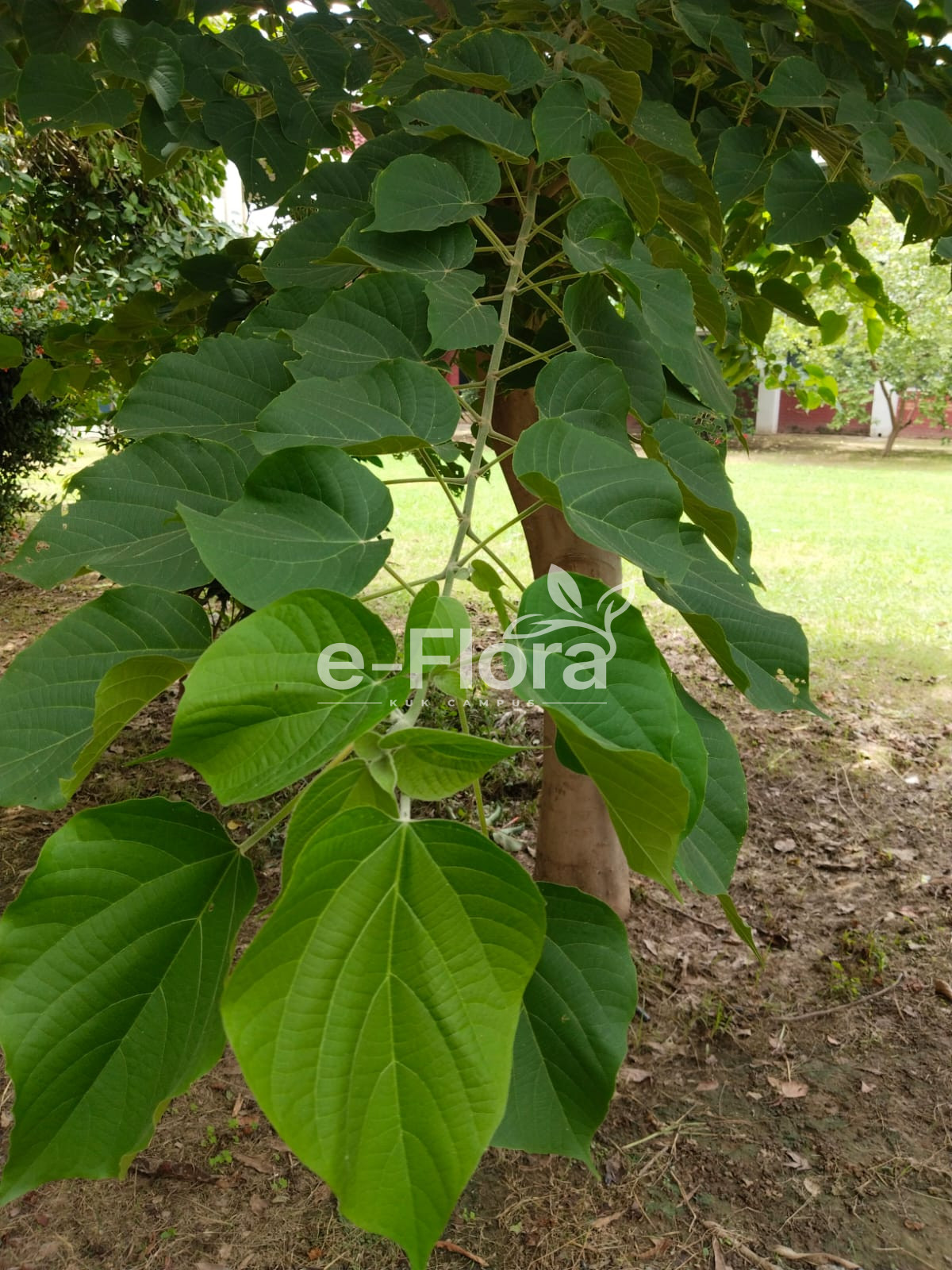
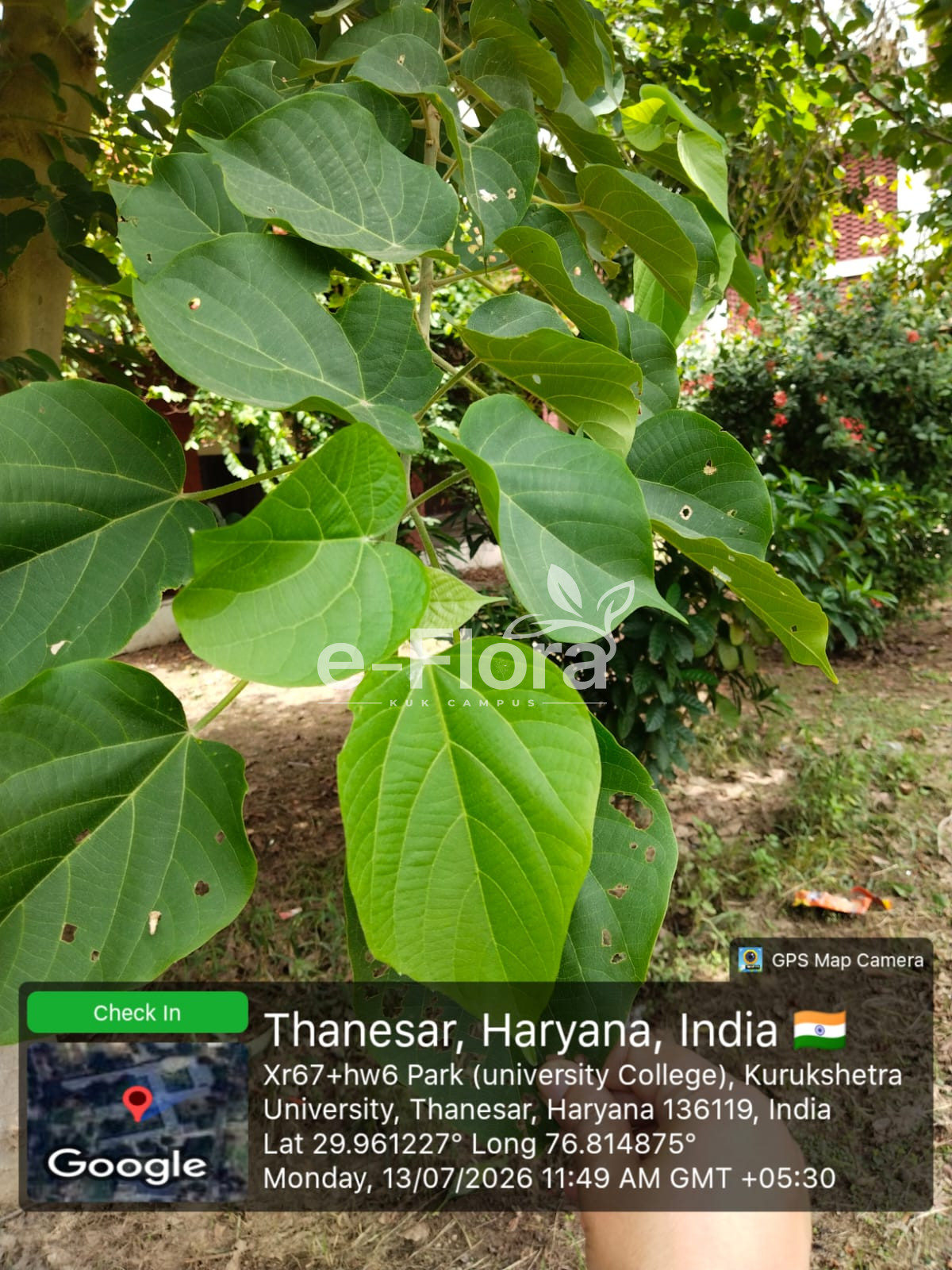
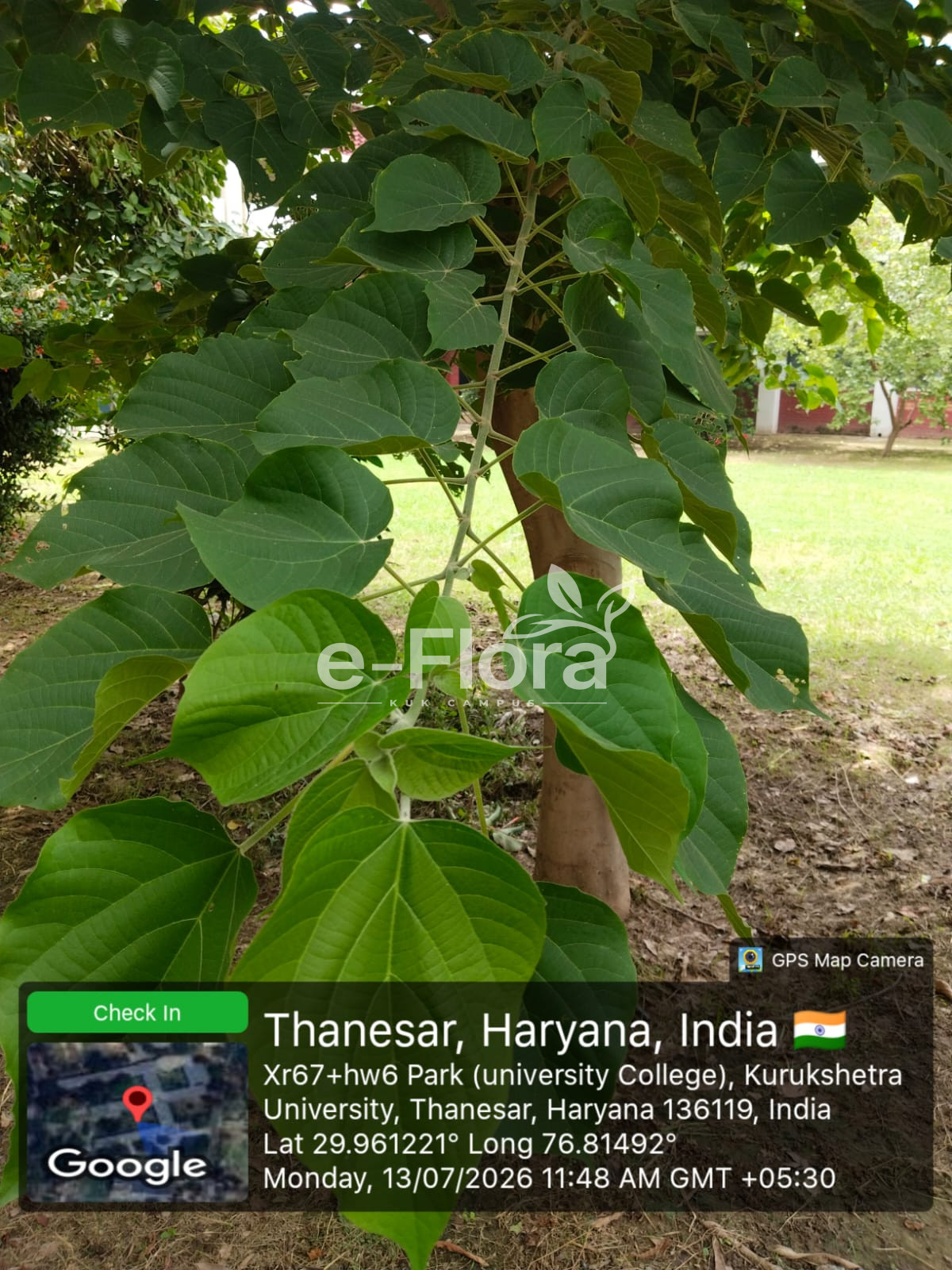
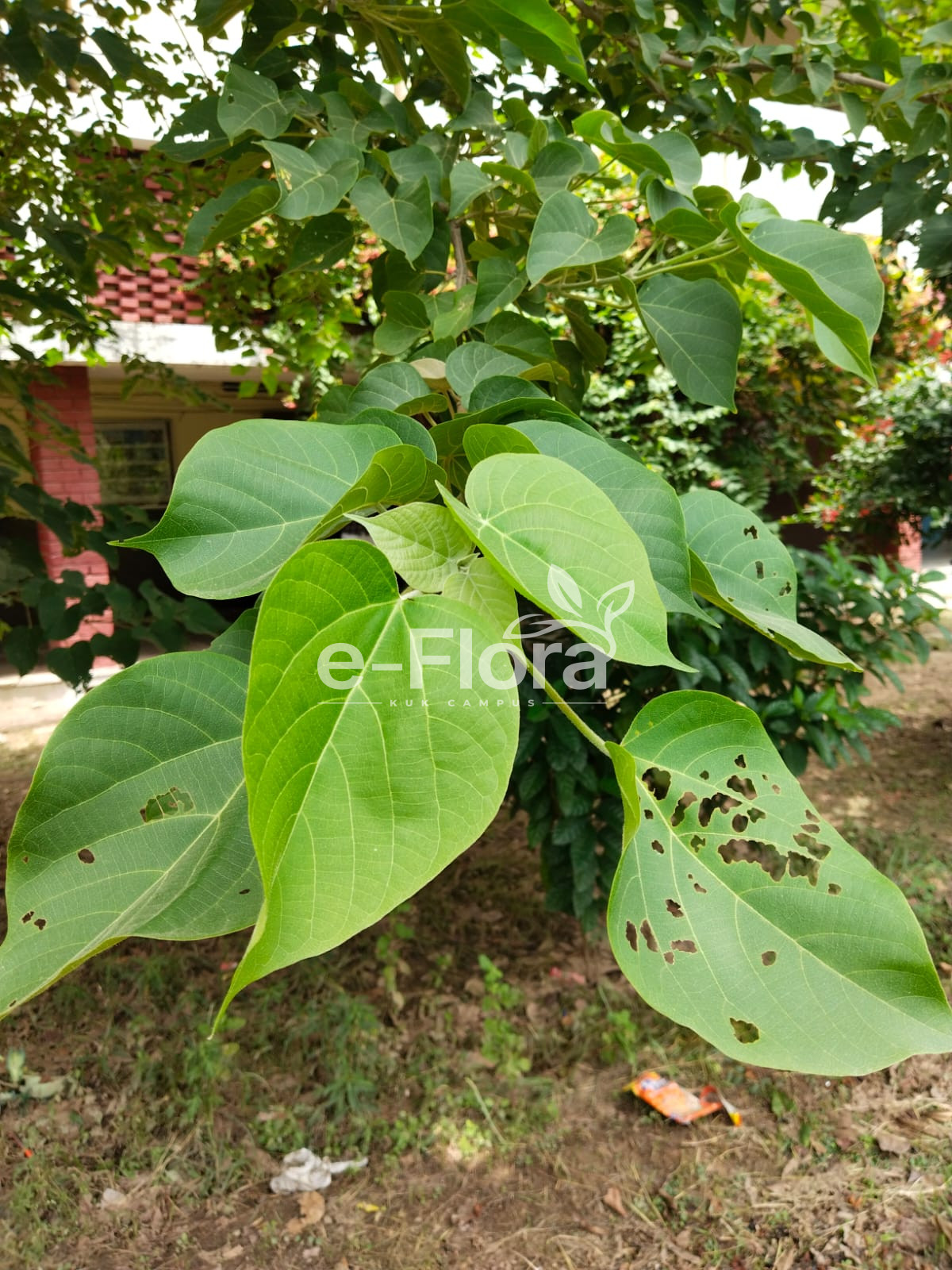
Gmelina arborea Roxb.
Vernacular name: Gamhar, White Teak (Hindi: गम्हार, गम्भारी)
Species Name: Gmelina arborea Roxb.
Family: Lamiaceae
Habit: Fast-growing deciduous tree.
Stem: Straight trunk 12–30 m tall; bark grey to pale brown, smooth to corky, exfoliating in thin scales.
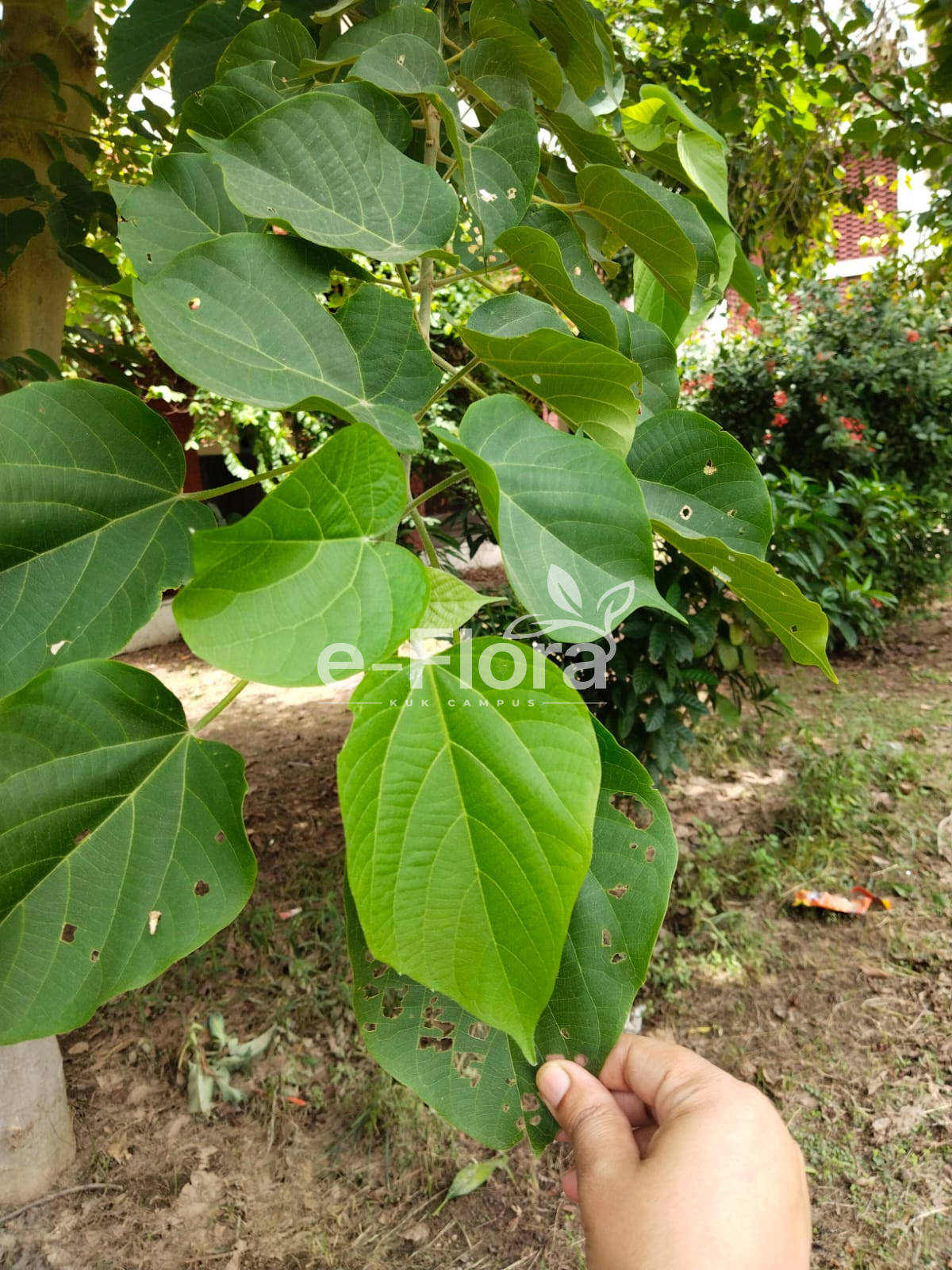
Leaf: Opposite, broadly ovate to cordate, 10–25 × 8–20 cm, entire to shallowly lobed, pubescent beneath, long-petiolate.
Flowering: Spring–early summer (February–April).
Flowers: Large, yellow with brown or purple markings, borne in terminal cymose panicles; calyx campanulate, 5-lobed; corolla bilabiate; stamens 4, didynamous; ovary superior, bicarpellary.
Fruit: Ovoid to ellipsoid drupe, 2–3.5 cm long, green turning yellow at maturity, enclosing a hard stony endocarp.
Uses:
- Bark, roots, fruits, and leaves are important in Ayurveda, particularly as one of the constituents of Dashamoola used to treat fevers, nerve pain and digestive issues as they have laxative and diuretic properties.
- Leaves are crushed to make a paste which on external application can soothe headache and relieve fever.
- Fruits are used as a rejuvenating tonic (Rasayana), a cure for general weakness and to nourish hair and alleviate thirst.
- Gamhar has powerful anti-inflammatory, antibiotic, anti-asthmatic and analgesic properties that helps in treatment of ailments like muscle pain, joint swelling, rheumatoid arthritis and osteoarthritis
- Gamhar is also a good antioxidant and can help in treatment of hypospermia, erectile dysfunction, asthenozoospermia, premature ejaculation, oligospermia, teratospermia and enhancing spermatogenesis. Plant can also help with boosting production of testosterone and luteinizing hormones.
- Plant also help in reducing deposition of phlegm in chest and nasal cavities and relieve cold, sough, sore throat and flu symptoms.
- A valuable timber tree producing lightweight, durable and strong wood used for furniture, plywood, carvings, musical instruments, paper pulp, matchsticks and construction. Wood is a good source of fuel and charcoal.
- Fruits and wood ash are processed to yield a yellow colour dye.
- Leaves are used as fodder for livestock and also a host of silkworms.
- The tree is also widely planted in agroforestry, avenue plantations, and reforestation programmes.