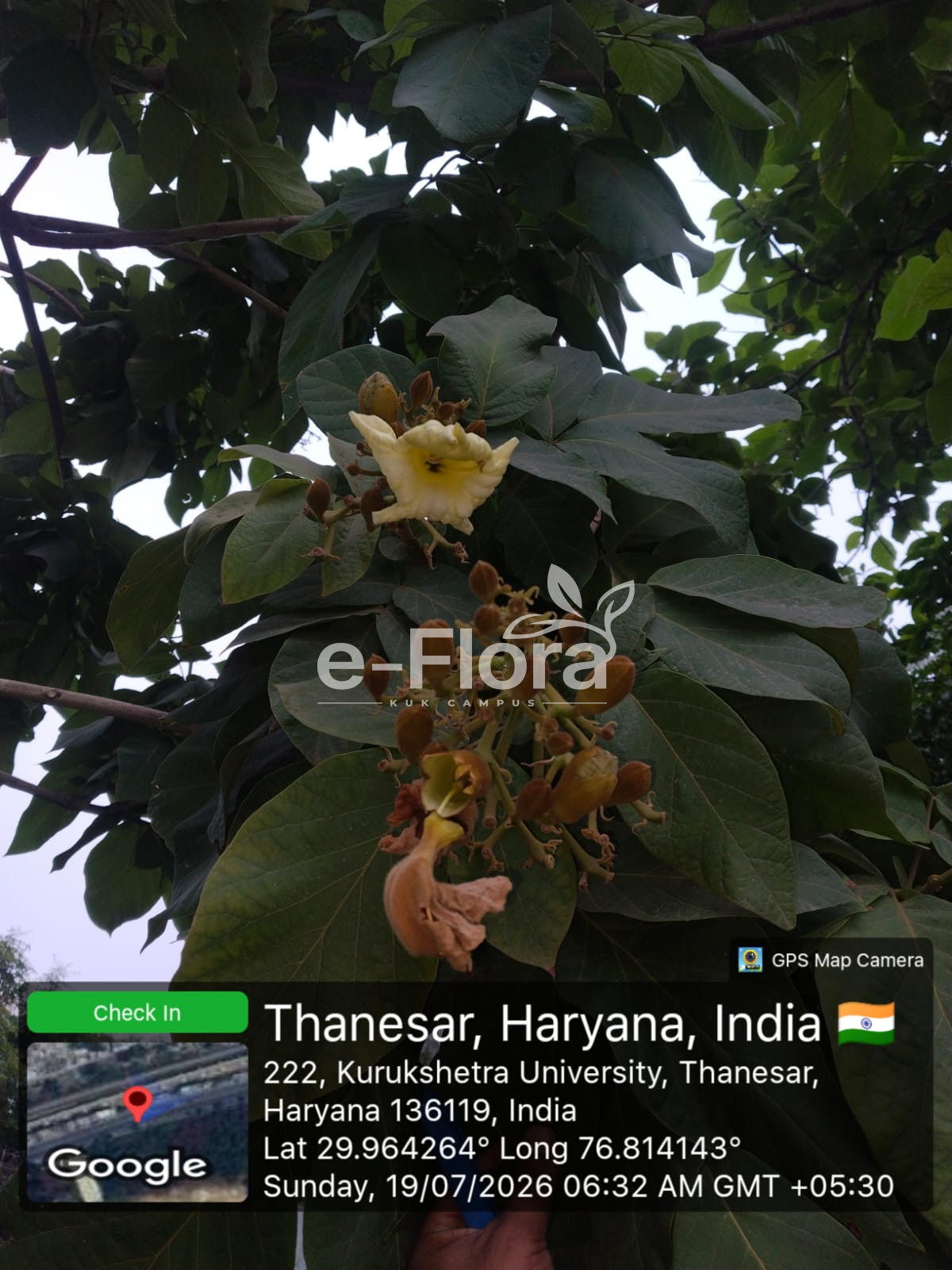
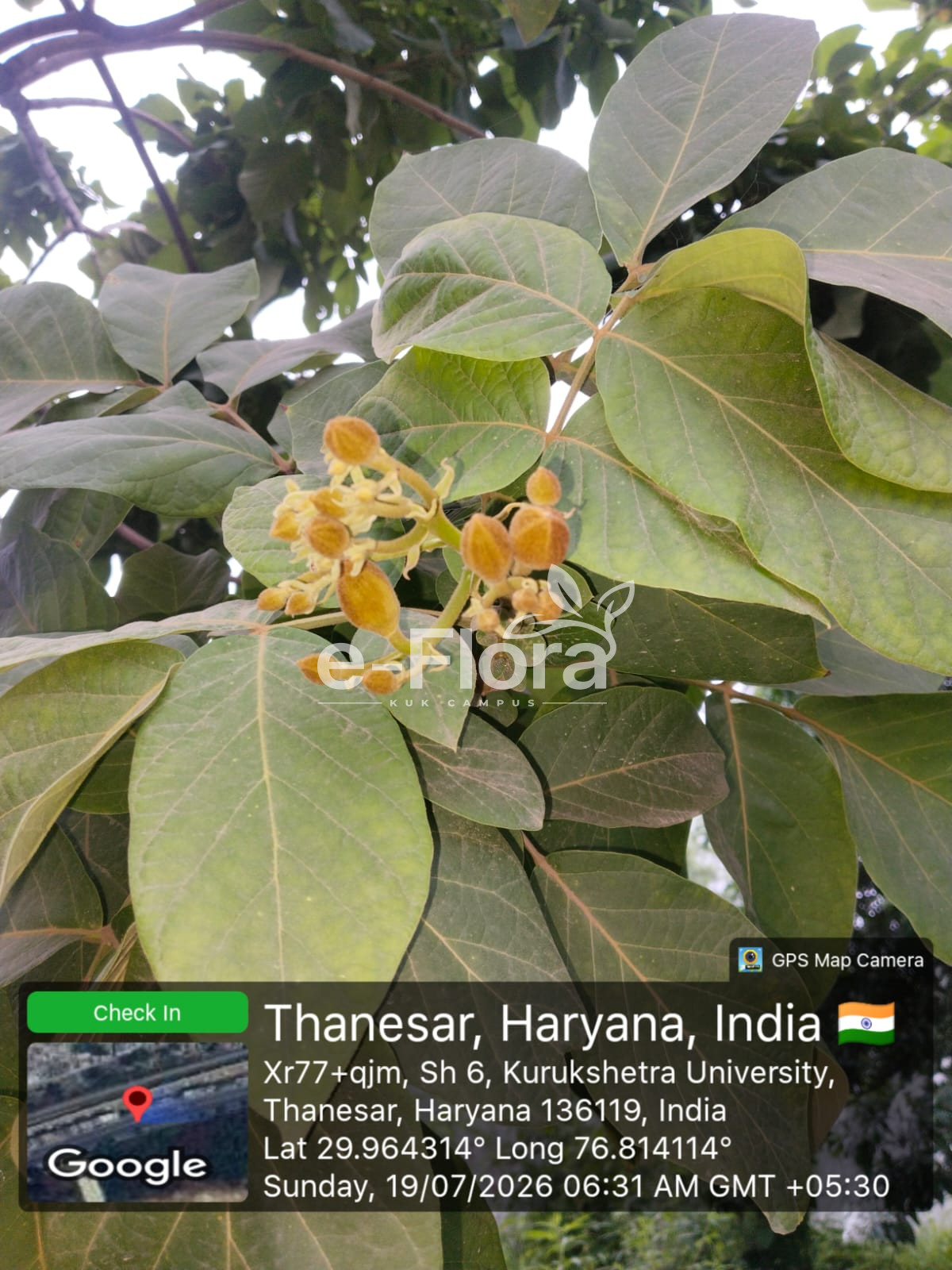
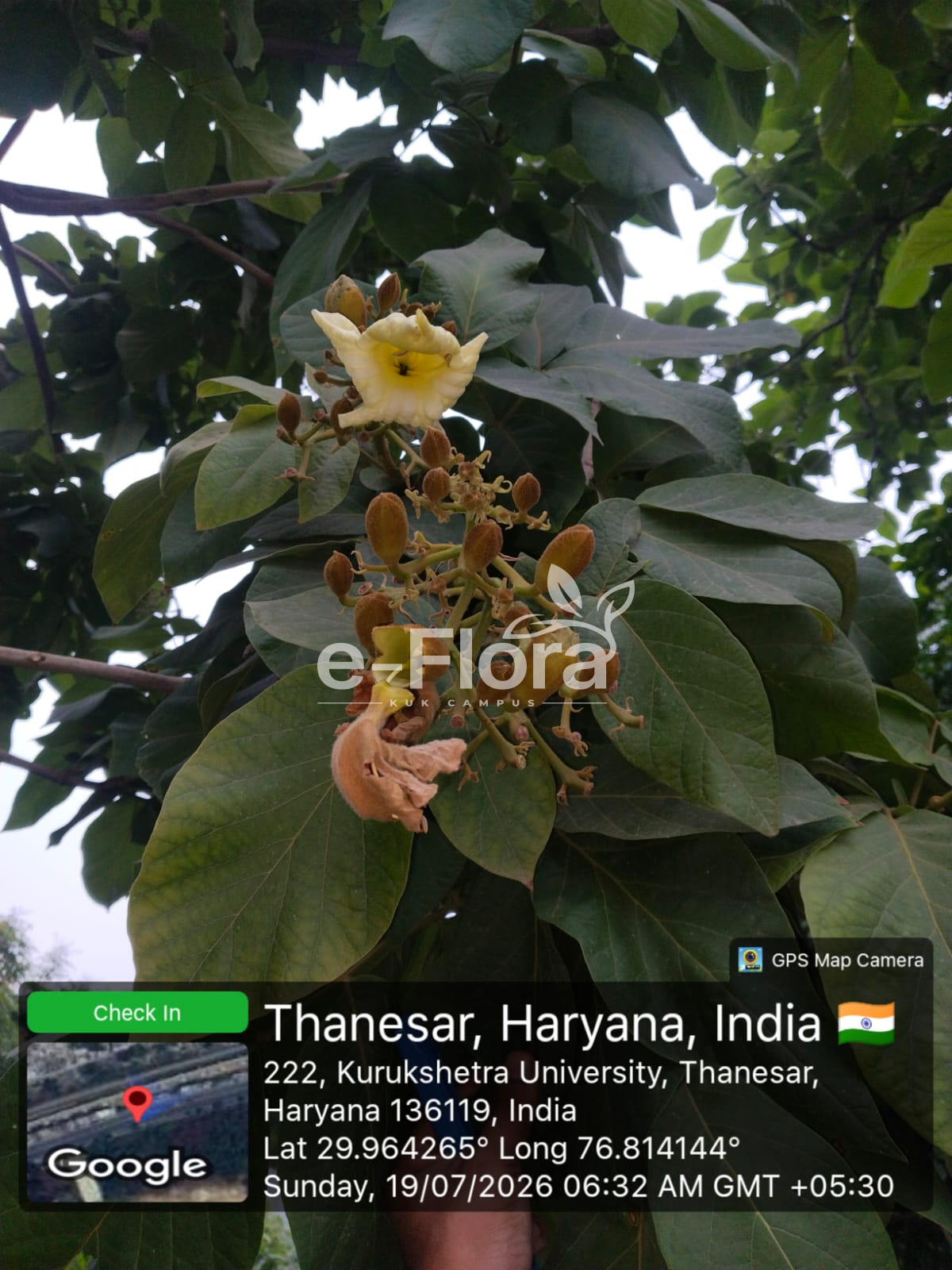
Fernandoa adenophylla (Wall. ex G.Don) Steenis
Vernacular name: Fernandoa, Yellow Trumpet Tree, Karen wood
Species Name: Fernandoa adenophylla (Wall. ex G.Don) Steenis
Family: Bignoniaceae
Habit: Deciduous tree.
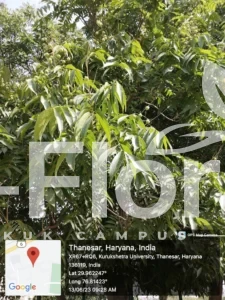
Stem: Medium to large tree, 15–30 m tall; trunk straight; bark grey to brown, rough and longitudinally fissured.
Leaf: Opposite, imparipinnate, 20–50 cm long; leaflets 5–9, ovate to elliptic, entire, glabrous to sparsely pubescent, shortly petiolulate.
Flowering: Spring–early summer.
Flowers: Large, pale yellow to creamy-yellow, tubular-campanulate, borne in terminal panicles; calyx campanulate, 5-lobed; corolla 5-lobed; stamens 4, didynamous; ovary superior, bicarpellary.
Fruit: Long, slender, cylindrical capsule, 30–70 cm long, dehiscent; seeds numerous, flat and broadly winged.
Uses:
- Local communities of Assam, India uses the root extracts and decoctions to treat snakebites.
- Roots and aerial parts of plant is used by tribal groups of Bangladesh to treat constipation and hemorrhoids.
- Tropical application of leaf extracts and poultice is used to mange skin infections in traditional Thai medicines.
- To relieve muscle tension and cramps, extracts of different parts of plant is mixed with massage oil.
- Extracts of plant is used in folk practices to treat sepsis, diabetes and reproductive health ailments.
- Crude extracts of plant is found to have antimicrobial, antifungal, antihypertensive, anti-tuberculosis and leishmanicidal properties, making it valuable for pharmaceutical industry.
- Planted as an ornamental and avenue tree for its attractive yellow flowers.
- Wood is moderately hard but flexible and used for furniture, plywood, interior construction, bows and as general timber.
- Fresh flowers are edible as raw and cooked while fruits are needed to be cooked.
- It is also planted in reforestation and agroforestry programmes.