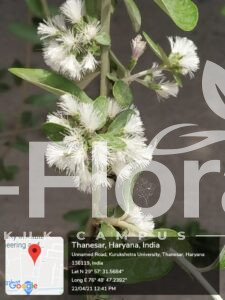

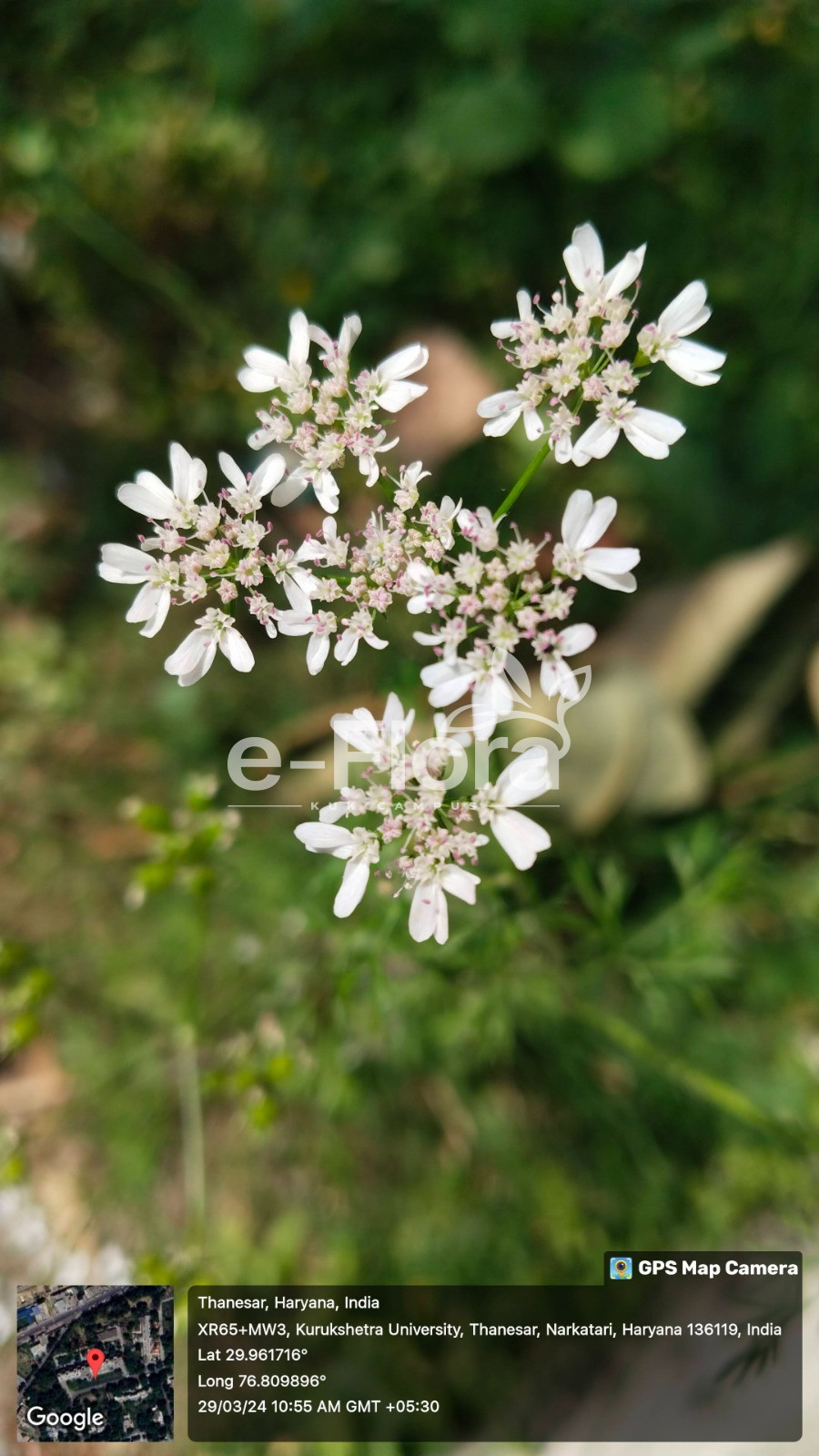
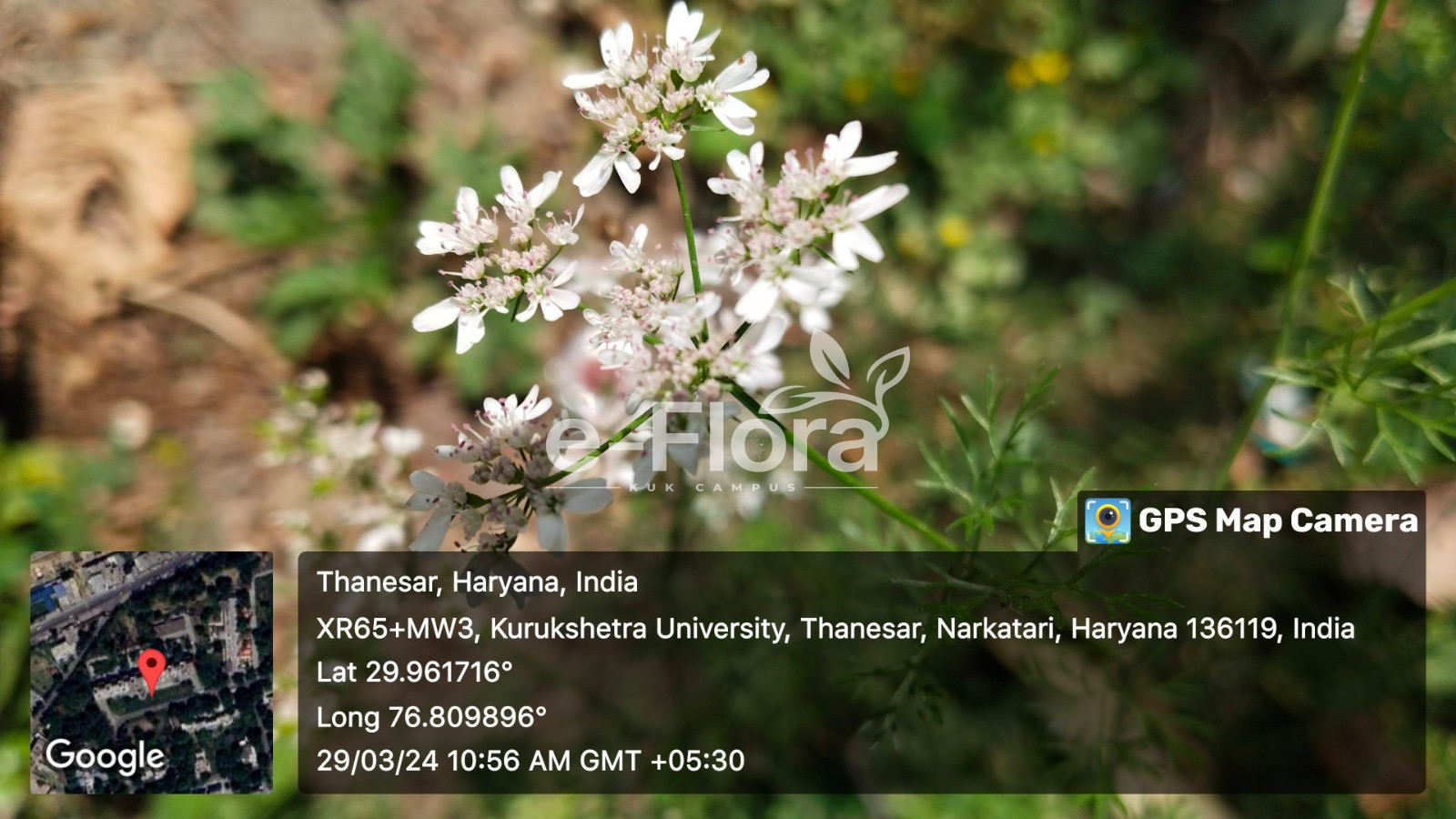
Coriandrum sativum L.
Vernacular name: Coriander, Cilantro (Hindi: धनिया)
Species Name: Coriandrum sativum L.
Family: Apiaceae
Habit: Annual aromatic herb.
Stem: Erect, slender, branched, glabrous, 20–70 cm tall, striate.
Leaf: Alternate; lower leaves broadly lobed and petiolate, upper leaves 2–3-pinnately divided into narrow linear segments, glabrous.
Flowering: Winter–spring.
Flowers: Small, white to pinkish, arranged in compound umbels; petals 5, outer petals often enlarged; stamens 5; ovary inferior, bicarpellary.
Fruit: Globose cremocarp, 3–5 mm diameter, yellowish-brown, splitting into two aromatic mericarps.
Uses:
- The plant is valued in traditional medicine as a digestive, carminative, antioxidant, and antimicrobial herb.
- It gives digestive support by easing bloating, indigestion, gas and stomach spasms.
- Coriander helps in regulating blood glucose levels by stimulating the secretion of insulin and also manage blood pressure.
- Cilantro has diuretic properties that helps to soothe urinary tract discomfort.
- Extracts of seeds have antispasmodic property.
- Coriander contains linoleic acid and cineole that helps to reduce skin inflammations and also relieve rheumatic and arthritis pain.
- Dhaniya has strong antiseptic property due to the presence of citronellol and help to treat mouth ulcers and prevent bad breath.
- Coriander is very rich source of calcium and help with bone regrowth and durability. It is also a good source of iron and help with anemia. It also contains Vitamin A, C and K, carotene, folic acid, riboflavin and niacin.
- Fresh leaves are widely used as a culinary herb in soup, salads, pestos, chutneys, for garnishing many dishes, while the dried fruits (coriander seeds) are an important spice that can be powdered or used as whole.
- Coriander essential oil is also used in the food, beverages, pharmaceutical and cosmetic industries