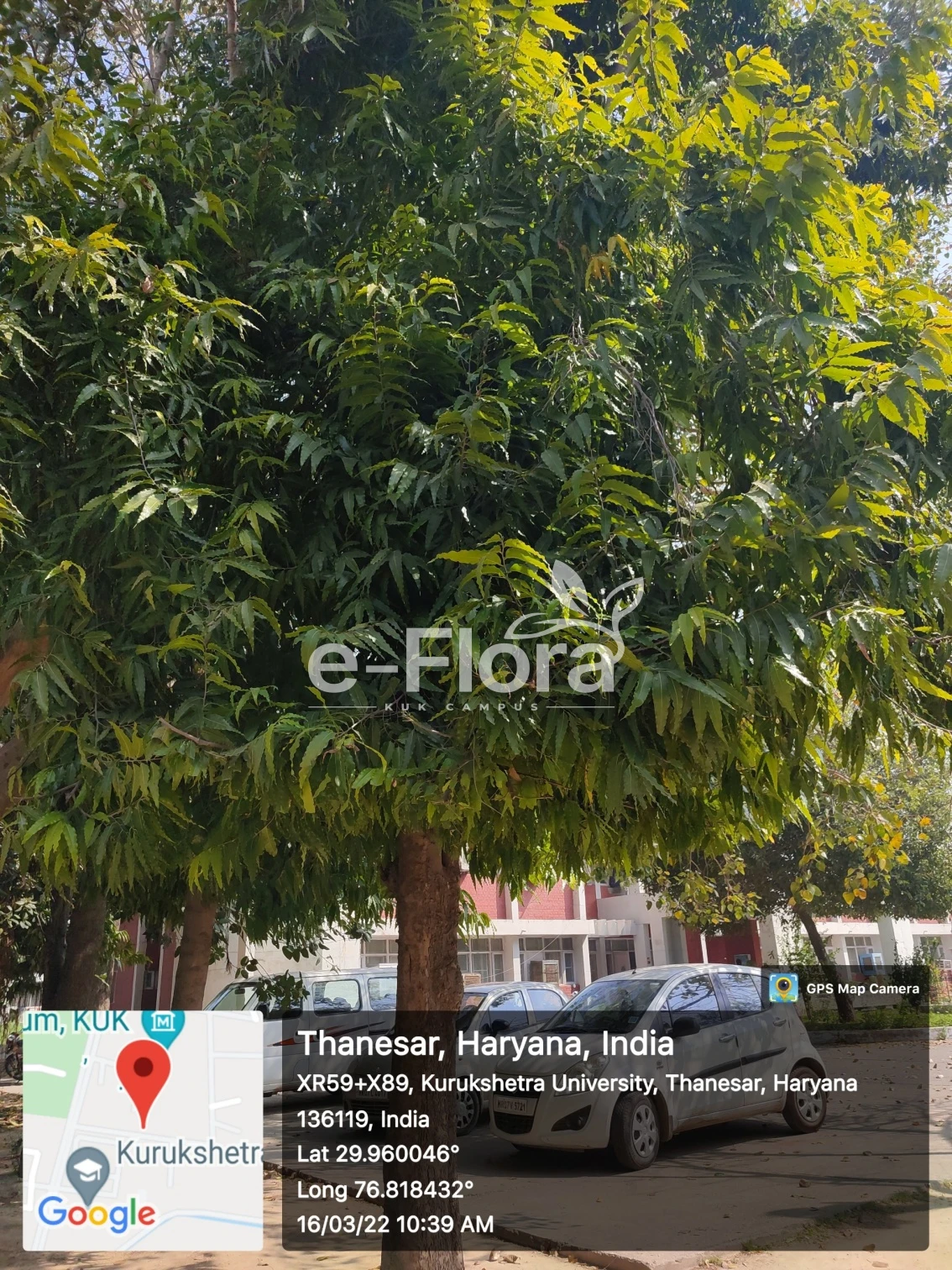
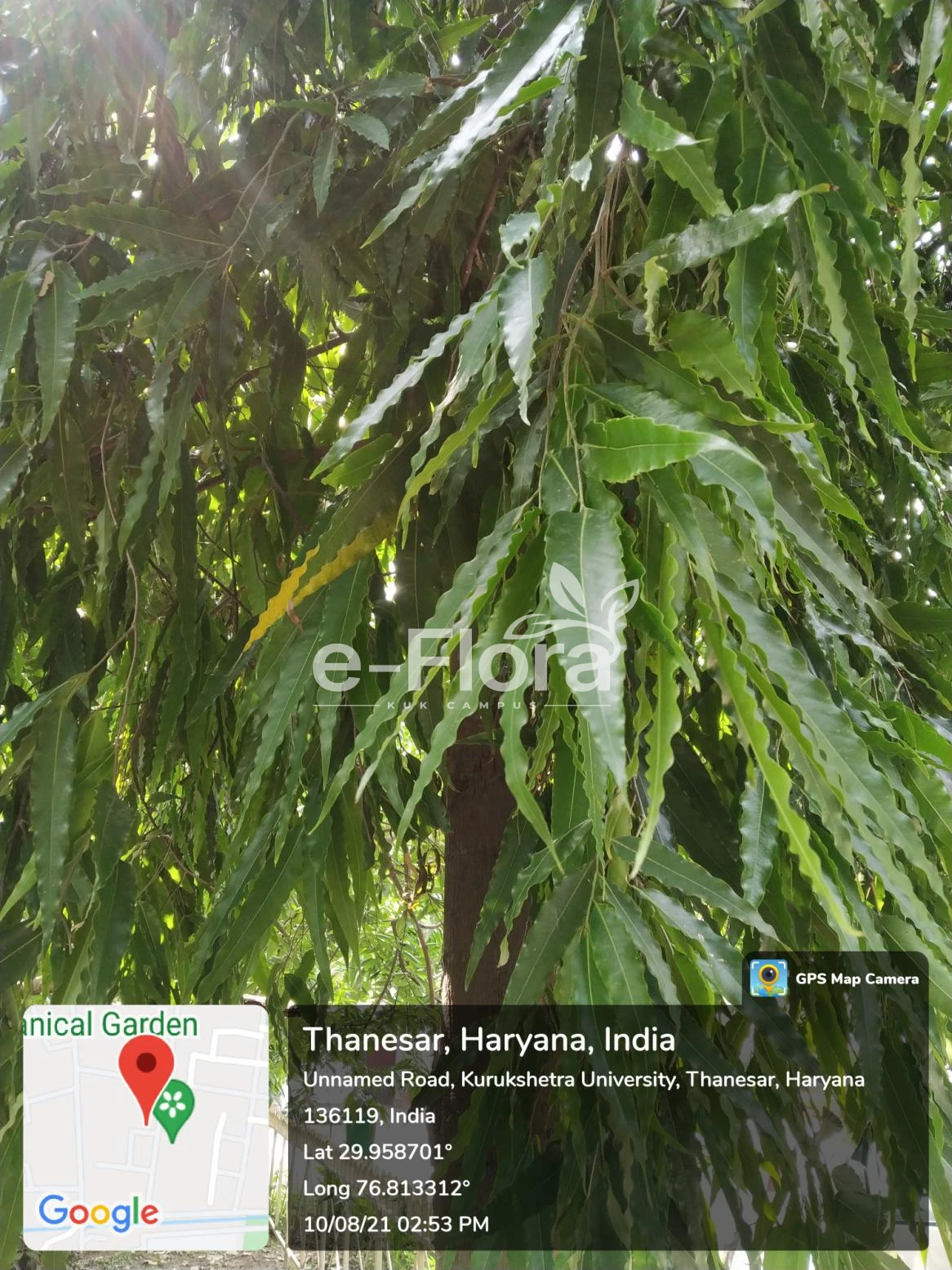
Monoon longifolium (Sonn.) B.Xue & R.M.K.Saunders
Vernacular name: Indian mast tree, False Ashoka (Hindi: देवदारु)
Species Name: Monoon longifolium (Sonn.) B.Xue & R.M.K. Saunders
Family: Annonaceae
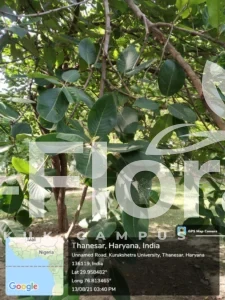
Habit: Evergreen columnar tree
Stem: Straight slender trunk 10-20 m tall, grey smooth bark, drooping branches forming narrow crown.
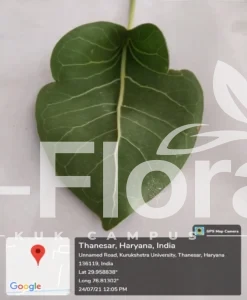
Leaf: Lanceolate wavy-margined 10-30×3-7 cm, glossy green (bronze when young), dense spiral aarrangement.
Flowering: Spring (Feb-Apr)
Flowers: Leaf-opposed fascicles; sepals 3 triangular reflexed, 6 yellowish-green petals linear-oblong valvate 1-2 cm (outer shorter), numerous cuneate stamens (anthers with dilated connectives), many free carpels 1-2 ovulate.
Fruit: Stalked ovoid berries in clusters, ripening black, 1 large seed each.
Uses:
- Avenue ornamental (columnar habit) plant used for hedges, formal garden and privacy screens as it acts as a natural buffer to alleviate urban noise and wind pollution.
- In South Asia, tree is sacred and leaves are used for making garlands in wedding and toran for decorations during festivals especially Diwali.
- Straight, flexible timber of plant is used for manufacturing sailing ship masts, pencils, boxes and matchsticks..
- Plant has antidiabetic, antiulcer, antimicrobial, antioxidant, hepatoprotective and emetic properties.
- Extracts are used as febrifuge, to manage skin diseases and blood pressure and effective against malarial parasites.
- “Ashoka-like” sacred tree and is ayurvedic pitta remedy.