
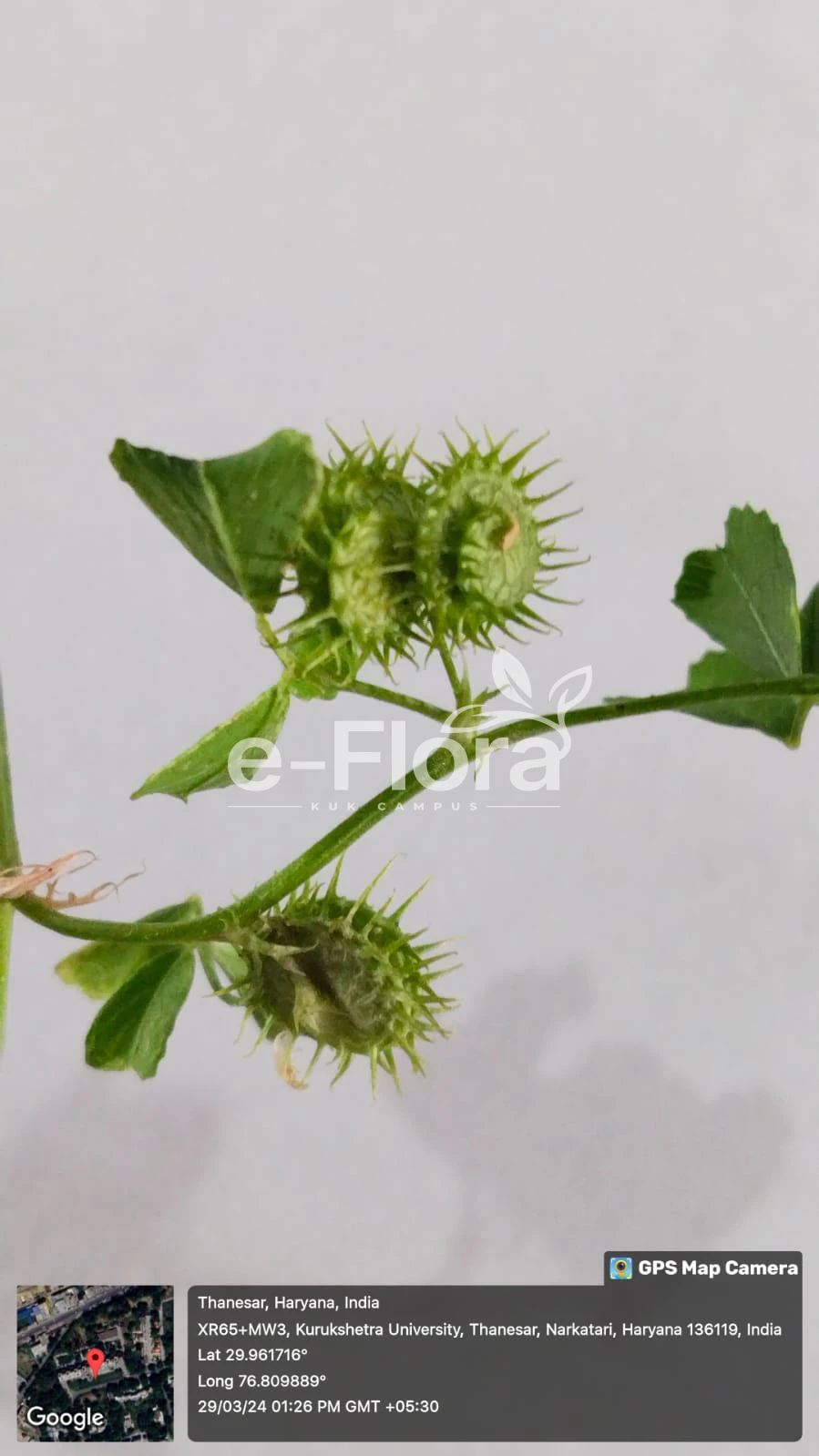
Medicago polymorpha L.
Vernacular name: Burr medic, Toothed medic (Hindi: बुर मेडिक)
Species Name: Medicago polymorpha L.
Family: Fabaceae
Habit: Annual prostrate herb
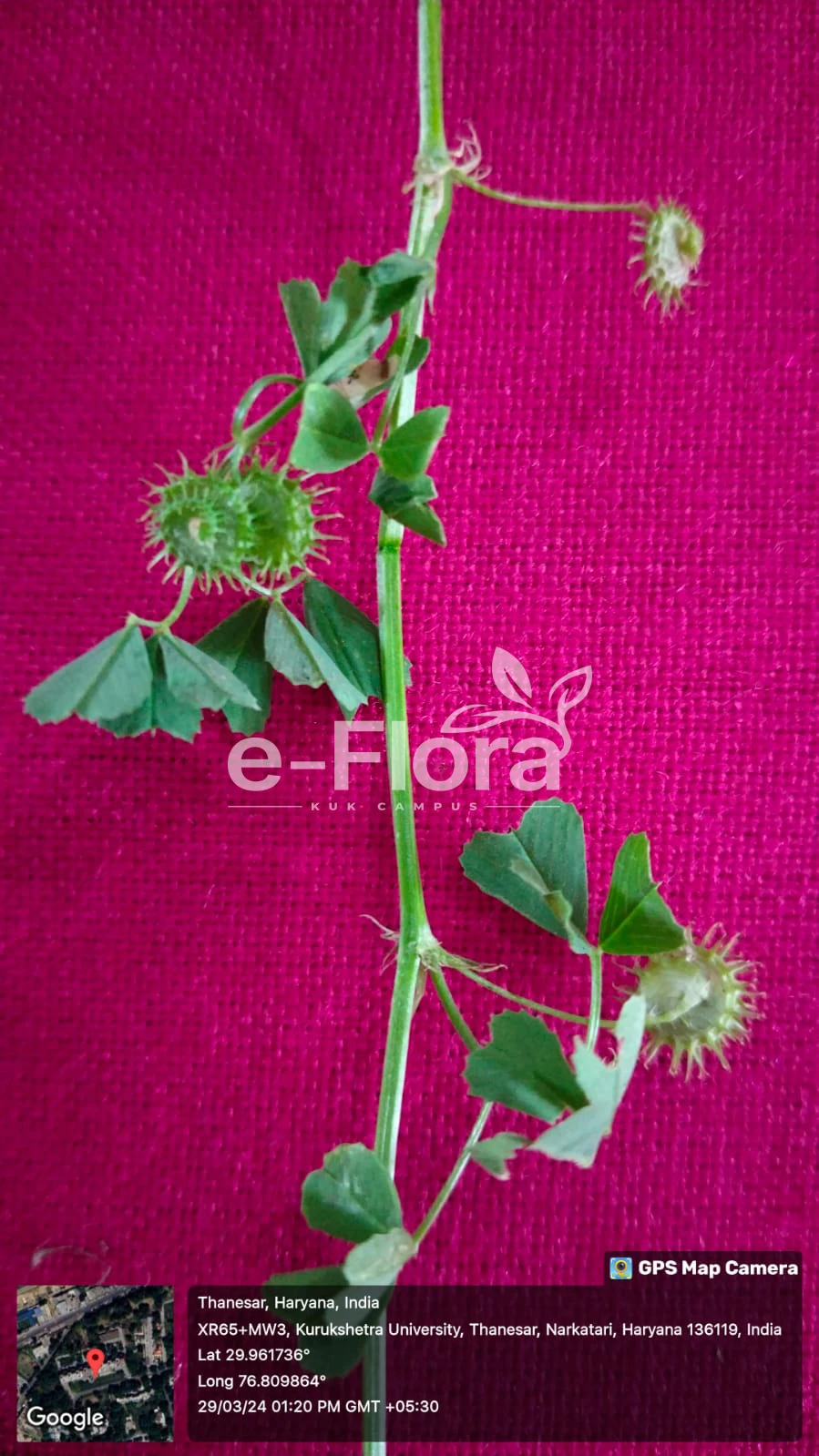
Stem: Trailing branched 20-90 cm, glabrous to hairy.
Leaf: Trifoliate alternate; leaflets obovate 5-20×3-15 mm, dentate apex, purple blotch near tip.Flowering: Spring-summer
Flowers: Axillary umbel-like racemes 5-30-flowered; calyx 5 teeth, 5 yellow corolla (standard 4-6 mm, wings/keel shorter), 10 diadelphous stamens (anthers uniform), superior 1-locular ovary.
Fruit: Coiled spiral legume 5-20×3-10 mm, 3-7 turns, spiny/reticulate, brown 10-30 seeds.
Uses:
- It is a legume that fixes atmospheric nitrogen and improve soil fertility.
- It acts a living mulch and helps with prevention of soil erosion and stabilize soil. Though its deep tap roots breaks soil compaction.
- Edible young leaves and shoots can be used as vegetable to cook potherb or can be eaten raw due to its hight nutrient value as its rich in vitamin A, C and E
- It is a high protein livestock fodder but prickly burrs can cause wool contamination and is unsuitable for horses.
- It is an Ancient Mediterranean fodder and an invasive self-seeding pasture.
- Plant has some medicinal propertries owing to its organic compositions.