Physalis angulata L.
Vernacular name: Cutleaf Groundcherry, Wild Cape Gooseberry (Hindi: चिरपोटी, रसभरी)
Species Name: Physalis angulata L.
Family: Solanaceae
Habit: Annual herb.
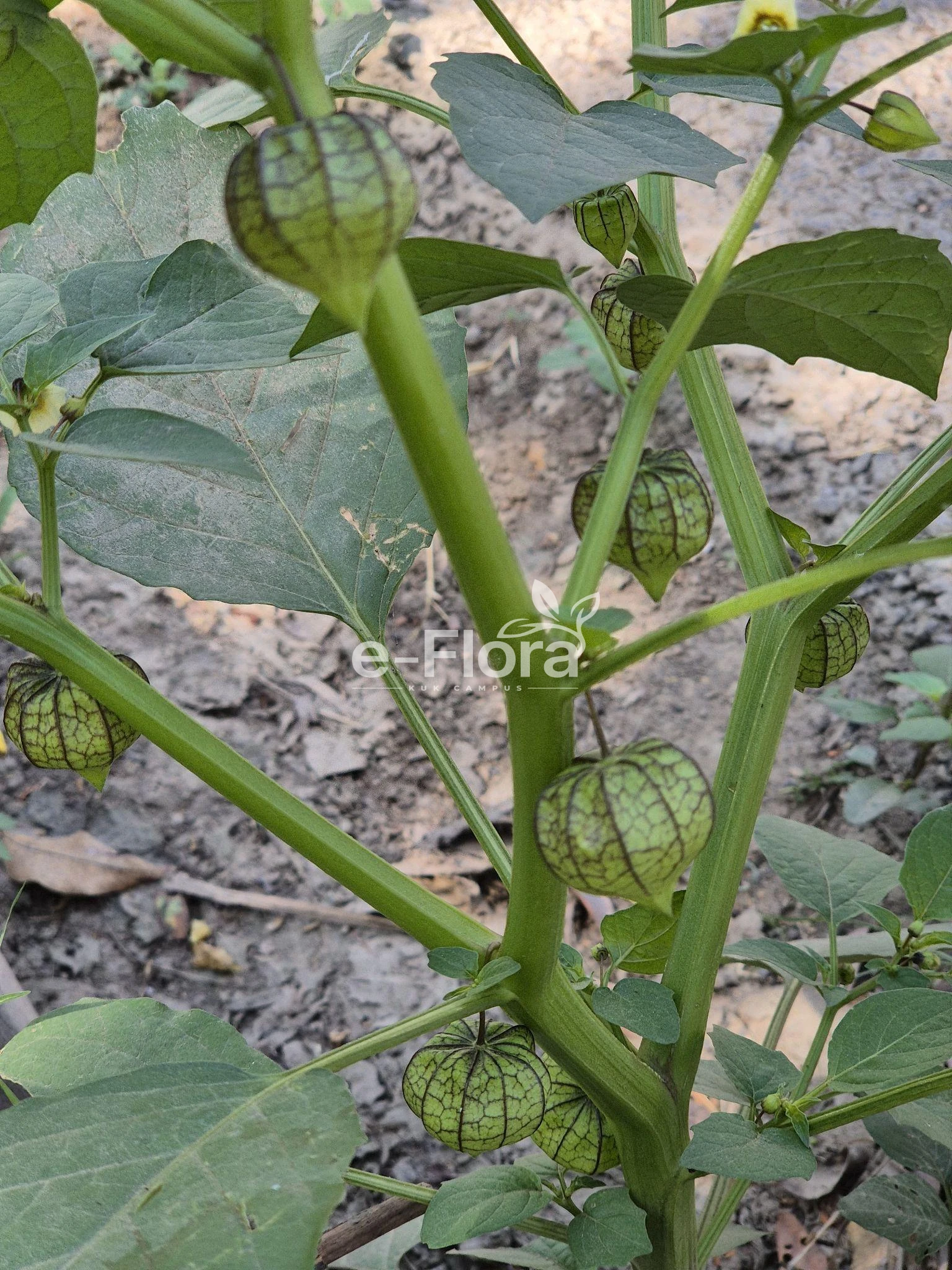
Stem: Erect, branched, angular, glabrous to sparsely pubescent, 30–100 cm tall.
Leaf: Alternate, ovate to broadly ovate, 4–12 × 2–8 cm, entire to sinuately toothed, petiolate.
Flowering: Throughout the warm season.
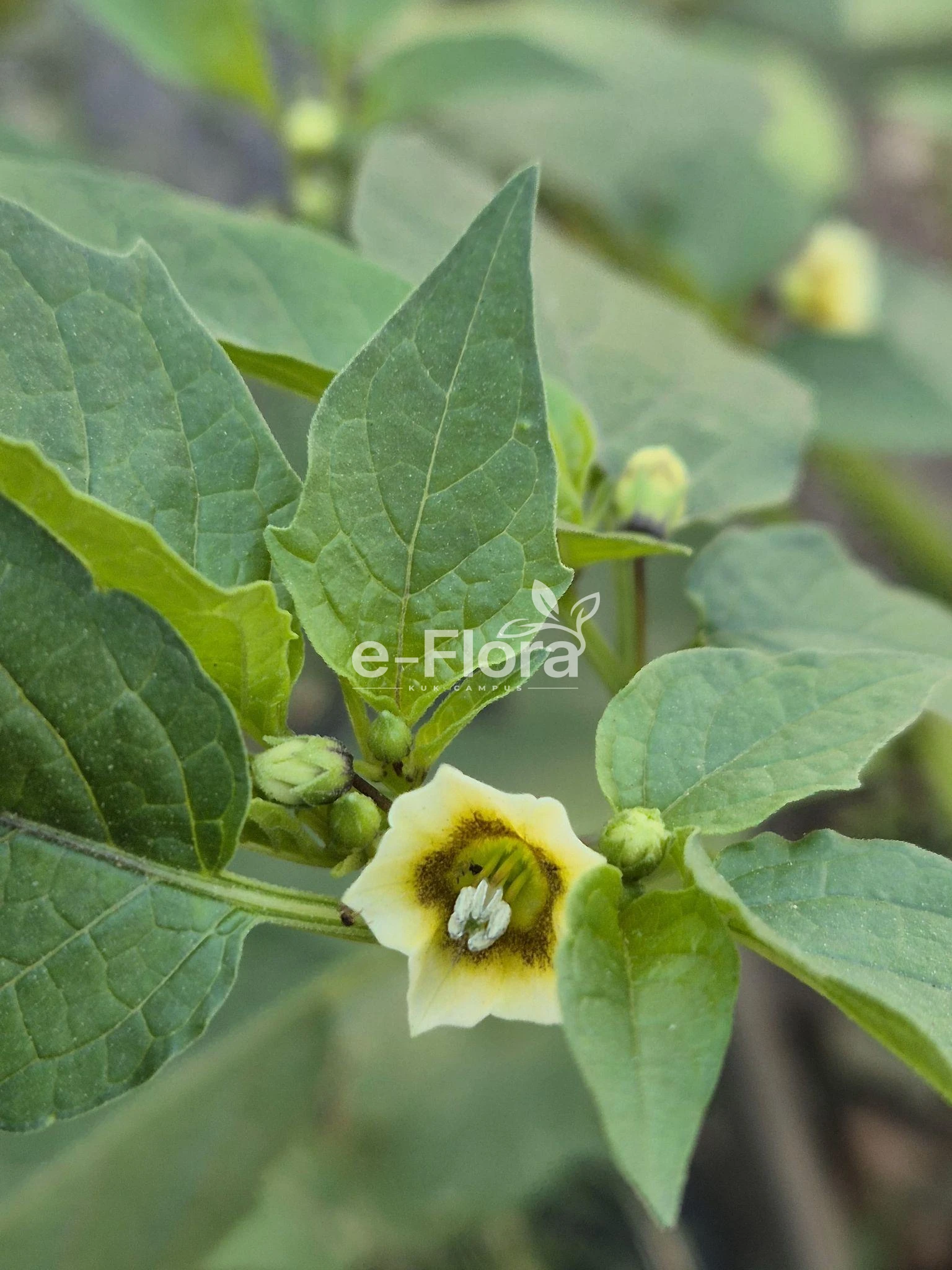
Flowers: Solitary, axillary; corolla campanulate, pale yellow with dark purplish markings at the throat; stamens 5, epipetalous; ovary superior, bicarpellary.
Fruit: Globose berry enclosed within an inflated, persistent papery calyx; berry yellow when ripe, many-seeded.
Uses:
- Fruits are edible when ripe having sweet tarty flavor and are consumed fresh and raw and can be used in salads or processed into jellies, jams and sauces while in some regions leaves cooked or used in salads.
- Traditionally extracts are used in treatment of arthritis, rheumatism and localized swelling.
- Leaves are used to make teas and poultice to soothe coughs, fever and asthma.
- In folk remedies, decoctions are used for bloating, diarrhae and other mild gastrointestinal issues.
- The plant is used in traditional medicine for inflammation, urinary disorders, and liver ailments.
- Plant has dermatological use as its external application can be helpful with cuts, sores and dermatitis.
- It is also valued for its antioxidant, hepatoprotective, anti-malarial, anti-diabetic, anti-tumor and immune-modulating properties.
- Extracts can be used in hair care product as it helps to reduce hair loss and improve scalp health.