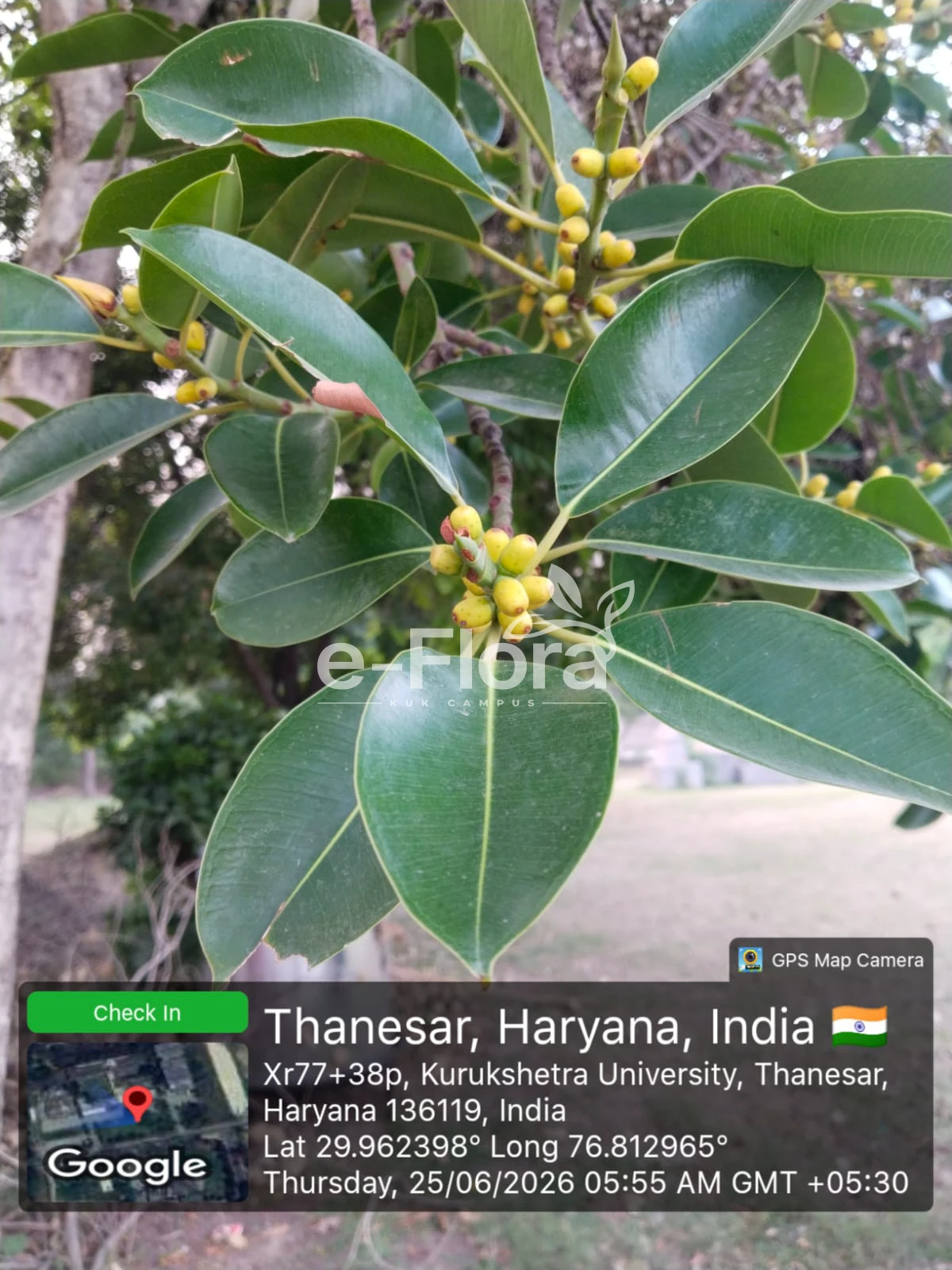
Ficus rubiginosa Desf. ex Vent.
Vernacular name: Rusty Fig, Port Jackson Fig
Species Name: Ficus rubiginosa Desf. ex Vent.
Family: Moraceae
Habit: Evergreen tree.
Stem: Medium-sized tree 10–30 m tall; trunk stout with grey-brown bark; branchlets rusty-tomentose when young; milky latex present.
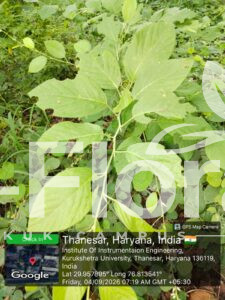
Leaf: Alternate, elliptic to ovate, 4–12 × 2–6 cm, leathery, glossy dark green above, rusty-brown pubescent beneath, entire, short-petiolate.
Flowering: Throughout the year (syconia produced seasonally).
Flowers: Minute unisexual flowers enclosed within axillary globose syconia; staminate and pistillate flowers borne inside the receptacle; ovary superior.
Fruit: Globose to ovoid syconium, 1–2.5 cm diameter, yellow, orange, or red when ripe, usually borne in pairs.
Uses:
- Widely planted as an ornamental shade tree in parks, gardens, and avenues.
- The fruits provide habitat and food for birds and other wildlife, making it valuable in urban biodiversity. Yellow figs are also consumed by indigenous Australian groups.
- Also cultivated as a bonsai and for landscaping due to its dense evergreen canopy.
- Wood yields timber, used for making traditional shields and packing cases.
- Plant has antioxidant and antimicrobial properties due to presence of flavonoids, phenols and catechins like bioactive compounds.