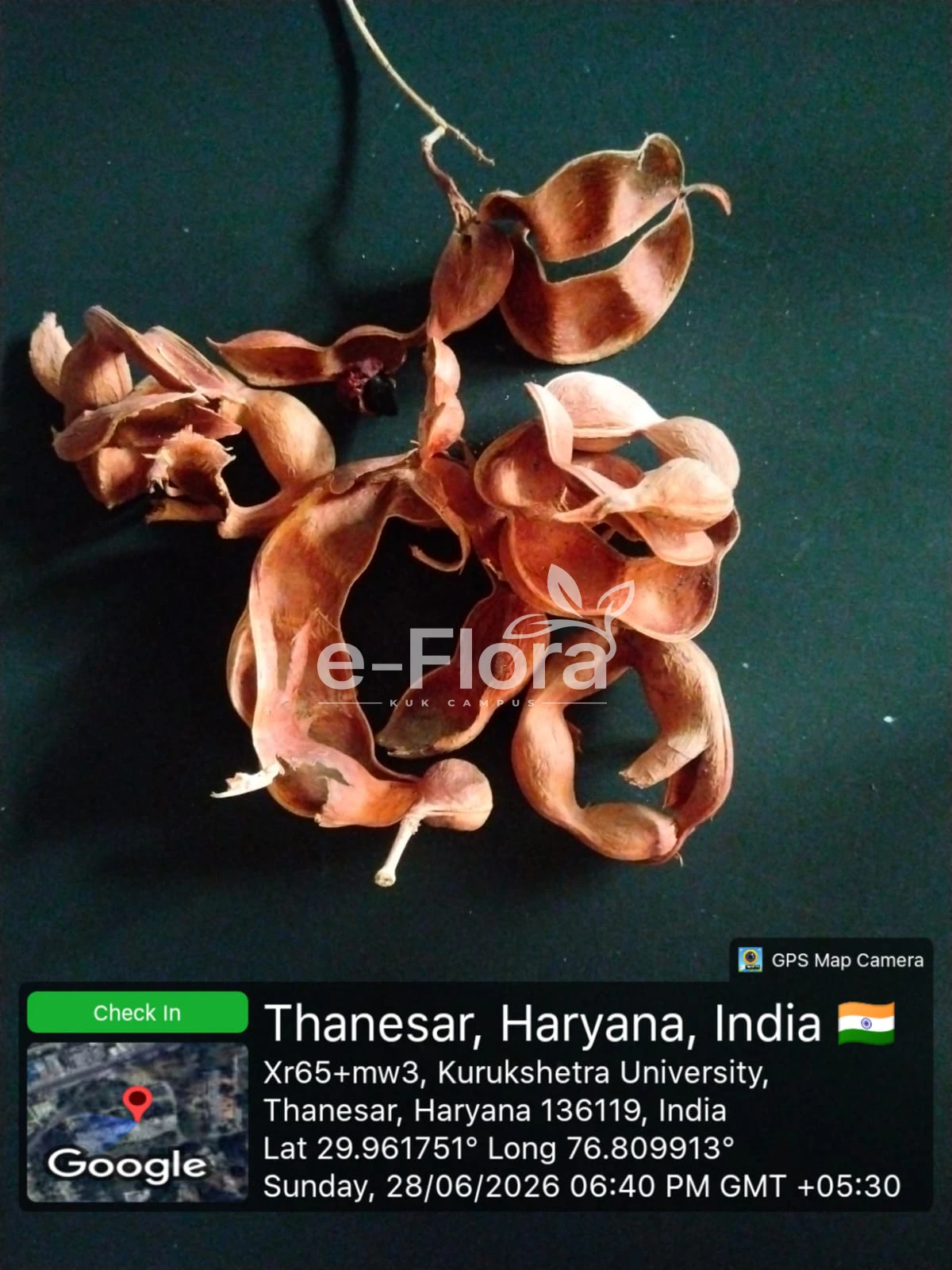
Pithecellobium dulce (Roxb.) Benth.
Vernacular name: Manila tamarind, Jungle jalebi (Hindi: विलायती इमली)
Species Name: Pithecellobium dulce (Roxb.) Benth.
Family: Fabaceae (Mimosoideae)
Habit: Evergreen thorny tree
Stem: Short crooked trunk 5-15 m, dark brown rough bark, paired stipular spines 0.5-1.5 cm at nodes.
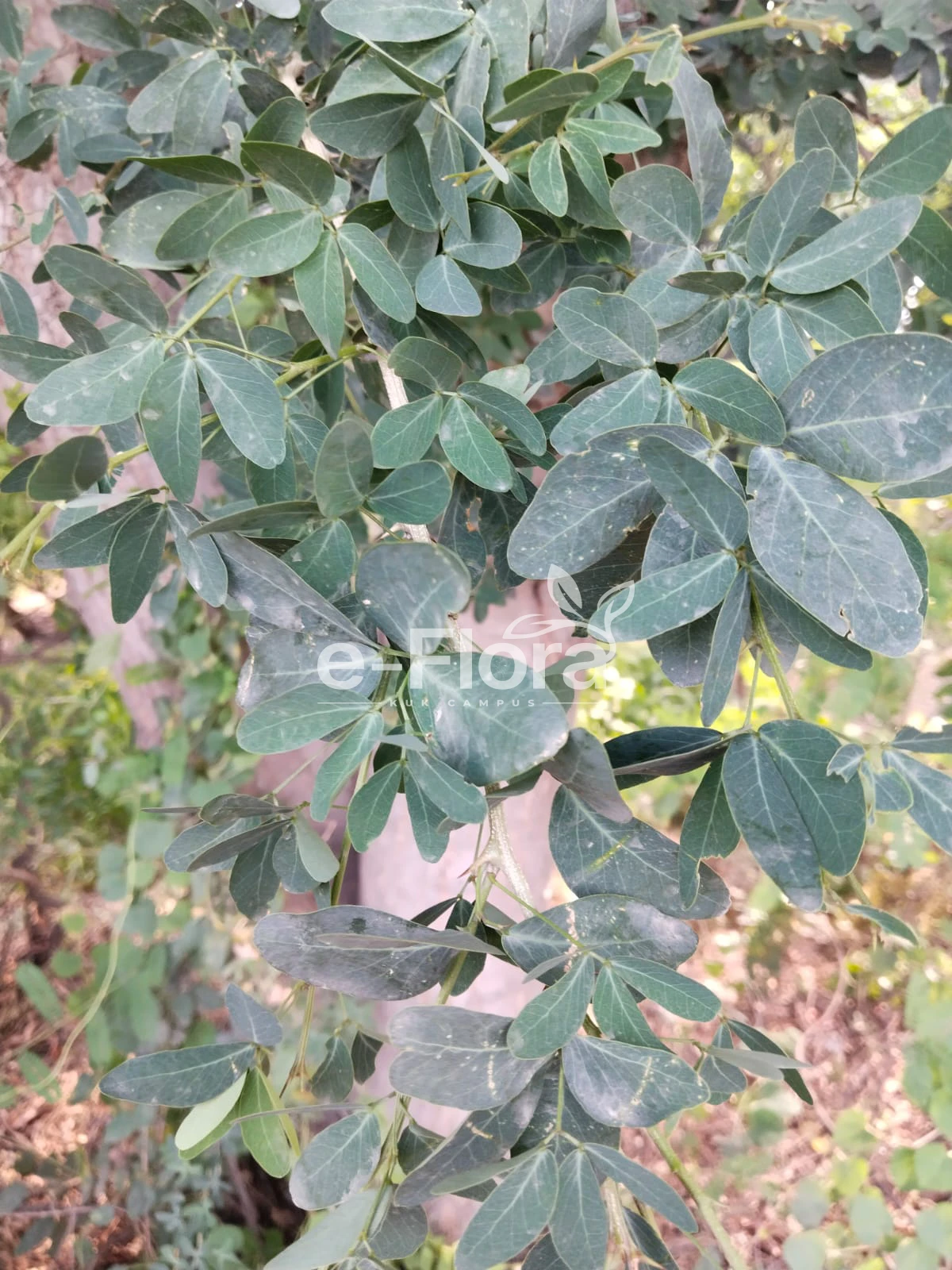
Leaf: Bipinnate; 2-3 pairs pinnae, each with 6-15 pairs small opposite elliptic-oblong leaflets, glossy green.
Flowering: March-June
Flowers: Small, greenish-white, fragrant, borne in axillary globose heads; stamens numerous, long and exserted; ovary superior, monocarpellary.
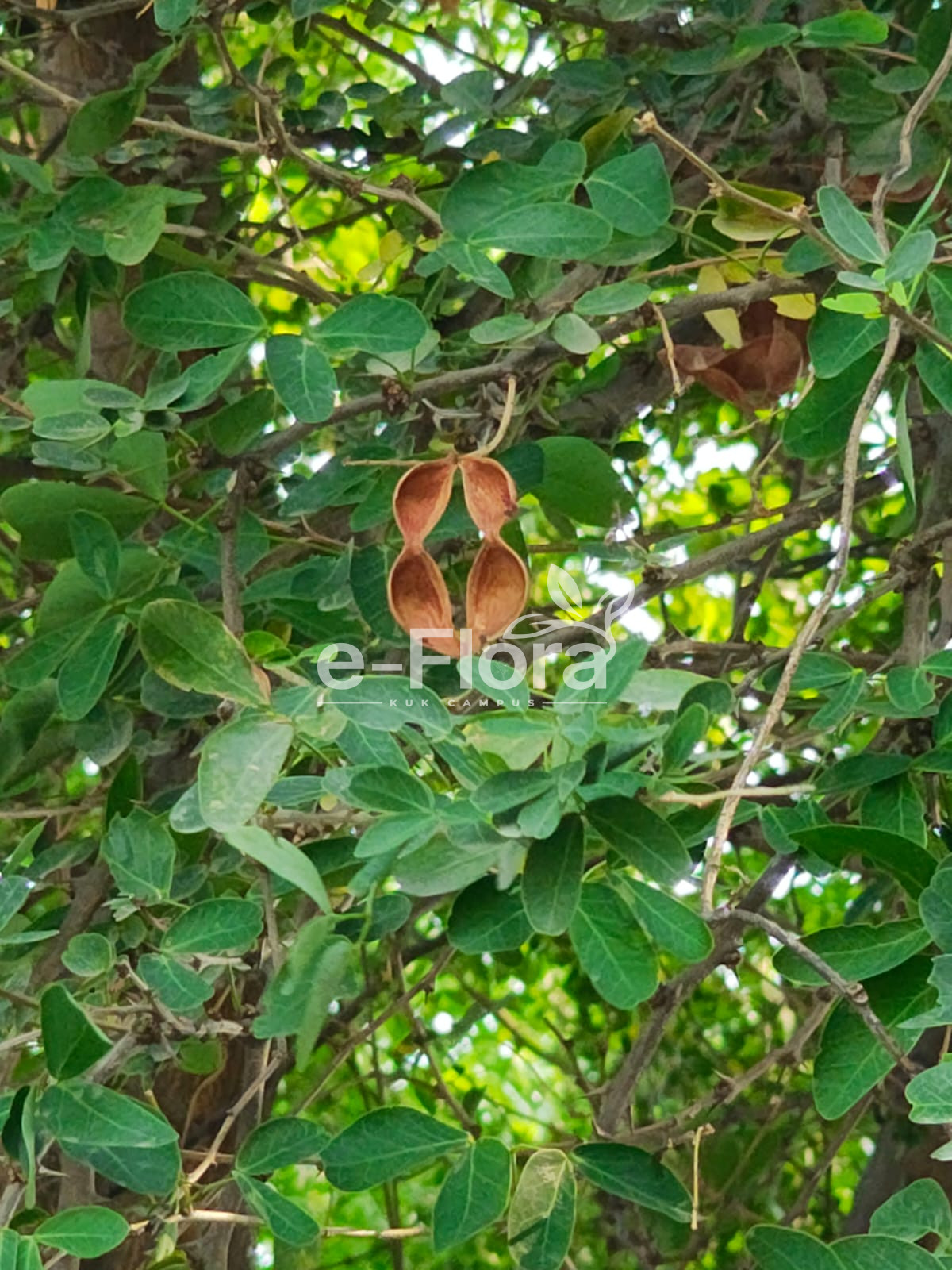
Fruit: Spirally twisted, pink to reddish indehiscent pod; pulp white to pink, sweet and edible; seeds black, glossy, compressed.
Uses:
- Ripe coiled pinkish seed pods and white or red sweet tarty pulp rich in protein, dietary fiber and vitamin C, eaten as snack (jungle jalebi) in India or added in curries, salads, tangy chutneys and lemonades.
- Leaves can be a good source of fodder for animals and wood can be used as firewood. Bark is used to derive gum and spines are used as natural fishhooks.
- It is dense, thorny ornamental grown as headge or living fence and provide shade.
- It fixes atmospheric nitrogen and improve soil fertility.
- Traditional stories: “Sweet imli” substitute; sacred groves; cattle feed during famine.
- Bark of plant has astringent and haemostatic properties that helps in the treatment of diarrhae, dysentery, toothaches and gum disorders.
- Poultice of leaves are extracted from leaves to treat skin disorders, ellevate indigestion and reduce joint inflammation.
- Paste or powder are made from seeds that have external application in healing ulcers.
- Extracts of varies parts of plant have antioxidant, anti-inflammatory and anti bacterial properties.