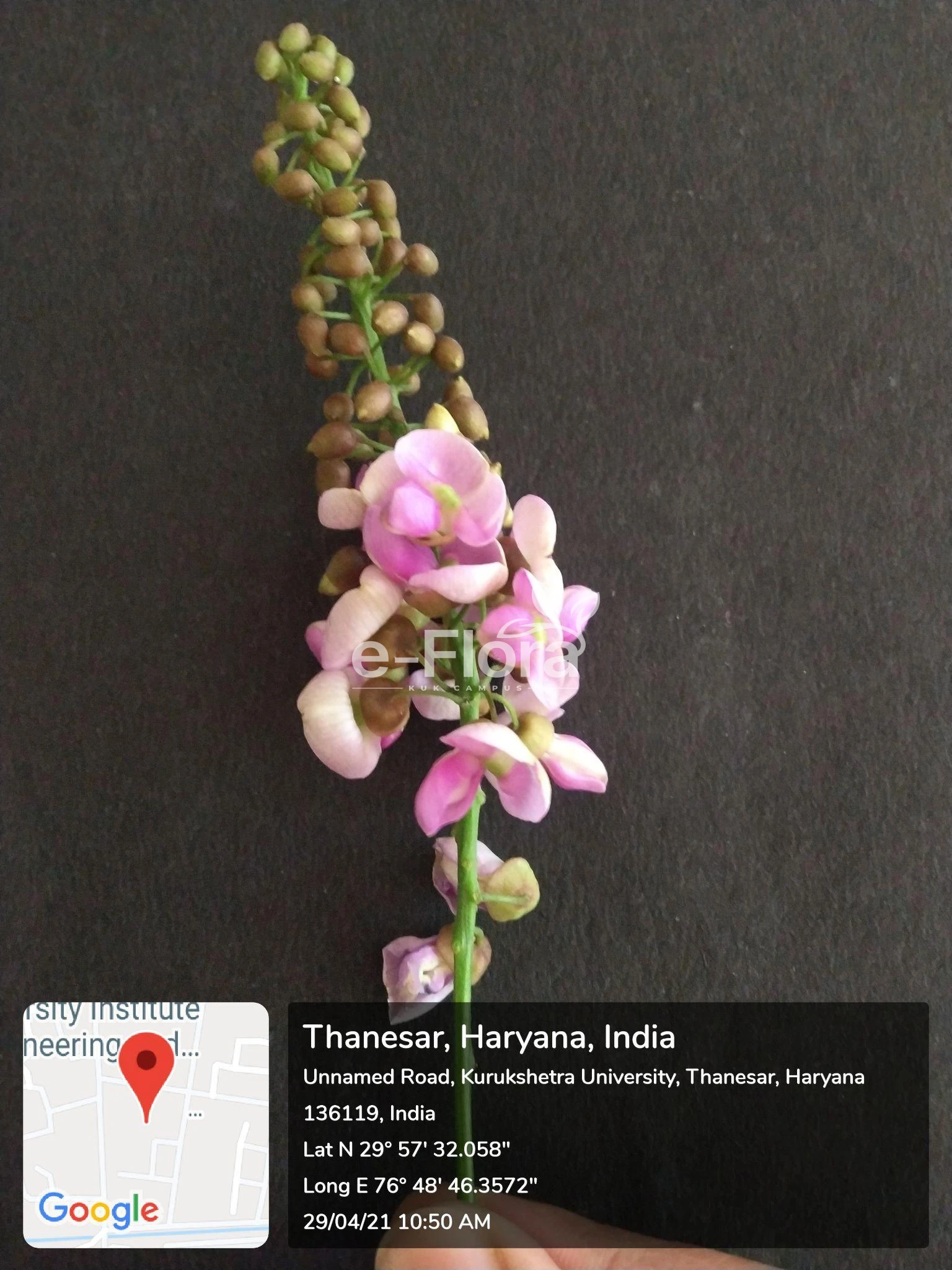
Pongamia pinnata (L.) Pierre
Vernacular name: Karanja, Pongam oil tree (Hindi: करंज)
Species Name: Pongamia pinnata (L.) Pierre
Family: Fabaceae
Habit: Semi-evergreen medium tree
Stem: 8-25 m tall, short crooked bole, grey-brown bark, branches armed with white stipular scars.
Leaf: Imperfectly paripinnate 15-30 cm; 5-9 elliptic-oblong leaflets, pinkish-red when young, glossy dark green above.
Flowering: March-June
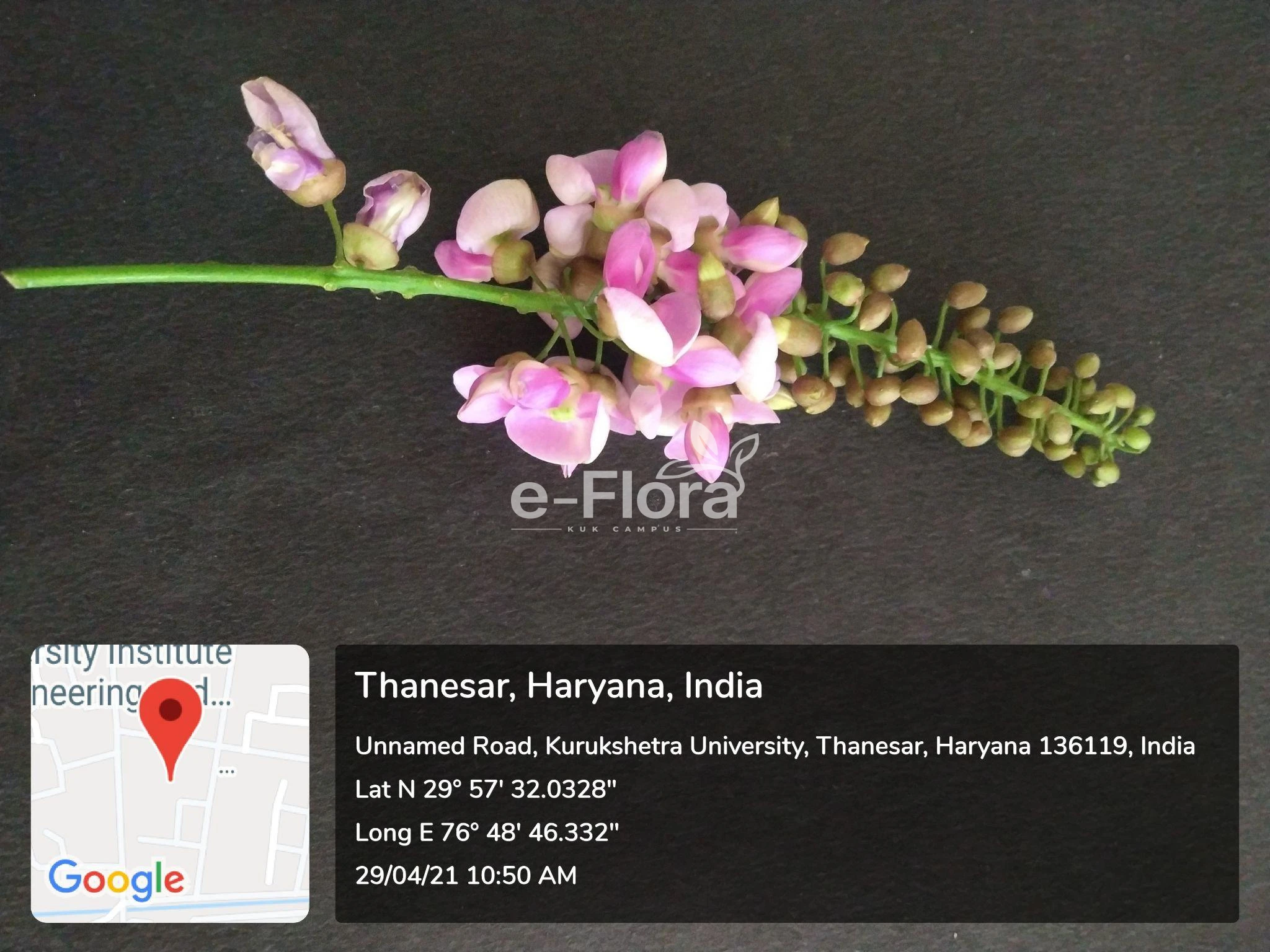
Flowers: Axillary racemes drooping; white/pink fragrant papilionaceous; standard obovate auricled, wings/keel adherent, 10 stamens diadelphous, stipitate ovary.
Fruit: Flat oblong woody indehiscent pod, thick-sutured, 1-3 ellipsoid seeds; oil 30-40% (biofuel).
Uses:
- It is known as “Nakshatra tree” planted near temples and is sacred to Shiva
- Traditionally seed oil is used for treatment of scabies, ulcers and eczema.
- On external application leaf extracts and oils helps to alleviate joint and rheumatic pain and manage arthritis.
- To promote healthy gums and teeth in Ayurveda and fold remedies twigs of plant is used as natural toothbrush.
- Bark has antipyretic properties and also helps with treatment of piles.
- Seed yields 25-40% of non-edible oil that can be used as a sustainable resource of biodiesel.
- It is a natural nitrogen fixing plant that is resistance to salinity, drought and waterlogging that helps with windbreaking, wasteland greening and reforestation.
- Oil extracts and press cake contain karanjin that makes it natural and eco-friendly pesticides.
- Wood can serve as firewood and leaves as manure.