Putranjiva roxburghii Wall.
Vernacular name: Putranjiva, Child-life tree (Hindi: पौधर, पुत्रजीवक)
Species Name: Putranjiva roxburghii Wall.
Family: Putranjivaceae (APG); formerly classified under Euphorbiaceae
Habit: Evergreen moderate-sized tree
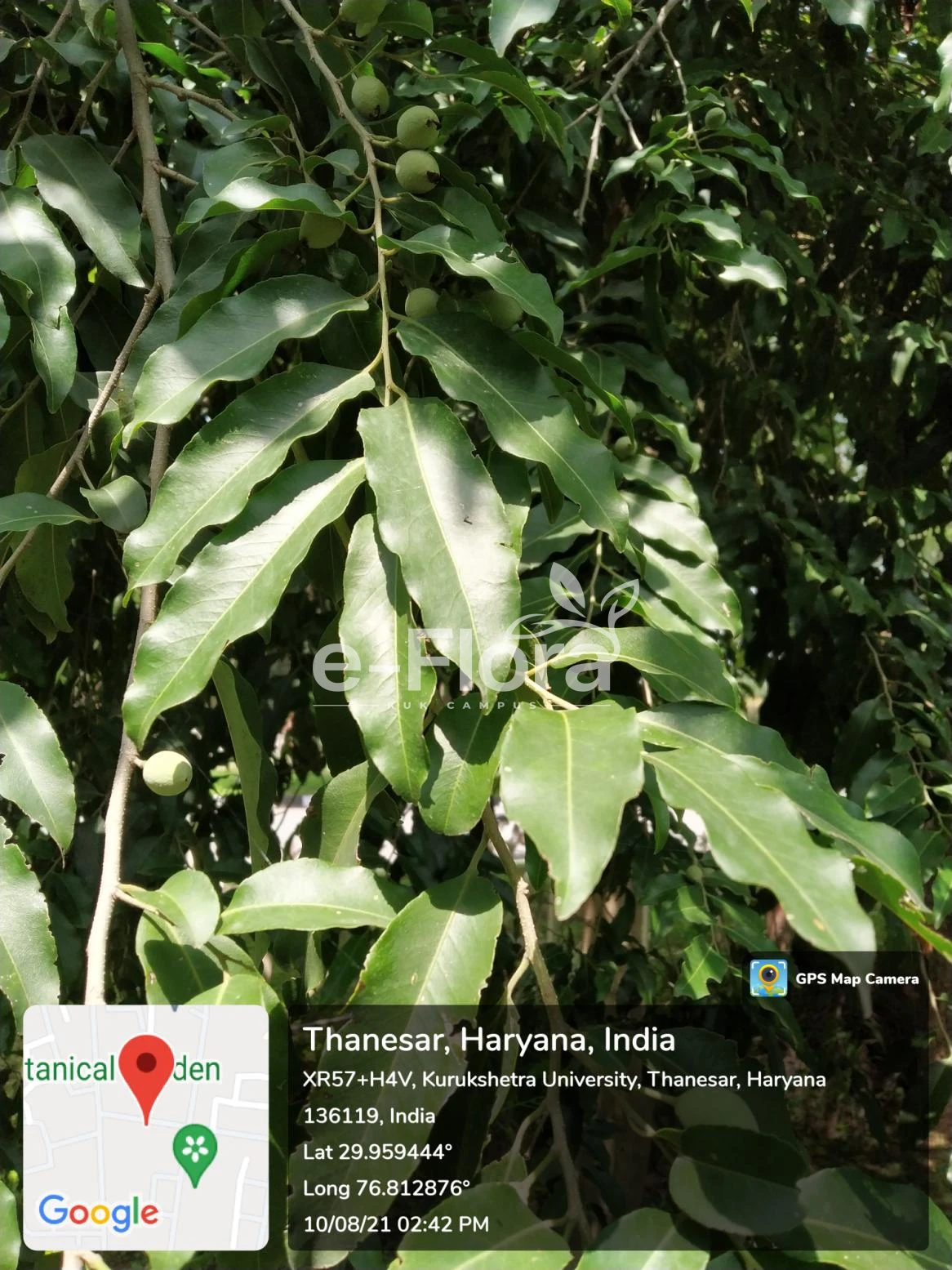
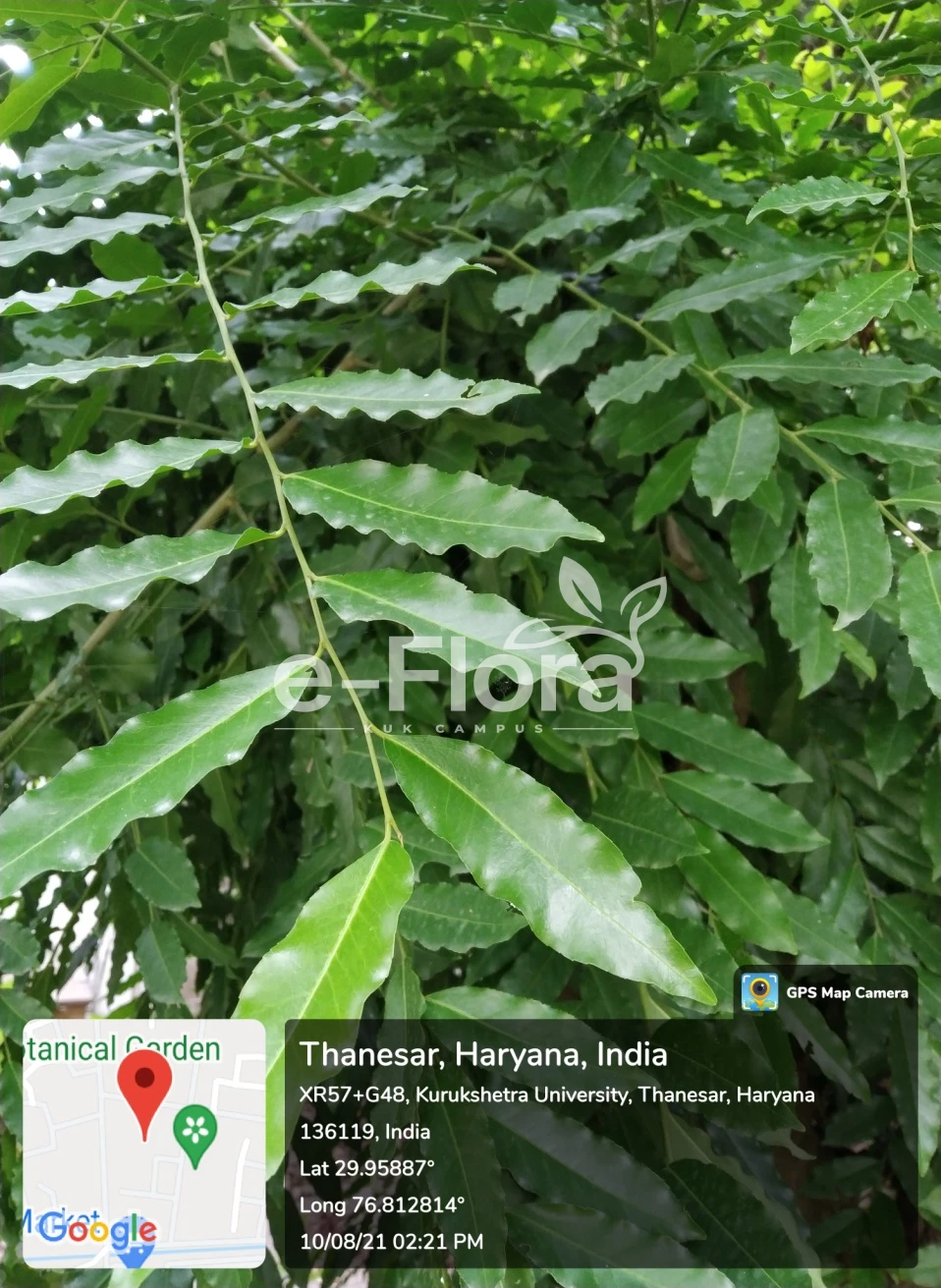
Stem: 10-15 m tall with drooping branches, dark grey corky bark with horizontal lenticels.
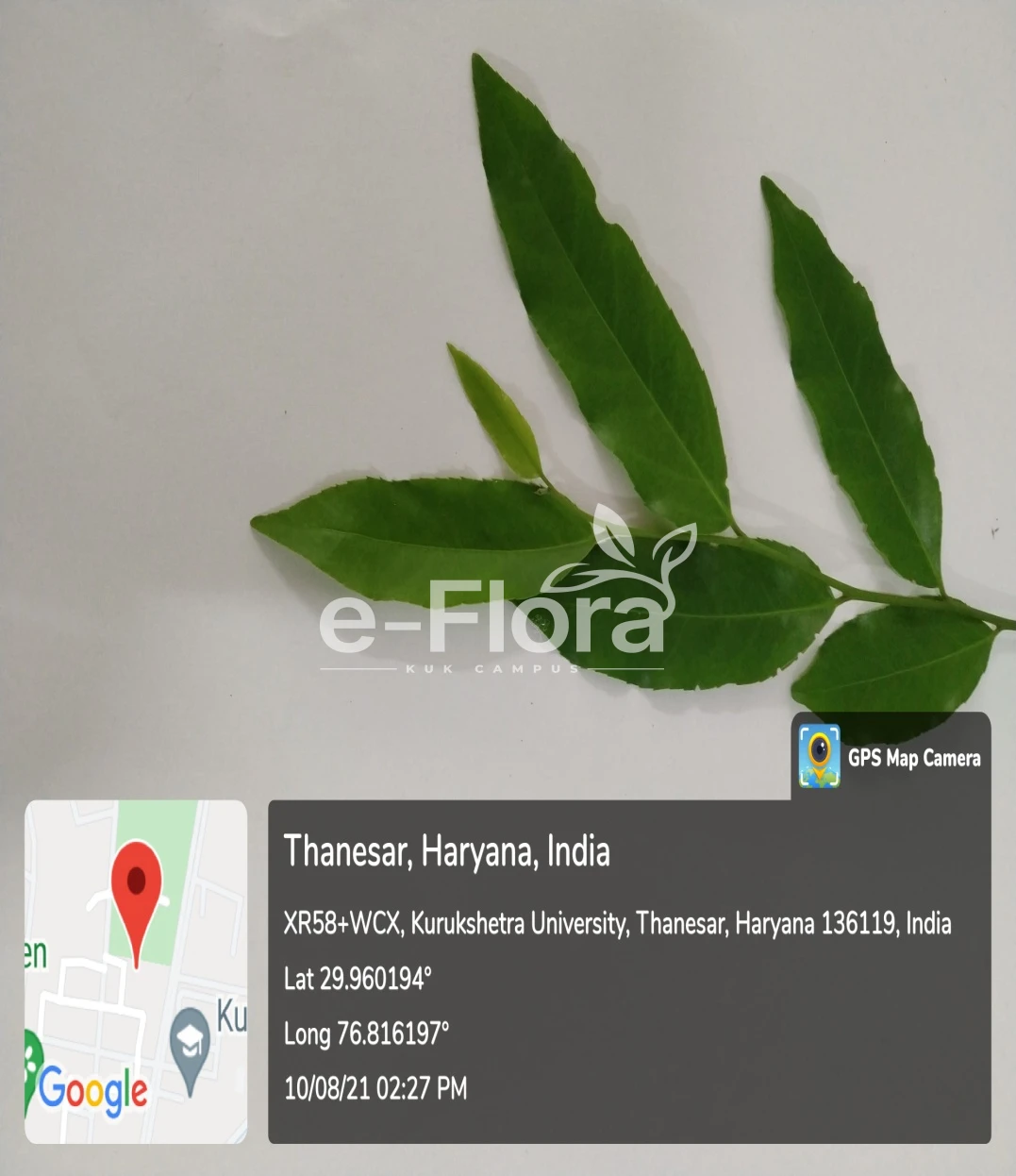
Leaf: Simple alternate distichous elliptic-oblong 5-12×2-4 cm, glossy dark green coriaceous, serrulate margins, petiole 4-10 mm.
Flowering: March-May (unisexual dioecious)
Flowers: Axillary clusters; male flowers yellow in rounded umbels, female flowers 1-3 per axil; tepals 5-6 oblong puberulous, stamens 8-12 (anthers sessile), superior 3-locular ovary with 3 spreading tomentose styles.
Fruit: Ovoid-ellipsoid drupe 1.5-2 cm, white-tomentose, single hard pointed rugose stone seed.
Uses:
- In traditional medicines, it is used as uterine tonic to promote conception, improve sperm quality and quantity and prevent miscarriages.
- Leaves, fruits and seeds are used to make decoction used for treating joint pain, muscle stiffness and rheumatic issues.
- Plant has laxative, antipyretic and diuretic properties that helps with catarrh, fever and constipation.
- It is an ornamental avenue tree whose wood is used for agricultural implements and seed is used as beads and malas.
- Wood known to have potential as biodiesel fuel.
- Extracts of seed and leaves have antibacterial and antifungal properties that help to protect stored grains in warehouses.
- It is named for progeny protection and used as Hindu lucky charm necklace also having use as snakebite antidote.