Syzygium cumini (L.) Skeels
Vernacular name: Jamun, Java plum, Black plum (Hindi: जामुन)
Species Name: Syzygium cumini (L.) Skeels
Family: Myrtaceae
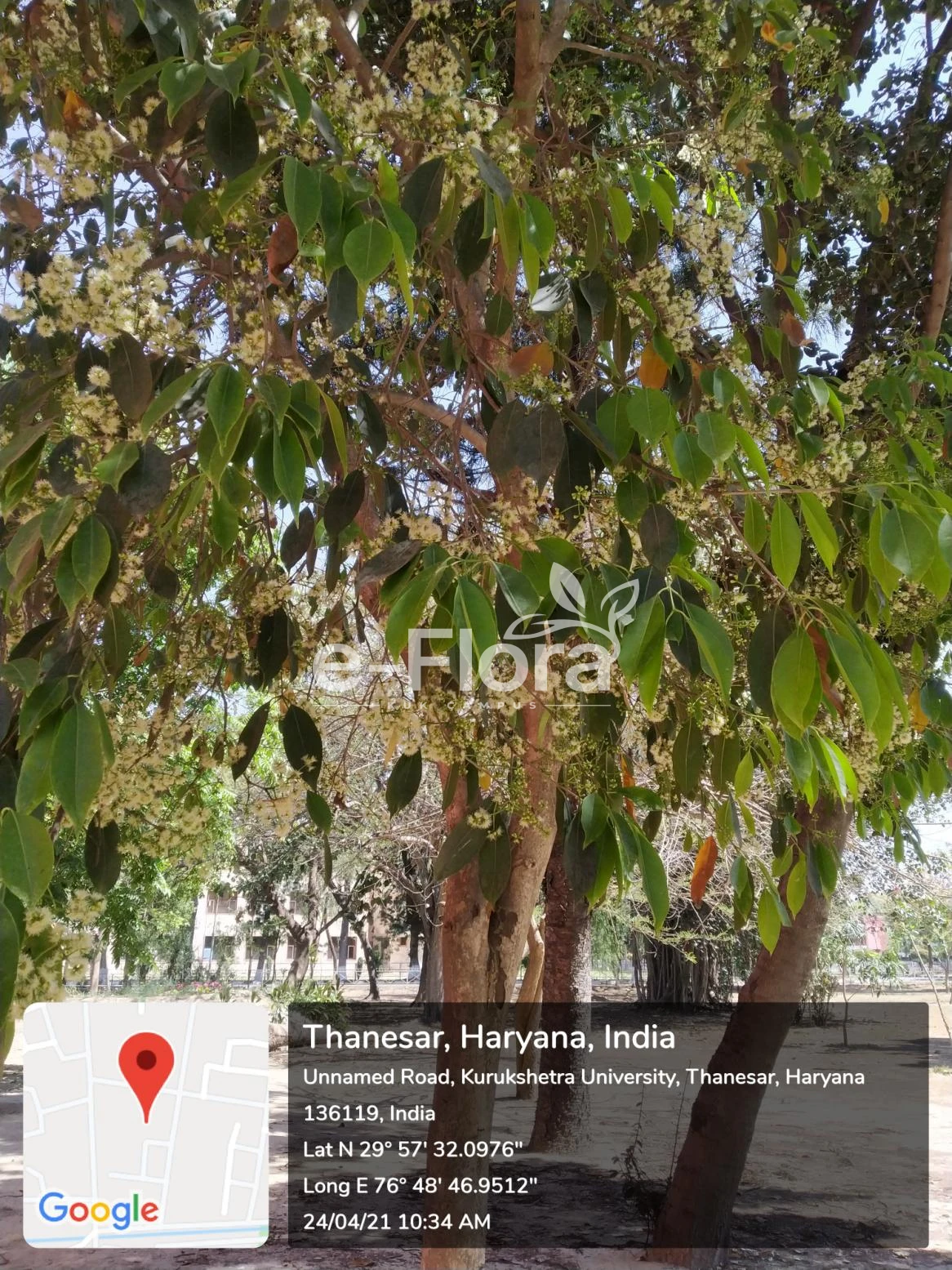
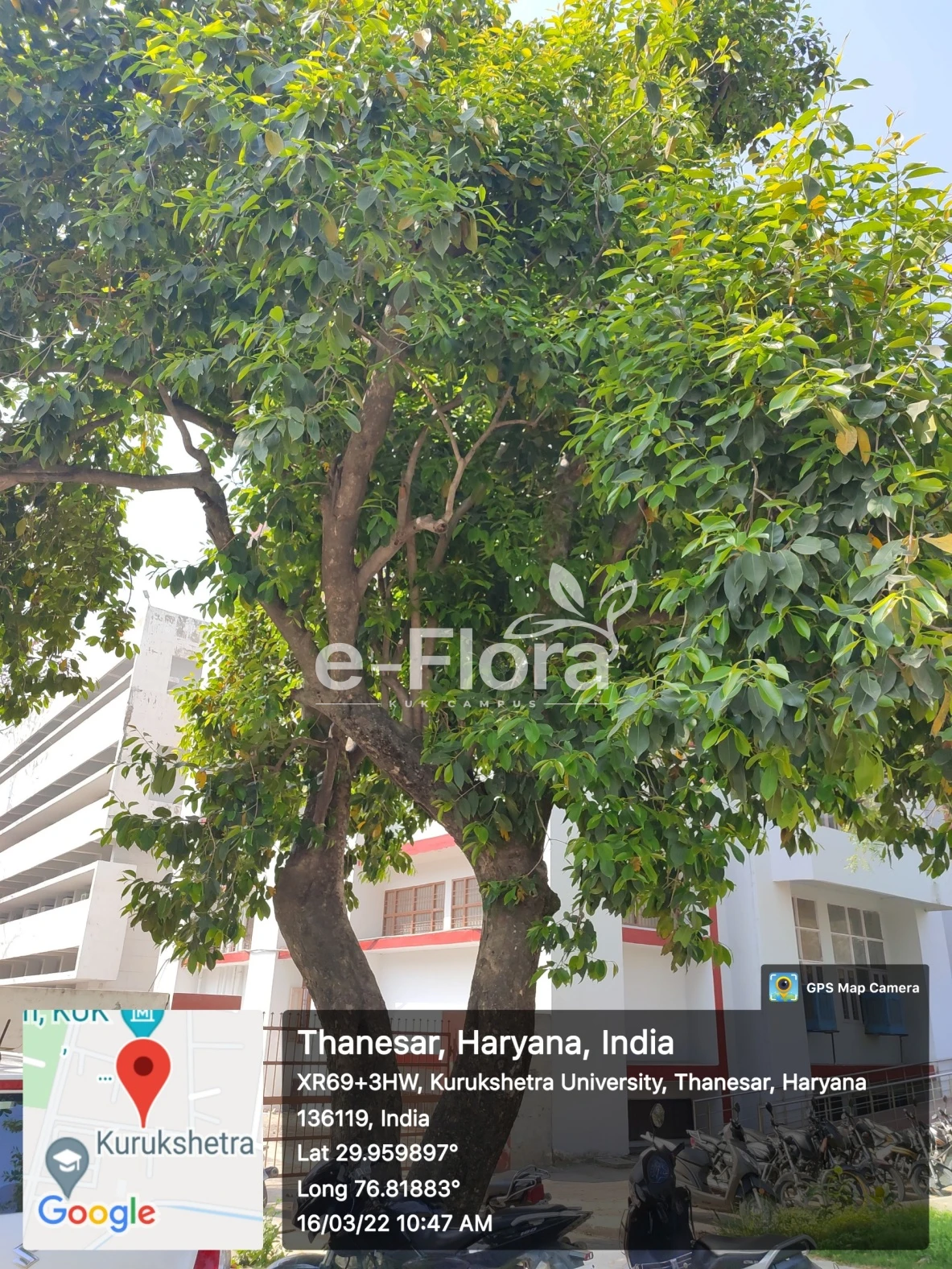
Habit: Large evergreen tree
Stem: Rough dark grey bark at base, smooth light grey above
Leaf: Opposite, elliptic-lanceolate, glossy green, aromatic
Flowering: March-April
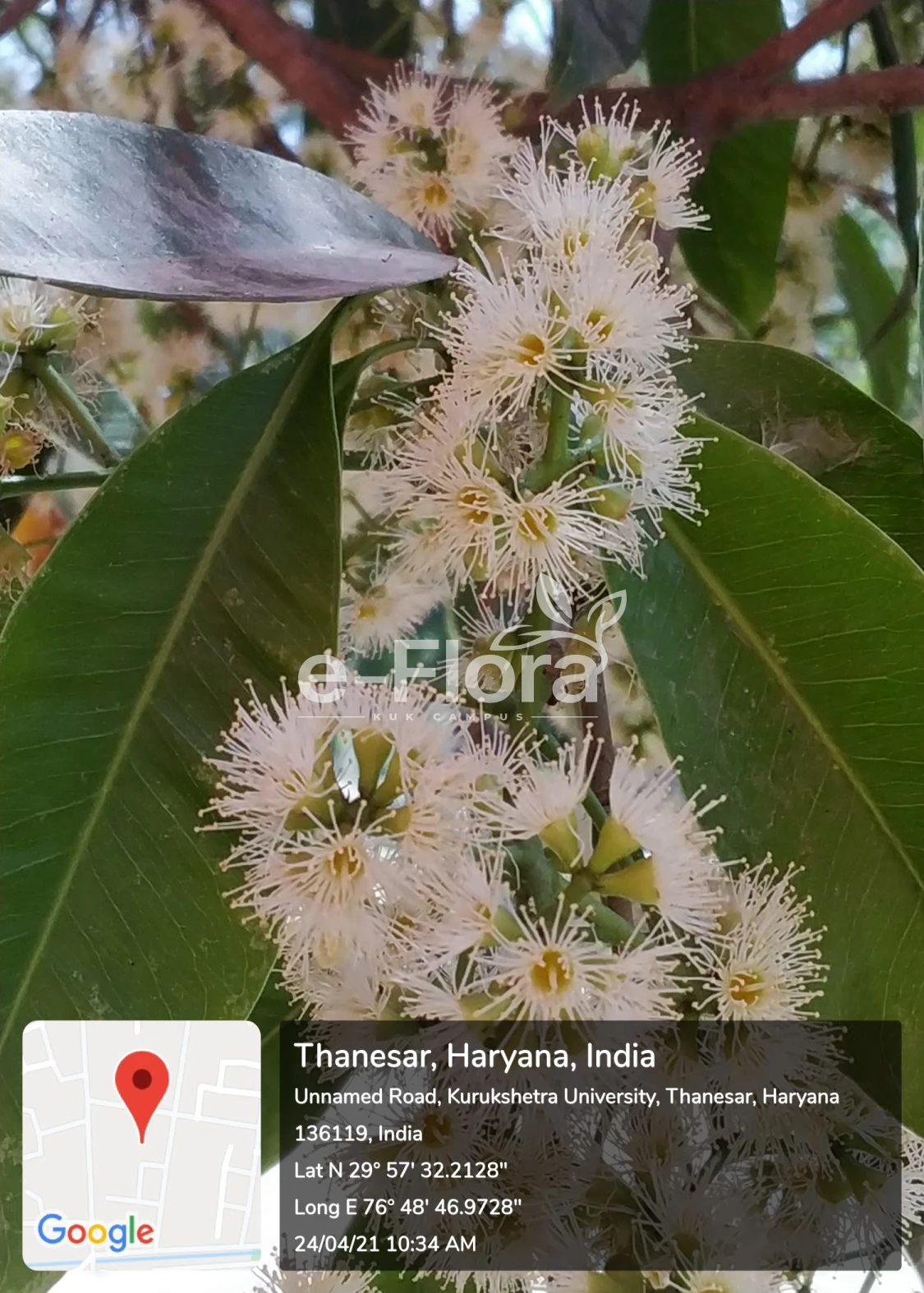
Flowers: Dense axillary cymes/panicles; small white fragrant flowers; 4-5 sepals, 4-5 petals, numerous stamens, inferior ovary
Fruit: Ovoid-oblong purple-black berries, 1 large seed, astringent sweet pulp
Uses:
- Seeds of Jamun has hypoglcermic properties due to presence of compounds like jamboline and jambosine that stimulate release of insulin and regulate glucose metabolism and resulting in lowering blood sugar.
- Fruit has astringent property and use in treatment of dysentery, loss of appetite, diarrhea and indigestion.
- Tradition medicines uses bark decoction and seed extracts to manage cholesterol (LDL/VLDL), obesity and hypertension.
- Antioxidant property of peels of fruit has hepatoprotective applications.
- Powder of seeds in combination with sugar is applied externally to treat ulcers, wounds and sores.
- Fruit is eaten fresh as rich in anthocyanins and iron and also used to prepare juice, vinegar, jellies, jams and wines.
- Seed powder and leaf extract has high flavonoid and vitamin C and used in herbal cosmetics and supplements.
- Wood is water resistant making it suitable for construction, agricultural tools and furniture.
- Plant of moist deciduous forests that is flood and drought tolerant, pantropical and have nitrogen-fixing tendencies.
- Krishna’s favorite fruit that stains tongue purple and is a sacred village tree.