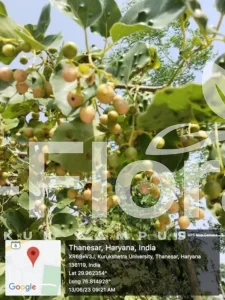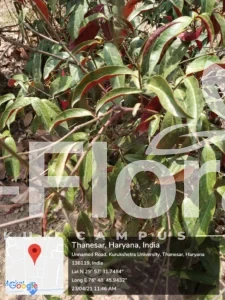
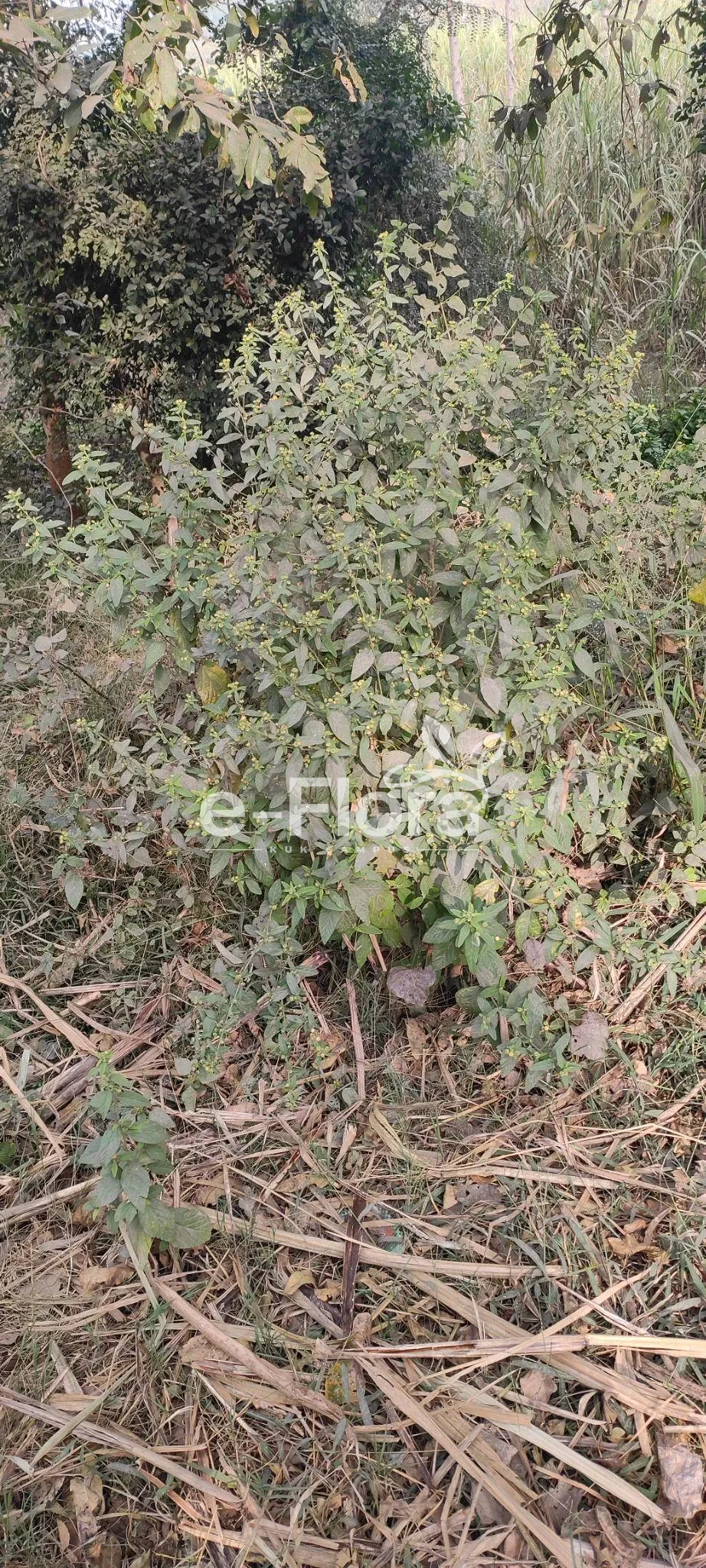
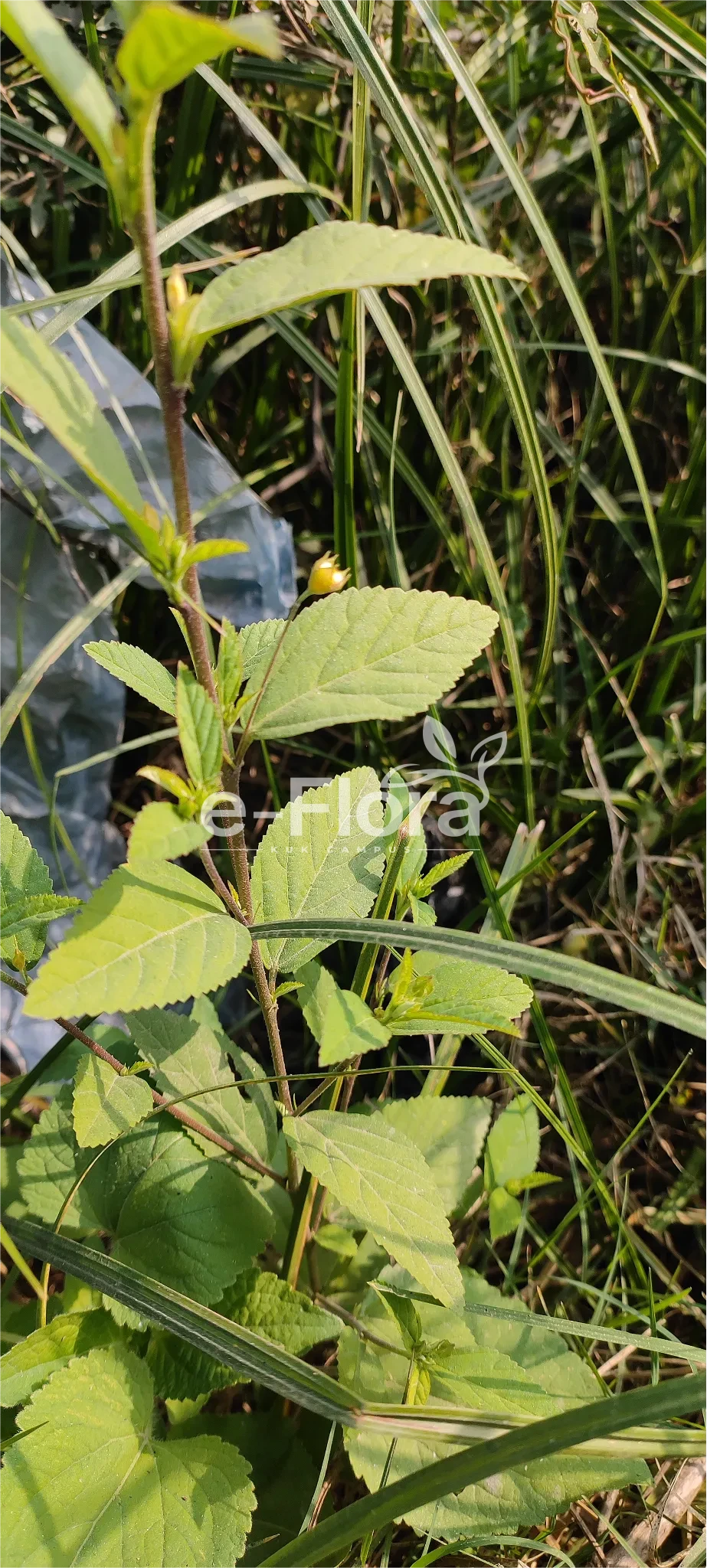
Sida rhombifolia L.
Vernacular name: Arrowleaf sida, Cuban jute, Paddy’s lucerne
Species Name: Sida rhombifolia L.
Family: Malvaceae
Habit: Erect annual/perennial subshrub
Stem: Stellate-hairy, tough, woody at base, branched
Leaf: Alternate, rhomboid-lanceolate, serrate upper half, stellate-hairy below
Flowering: Year-round
Flowers: Axillary solitary/paired on slender pedicels; pale yellow-orange; 5 sepals campanulate, 5 petals 6-8 mm, monadelphous stamens, 5-loculed superior ovary
Fruit: Schizocarp of 8-10 mericarps with 2 apical awns
Uses:
- Leaf decoction has anti-inflammatory and antibacterial properties while roots have diuretic property, making extracts quite useful soothe ulcers and regulate bowel movement to mange dysentery, diarrhea and dyspepsia.
- Traditionally, leaves and roots paste is used to alleviate joint pain, arthritis, swelling and muscle weakness.
- Decoction derived from leaves, stem, flower and fruits are used to treat asthma, chronic cough and bronchial congestion.
- Plant mucilage is tropically applied to soothe irritation, reduce scarring and accelerate healing of burns, boils and cuts.
- Ayurveda uses to prepare tonics from plant to boost energy, vitality and stamina.
- It is a pantropical weed found along roadsides and crops as its drought-tolerant and forms dense stands.
- Stems yield tough jute-like fiber used for cordage, bagging and coarse textile.
- It is known as “Queen weed” as present in abundance and can serve as veterinary fodder.