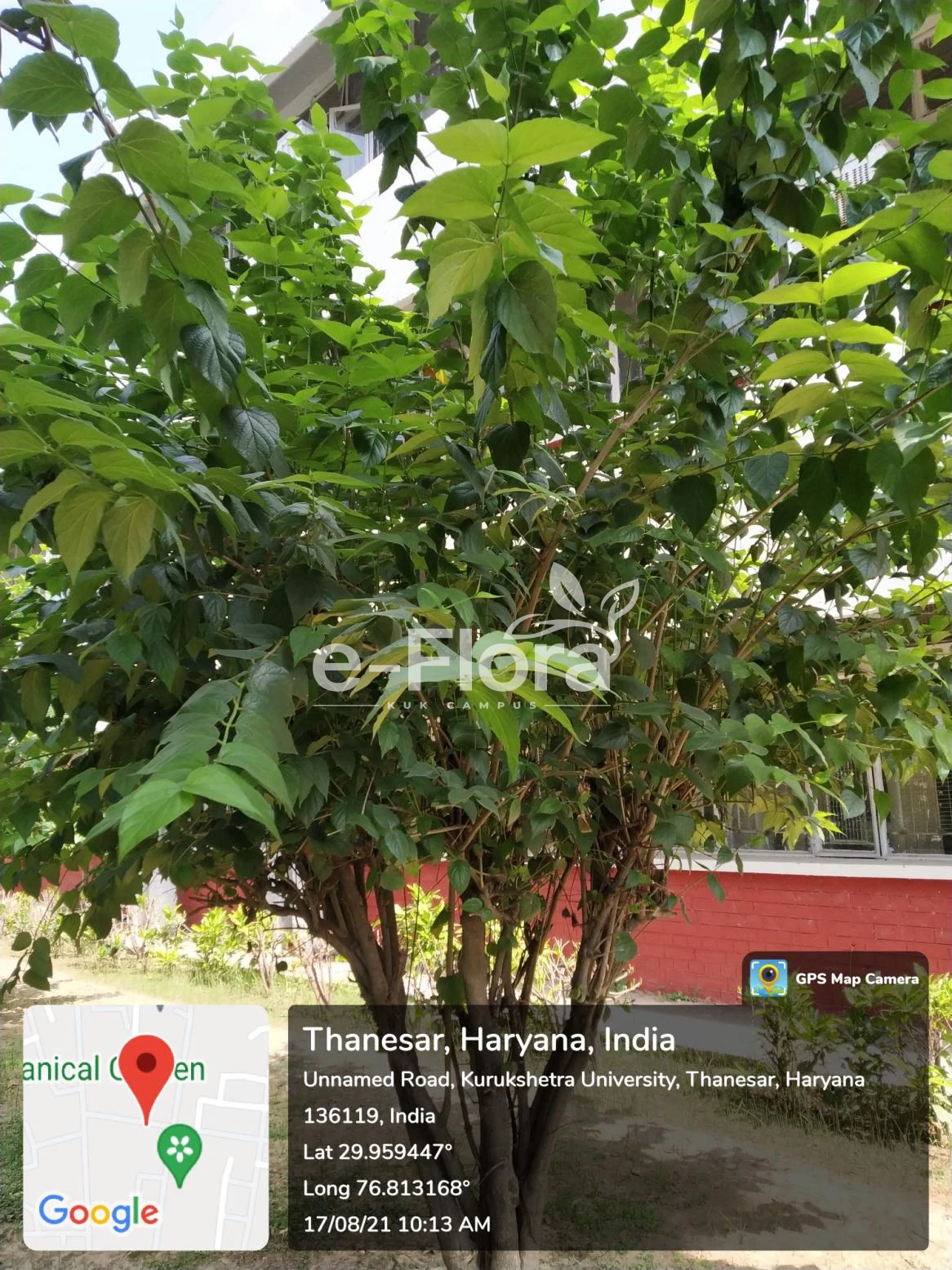
Nyctanthes arbor-tristis L.
Vernacular name: Parijat, Harshringar
Species Name: Nyctanthes arbor-tritis L.
Family: Oleaceae
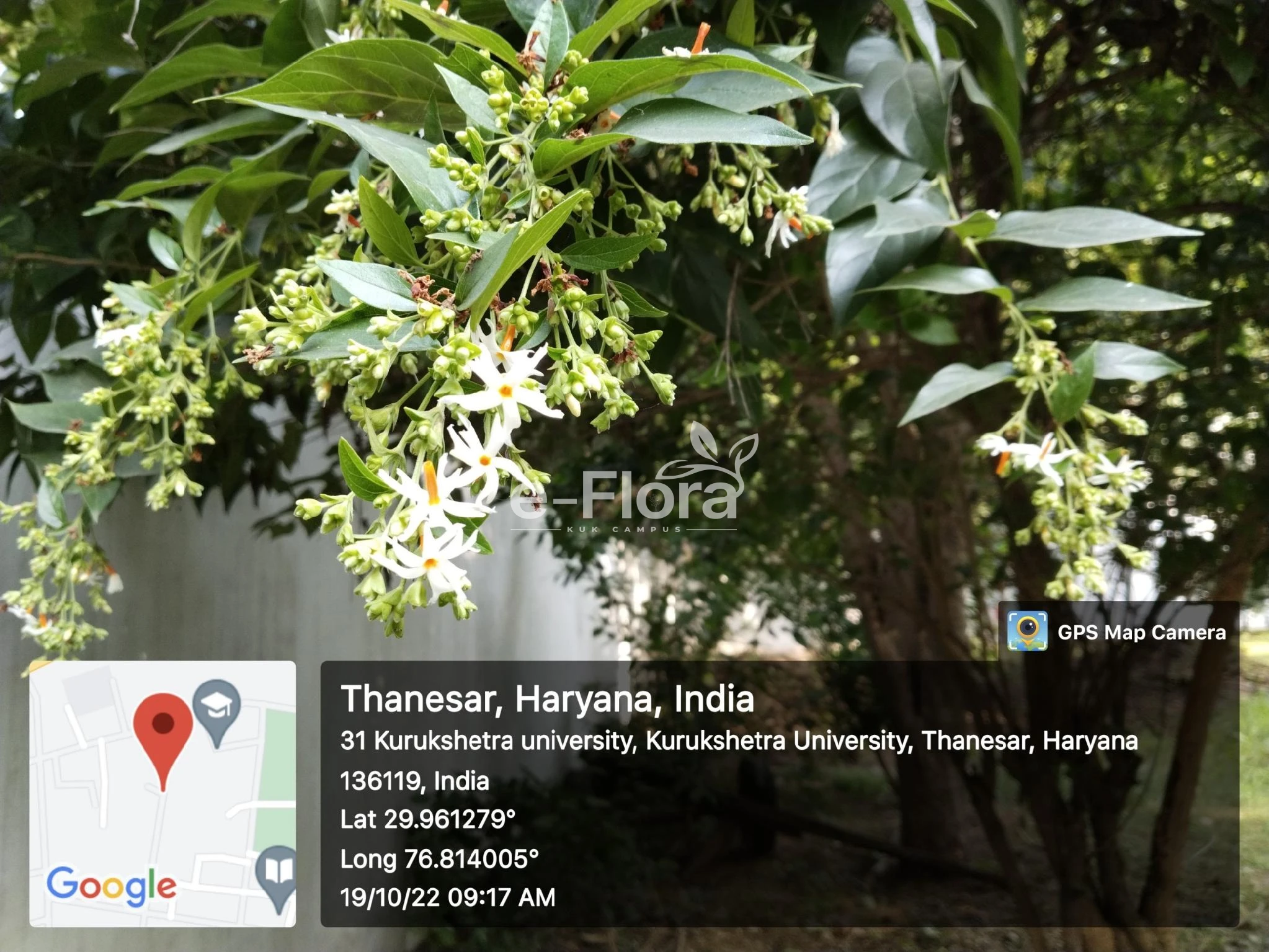
Habit: Evergreen tree
Stem: Rectangular, bark dark brown
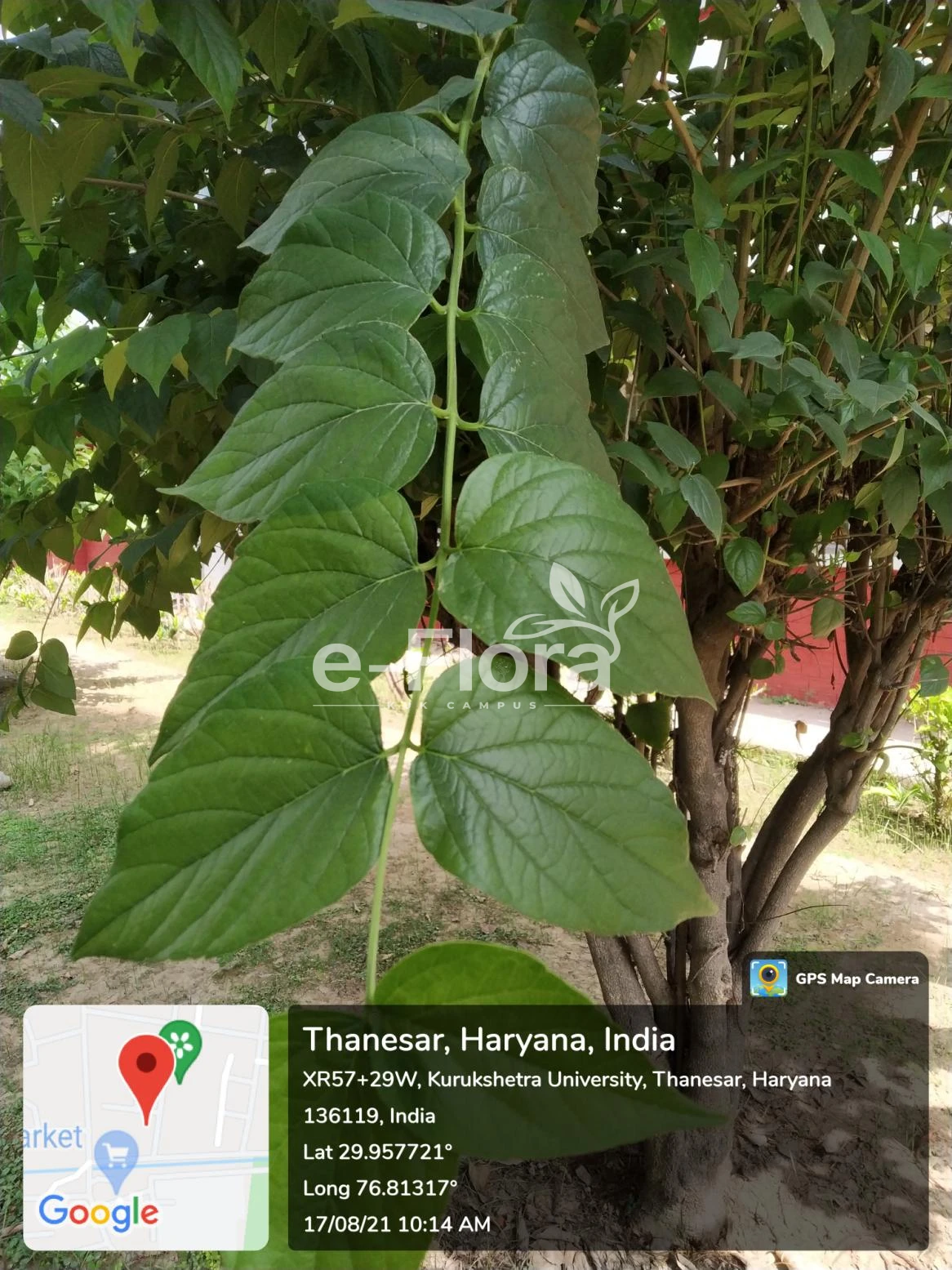
Leaf: Opposite, broadly ovate, acuminate, rough above with stiff hairs from bulbous bases, hairy beneath, entire, petiolate
Flowering: August-November
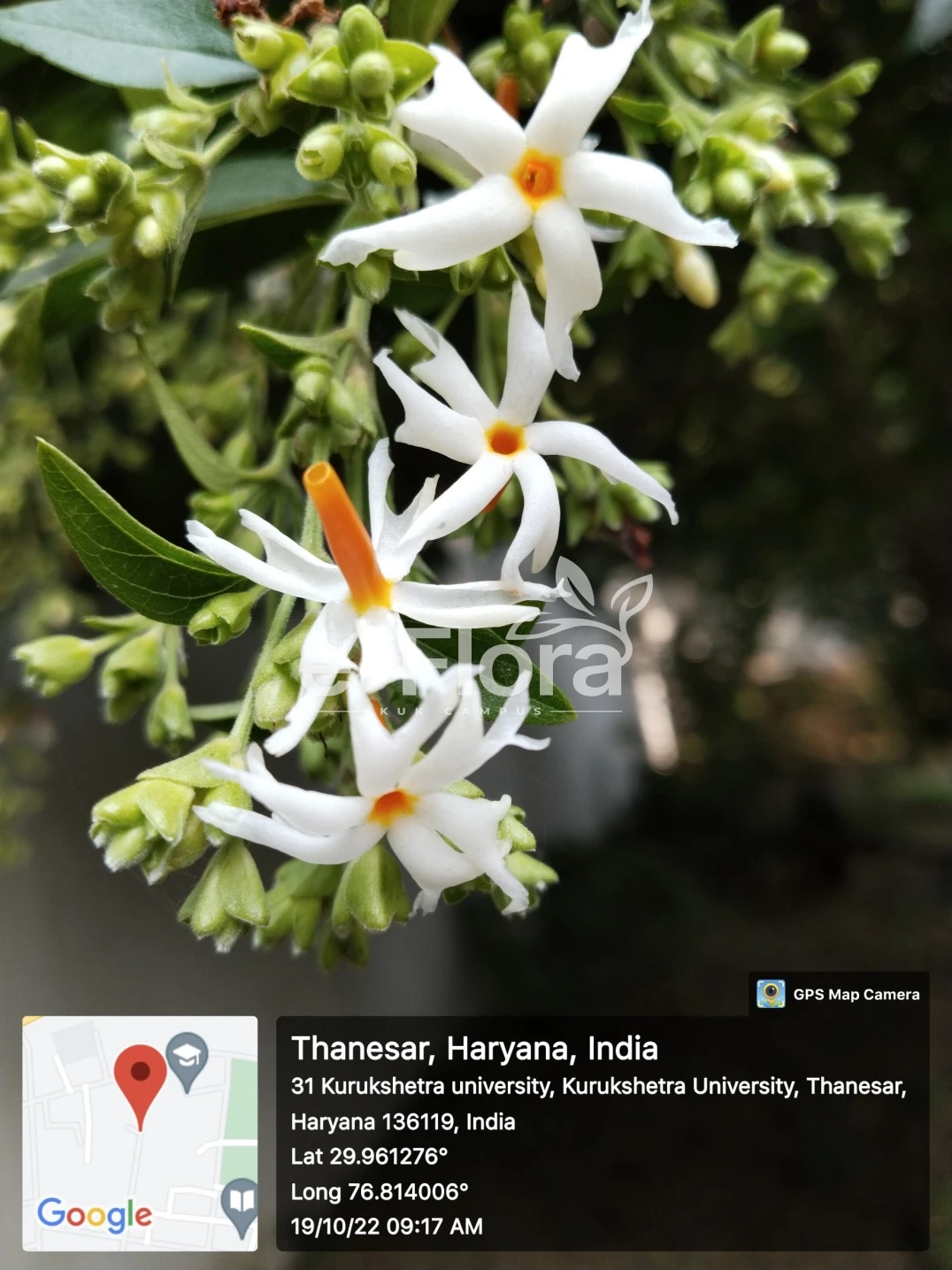
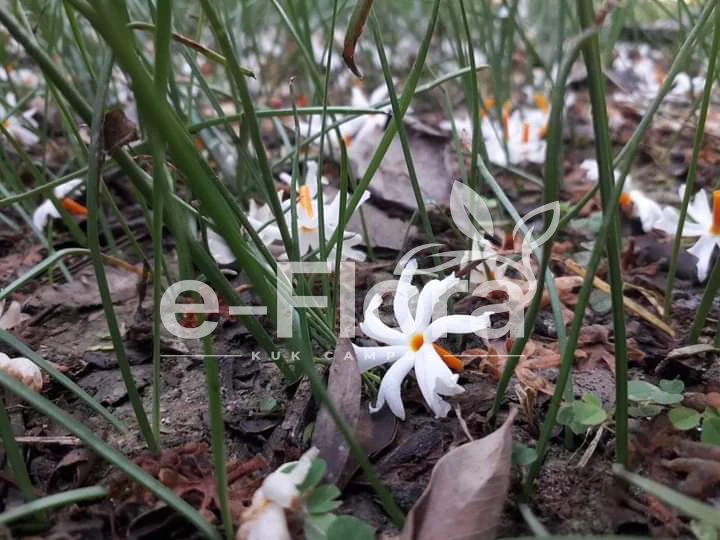
Flowers: Axillary and short terminal cyme inflorescence, bisexual flowers, White, fragrant in the evening, Calyx hairy outside, Corolla tube orange coloured, lobes white.
Fruit: Obcordate compressed capsule
Uses:
- In traditional medicines, leaf juice is used as natural antipyretic property to alleviate intermittent and malarial fevers.
- Anti-inflammatory and analgesic property of extracts derived from leaf and flower helps to relieve arthritis, rheumatism and joint pain.
- Leaves extracts acts as laxative and help with regulation of bowel movement and treatment of constipation.
- Leaf paste is externally applied to treat ring worm and skin problems in herbal remedies.
- Plant can also be used as an expectorant.
- Homeopathy uses tincture in medicines for the treatment of sciatica, head and stomach issues.
- Seed paste is applied on hair scalp to regulate hair fall.
- A decoction of flower and jaggery is used to treat antifertility in females.
- Plant is also used to treat Leishmaniasis.
- The dry leaves are used as fine sand-paper.
- Nocturnal jasmine like fragrance attracts night time pollinators like moths.
- Nyctanthin, a natural dye extracted from bright orange coloured corolla tube, traditional used to colour cotton and silk clothes, especially buddhis monks’ robes.
- Deep extensive roots system of plant helps with soil retention and makes it a good option to stabilize landscapes.
- Parijat believed to be very pious for both Buddhist and Hindus. It is believed that Lord Krishna brought this plant from heaven for his wife Satyabhama where as Buddhist uses it as traditional sedative.