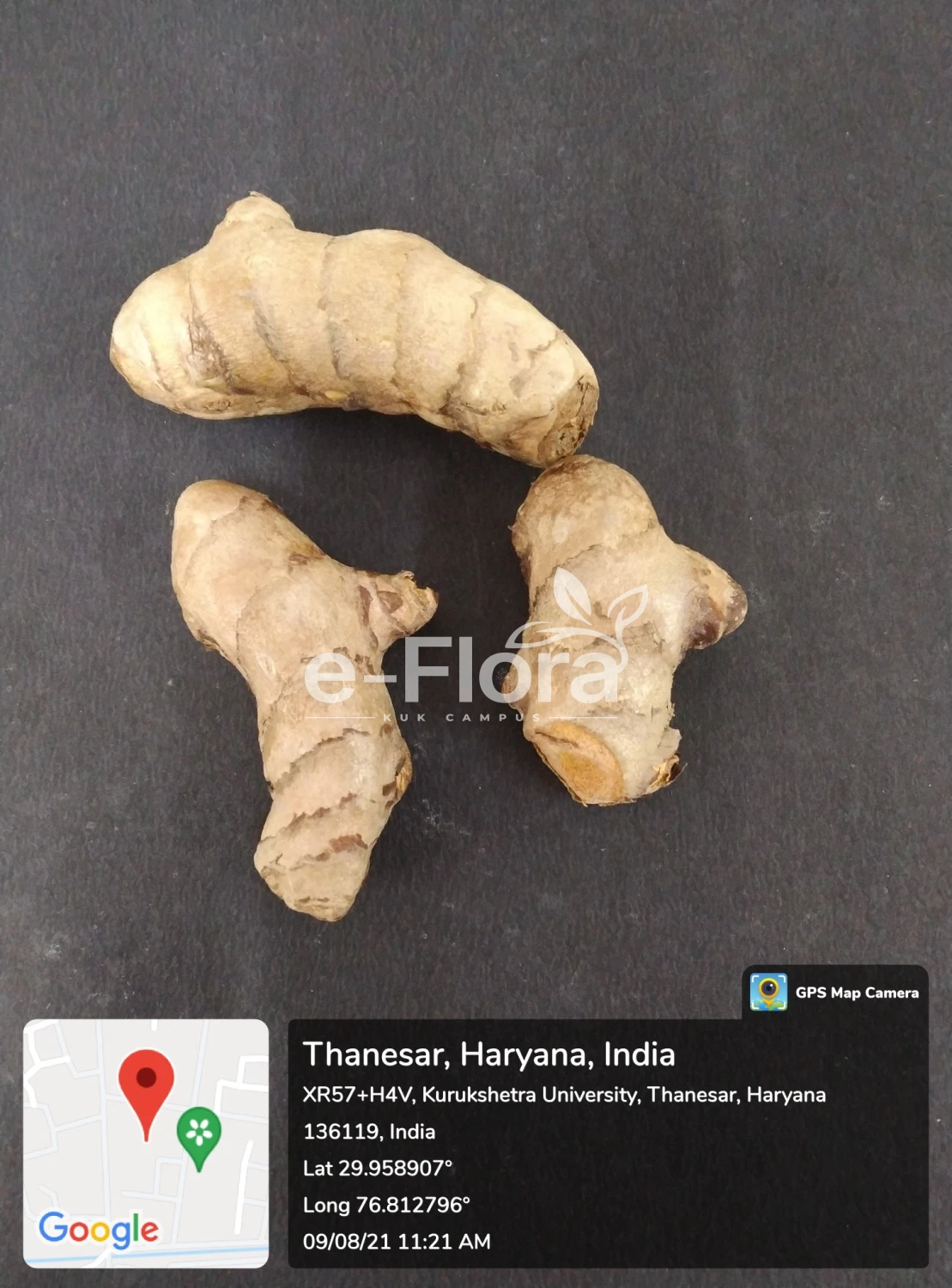
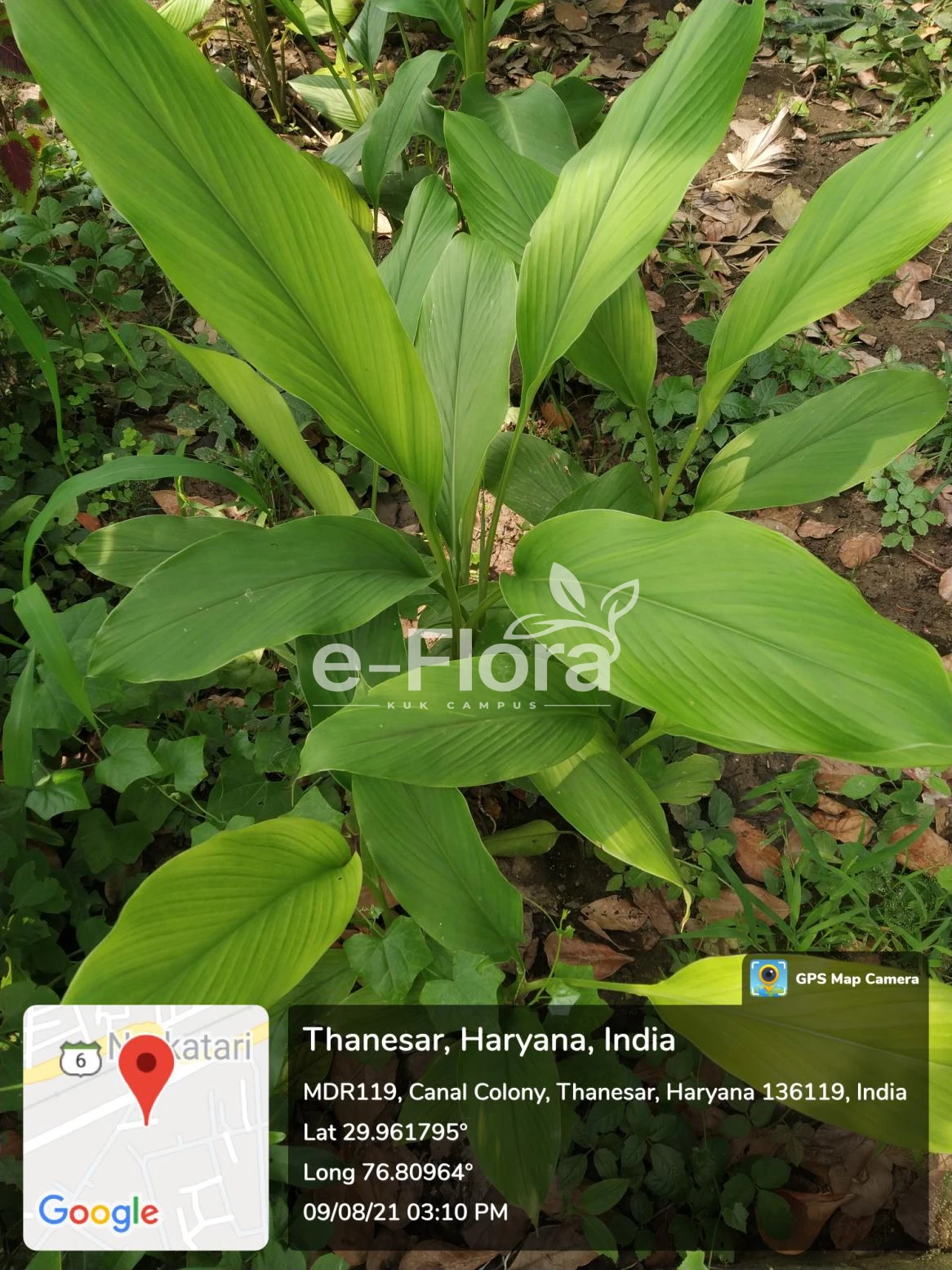
Curcuma longa L.
Vernacular name: Turmeric (Hindi: हल्दी)
Species Name: Curcuma longa L.
Family: Zingiberaceae
Habit: Rhizomatous perennial herb
Stem: Erect pseudostem 60-100 cm from rhizome.
Leaf: Lanceolate 30-70×10-20 cm, petiolate, glabrous.
Flowering: Pre-monsoon
Flowers: Bracteate central spike; 3 white petals (labellum yellow with purple stripes), 6 stamens (lateral staminodes petaloid), inferior ovary (3-locular).
Fruit: Rarely formed; 3-valved capsule
Uses:
- The rhizome is usually boiled, cleaned, and dried, yielding a yellow powder.
- Turmeric is used extensively in foods for both its flavor and colour.
- Also known with different names like Sacred Haridra in Hindu rituals; Buddhist monks’ robes dye; “golden healer” in Siddha medicine.
- Turmeric powder mixed with warm milk are taken for relief from cold and cough and boosting immunity.
- Poultice is applied externally to treat various skin conditions like acne, psoriasis and eczema.
- Turmeric is used to alleviate pain, inflammation in osteoarthritis, stimulate bile production, promote liver health and help with ulcers and abdominal pain.
- Turmeric acts as natural dye, natural preservative and insecticide.