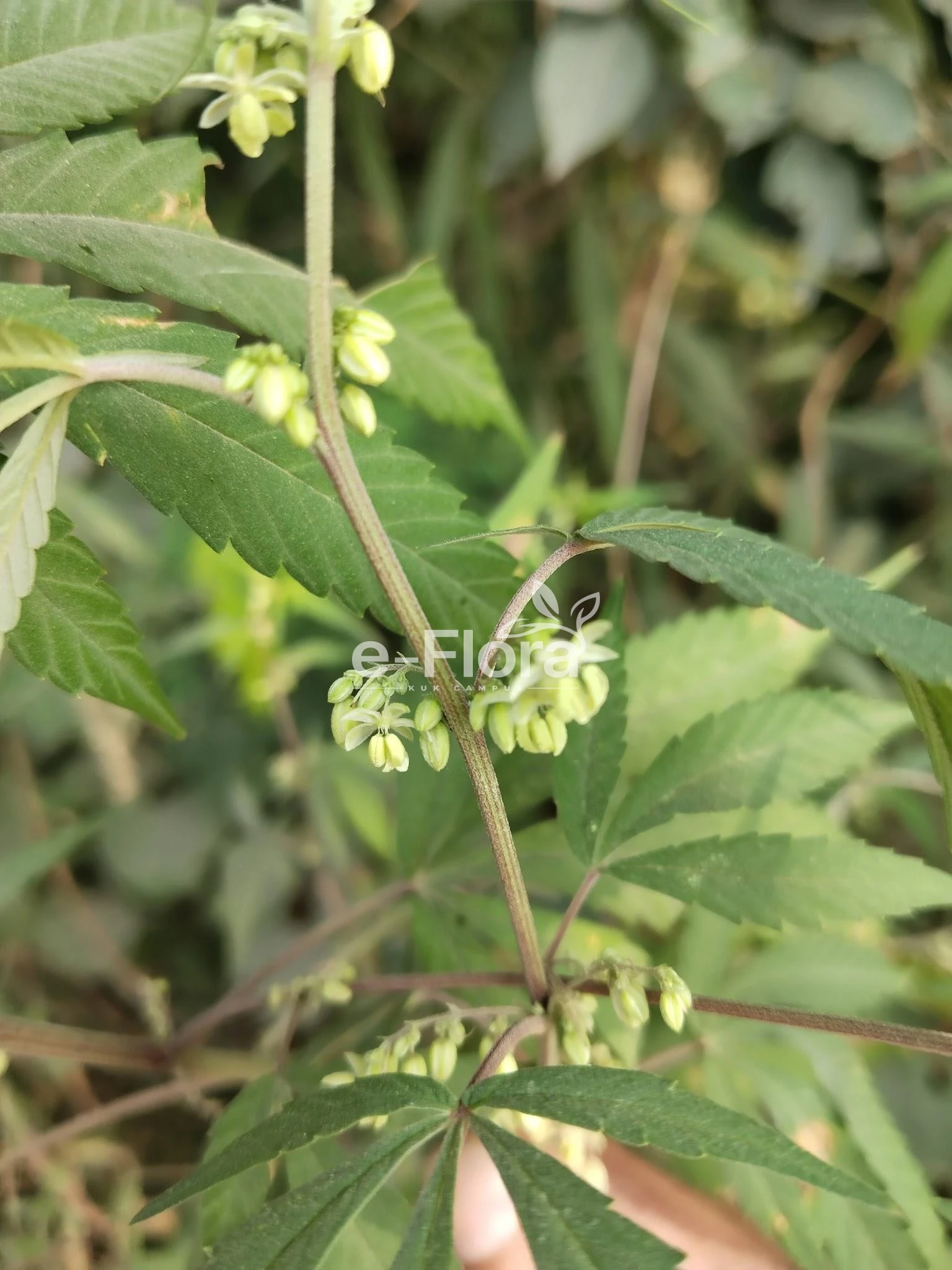
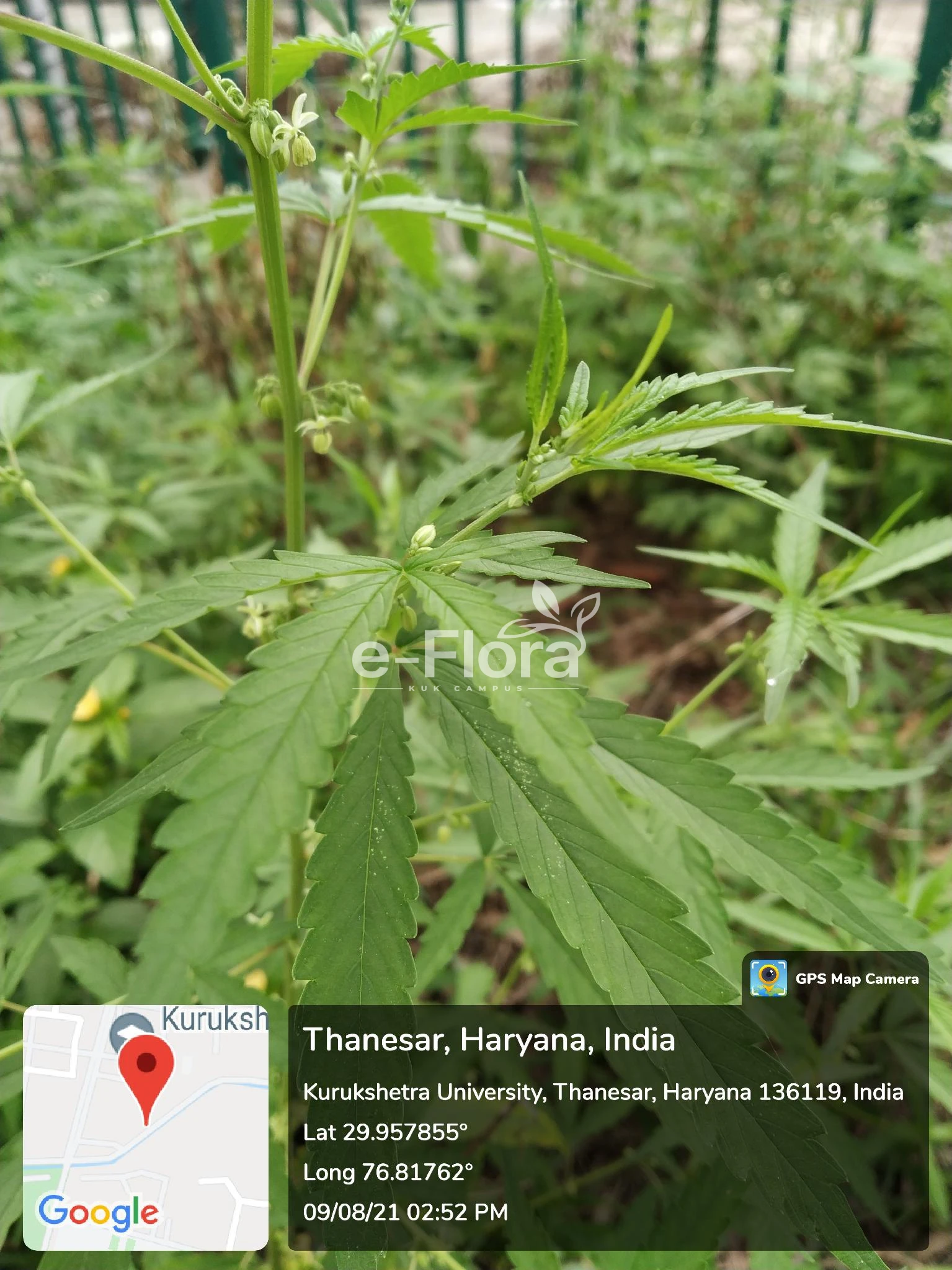
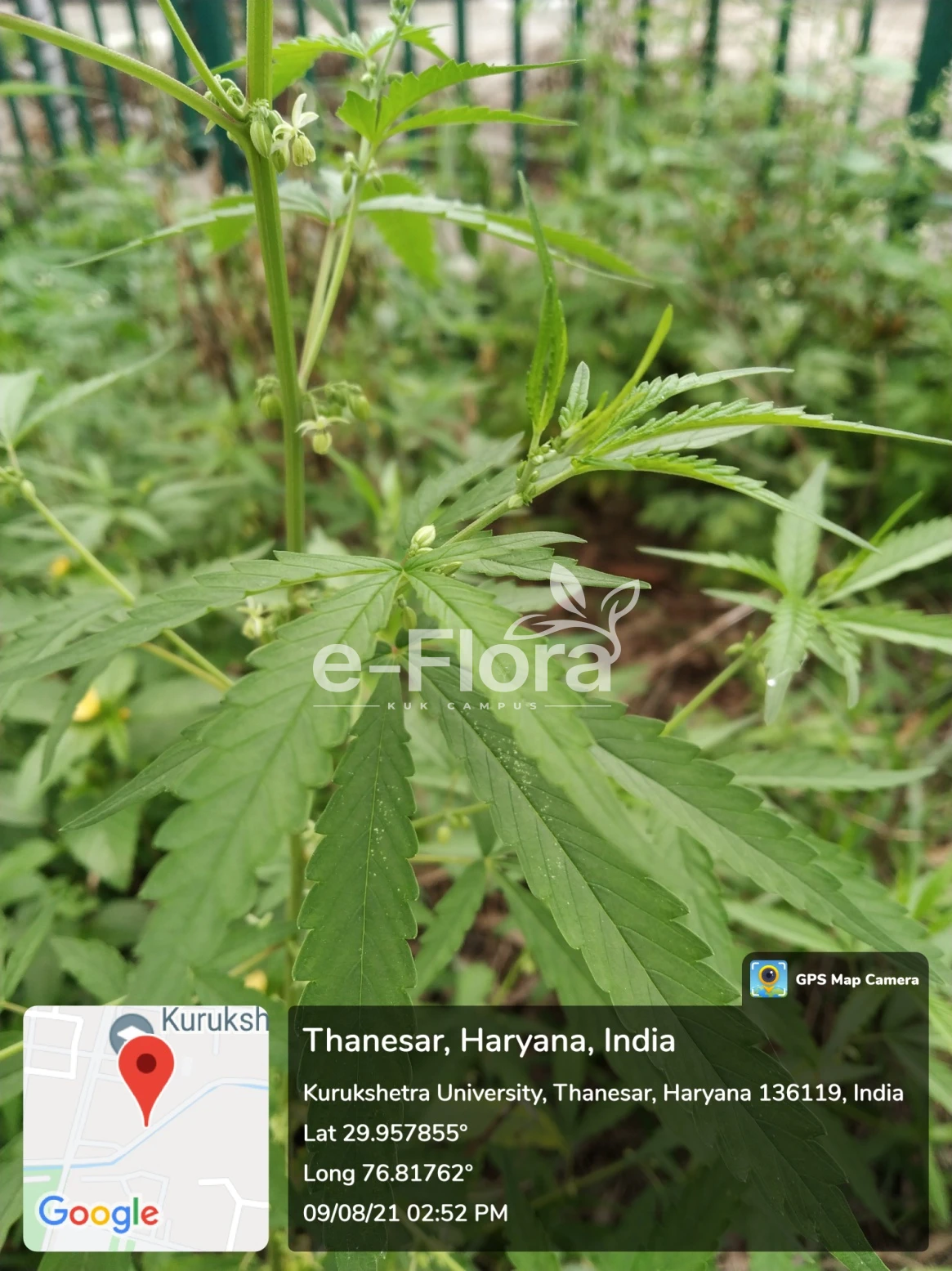
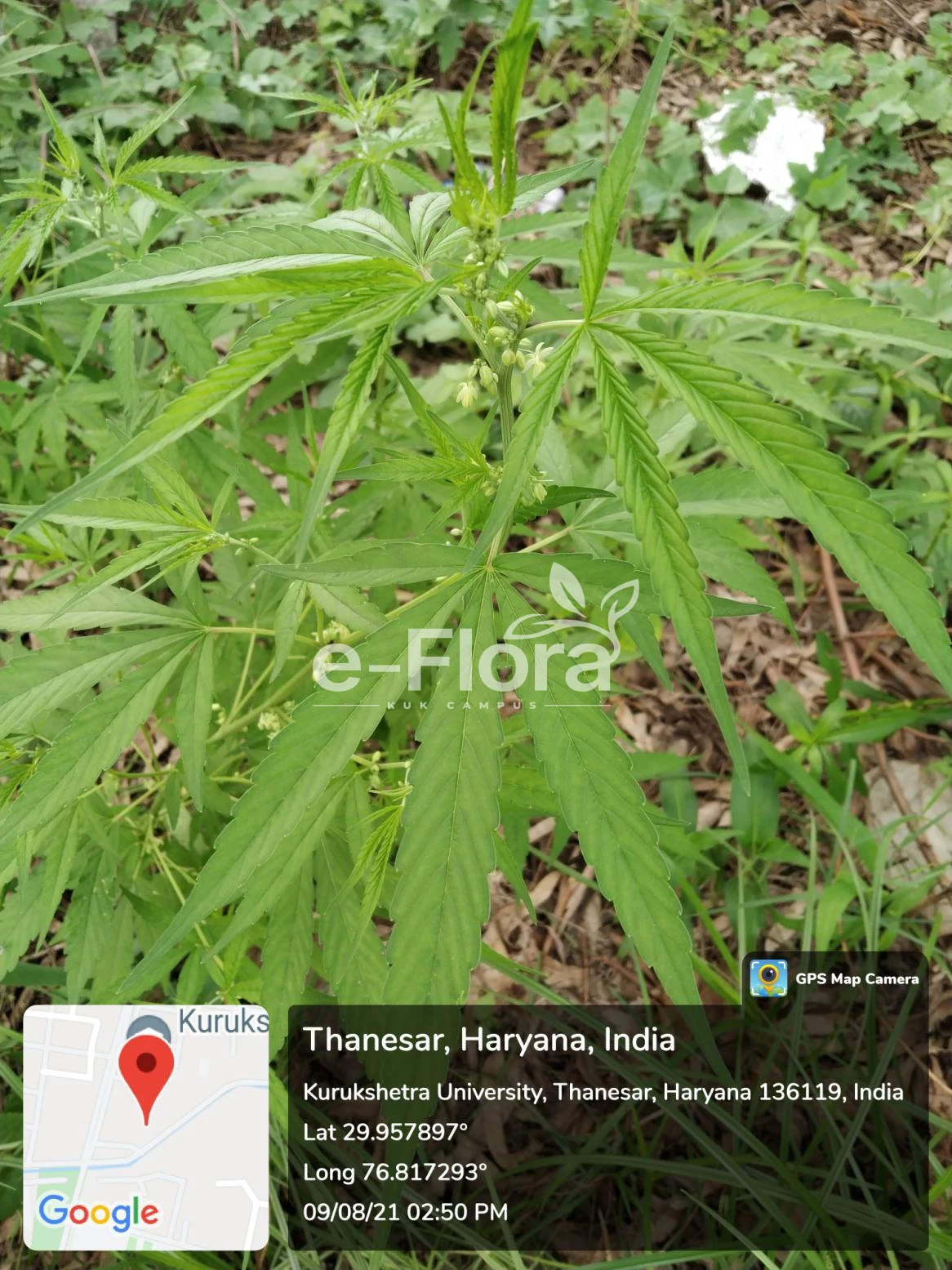
Cannabis sativa L.
Vernacular name: Hemp, Marijuana, Bhang (Hindi: भांग / गाँजा)
Species Name: Cannabis sativa L.
Family: Cannabaceae
Habit: Tall annual herb
Stem: Erect, hollow, branched, 1-5 m tall, angular-fibrous.
Leaf: Opposite (lower), alternate (upper), palmately compound 5-7 narrow lanceolate leaflets 10-15 cm long, serrate, glandular.
Flowering: Late summer-autumn
Flowers: Bracteate axillary racemes/panicles; petiolate female perianth (calyx) envelops ovary, no petals; male: 5 sepals, no petals, 5 stamens anthers yellow sagittate; superior unicarpellary ovary (female), single pistil; flower shape unisexual – female pistillate, male staminate.
Fruit: Achene (utricle) 2-5 mm, mottled grey-brown.
Uses:
- The tough fiber of the plant, cultivated as hemp, has numerous textile and construction uses.
- Its seed, chiefly used as caged-bird feed, is a valuable source of protein, essential fatty acid and energy.
- Seeds and oils extracted from seeds are also used in some dishes in India.
- Plant has psychoactive and physiologically active chemical compounds known as cannabinoids that are consumed for recreational, medicinal, and spiritual purposes.
- Cannabinoids are used in treatment of epilepsy and sclerosis.
- When so used, preparations of flowers and leaves, sometimes called marijuana, and preparations derived from resinous extract, sometimes called hashish, are usually consumed by inhaling a vapor released by smoking or heating, or by oral ingestion.
- Historically, tinctures, teas, and ointments were also common preparations.
- Plant is a good source for paper and biofuel.
- Seeds have anti-inflammatory and moisturizing properties and due to these properties, extracts from seeds are used to make balms and lotions.