Magnolia champaca (L.) Baill. ex Pierre
Vernacular name: Champa, White champaca (Hindi: चम्पा)
Species Name: Magnolia champaca L. (syn. Michelia champaca)
Family: Magnoliaceae
Habit: Evergreen tree
Stem: Straight cylindrical trunk 20–50 m, smooth grey bark, aromatic wood.
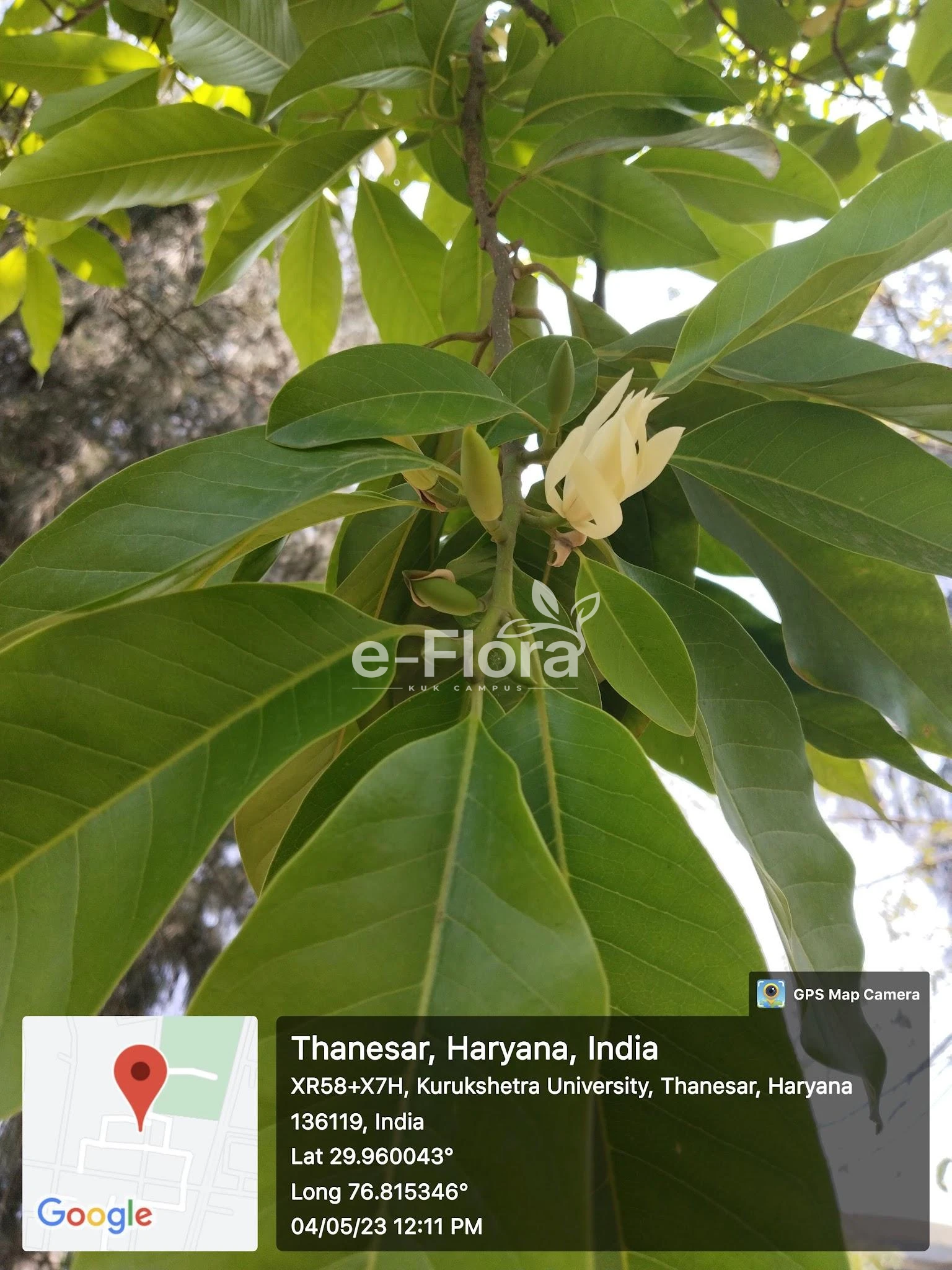
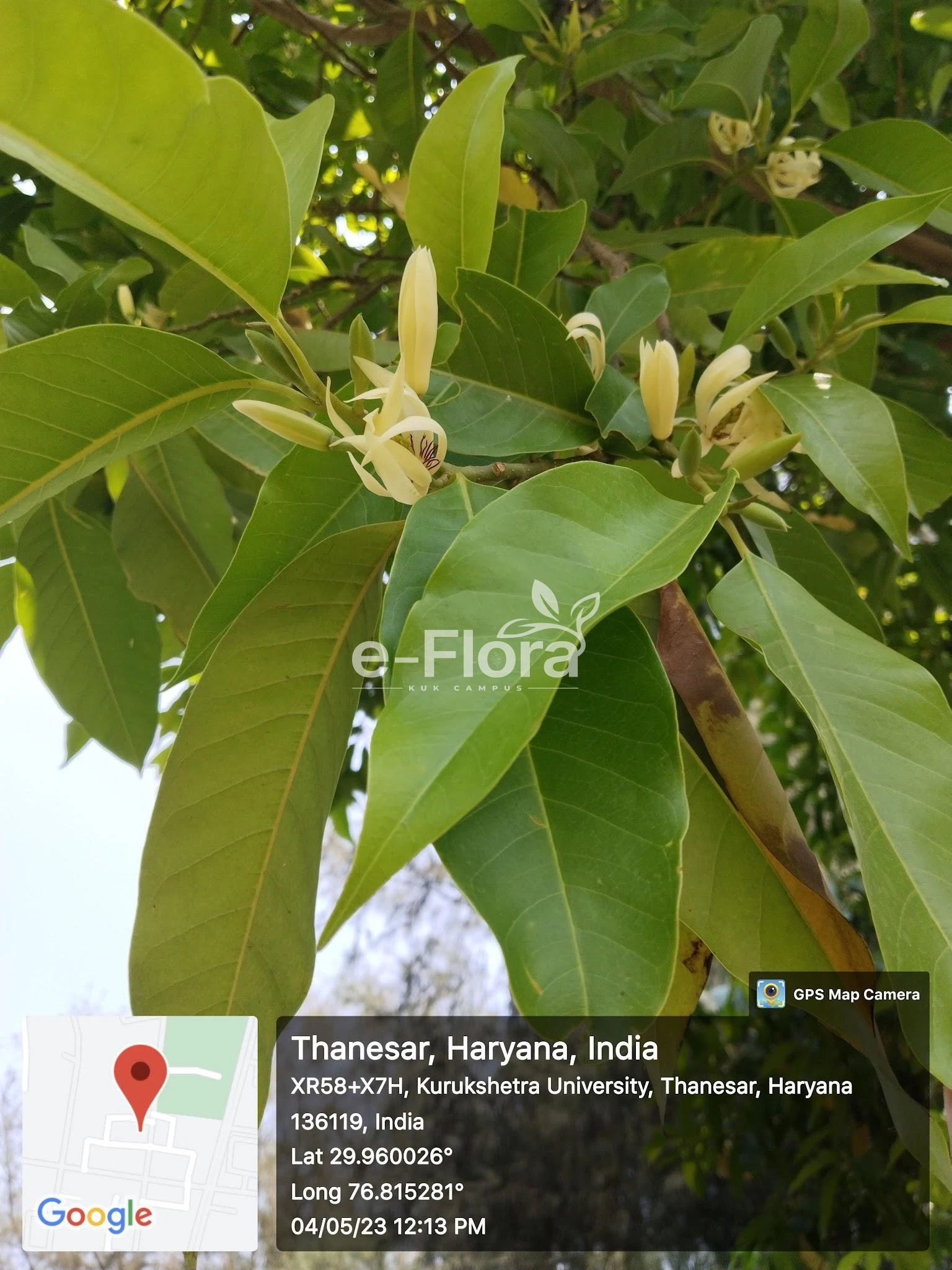
Leaf: Alternate, elliptic-lanceolate 8–16 × 3–7 cm, petiolate, leathery, glossy green.
Flowering: Spring–summer
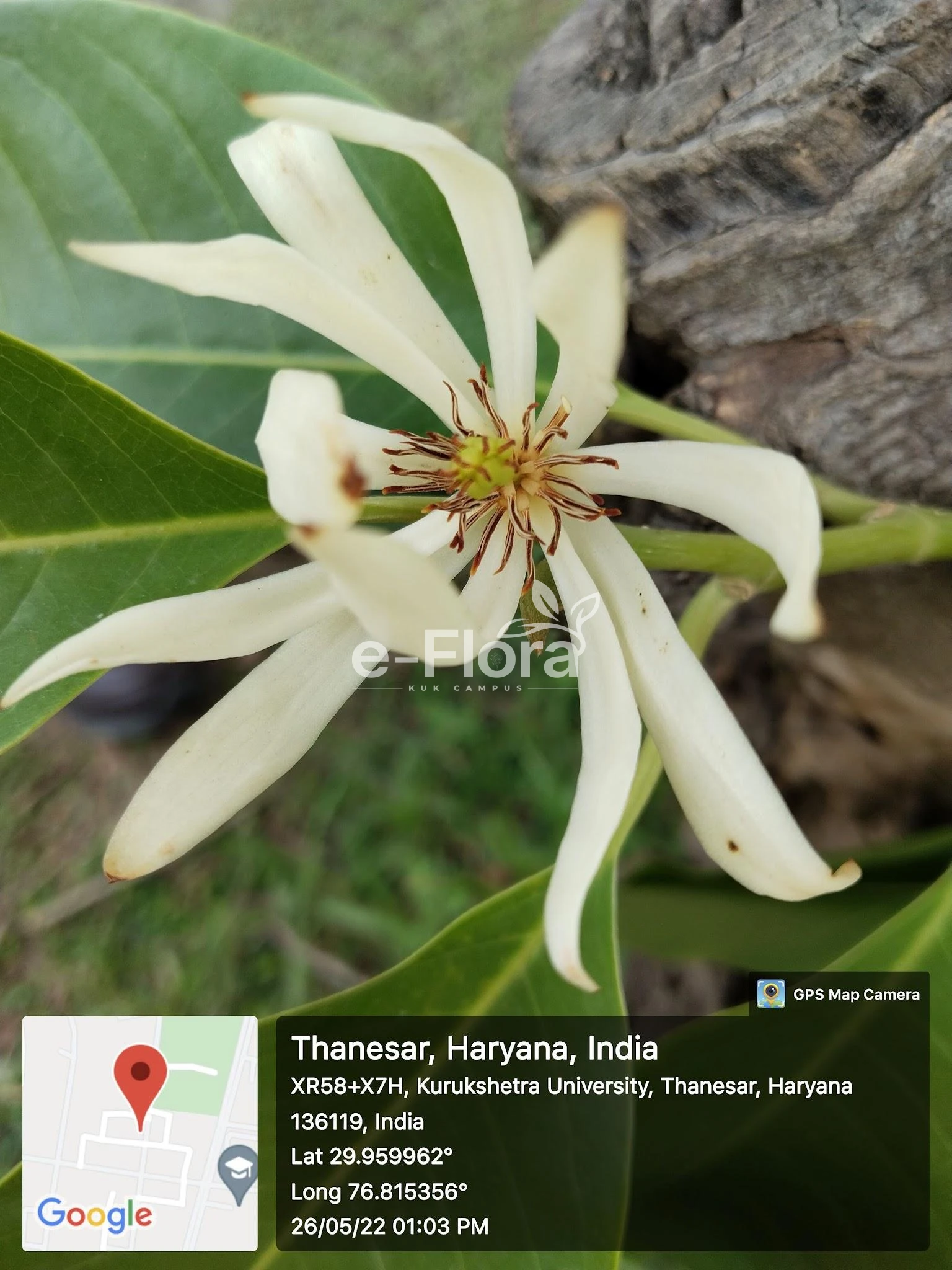
Flowers: Axillary, solitary, fragrant; 6–8 creamy-yellow tepals (outer 3 larger, 2.5–4 × 1.5–2 cm, oblanceolate; inner smaller), numerous stamens (anthers extrorsely curved), multicarpellary gynoecium (20–50 carpels spirally arranged on an elongated receptacle).
Fruit: Oblong woody aggregate 2.5–5 cm, follicles dehiscing dorsally, scarlet arillate seeds.
Uses:
- Flowers serve as attar/perfume base and religious offering in Hindu rituals.
- Flower is also used to extract massage and essential oils.
- Timber provides fragrant carving wood for furniture and cabinets.
- Sita’s favorite in Ramayana; Mughal champa distillate; temple planting tradition.
- Medicines: Traditionally, all parts of plants are used in medicines to treat joint inflammation, fever, digestive issues and respiratory problems like cough.