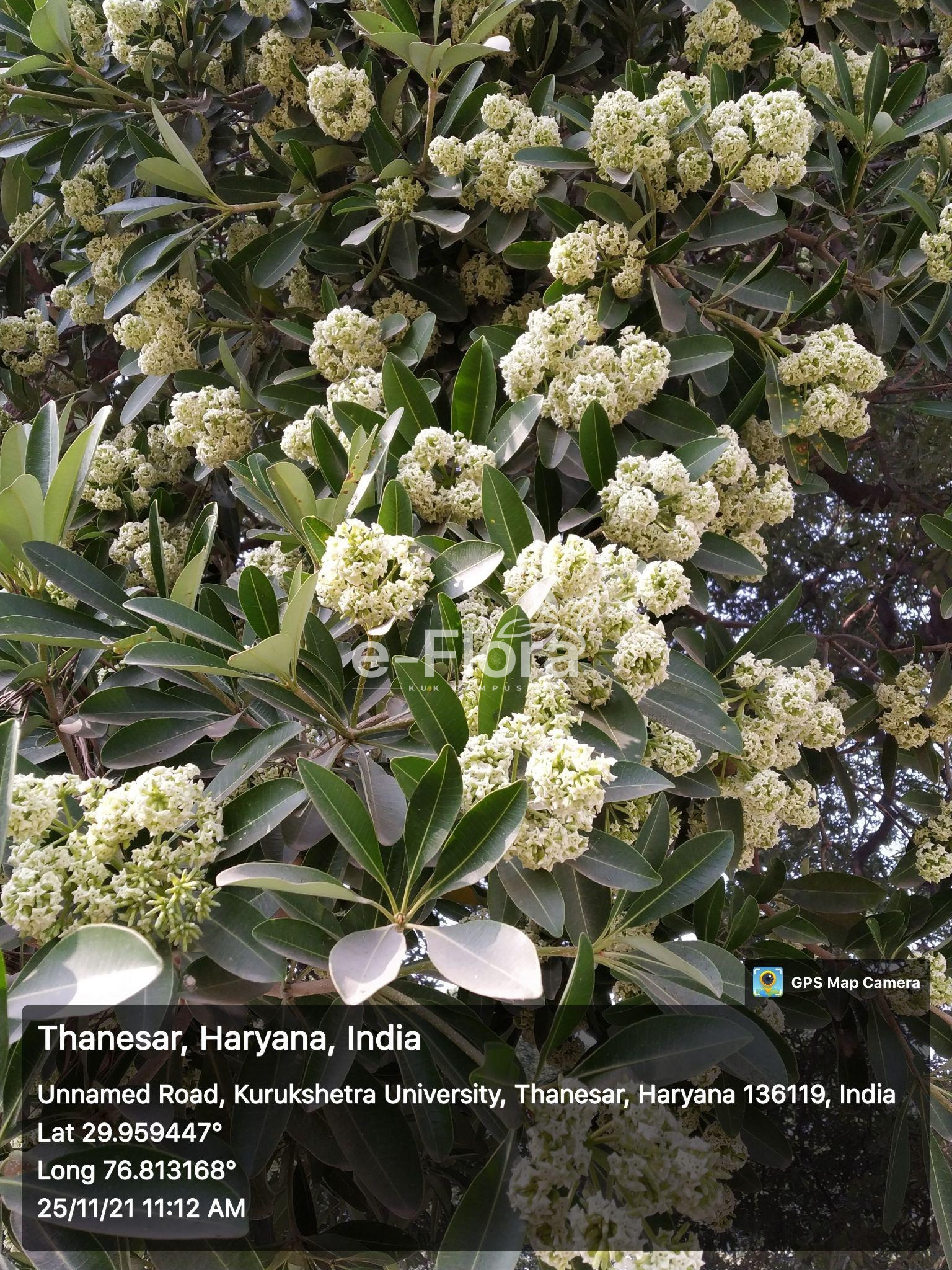
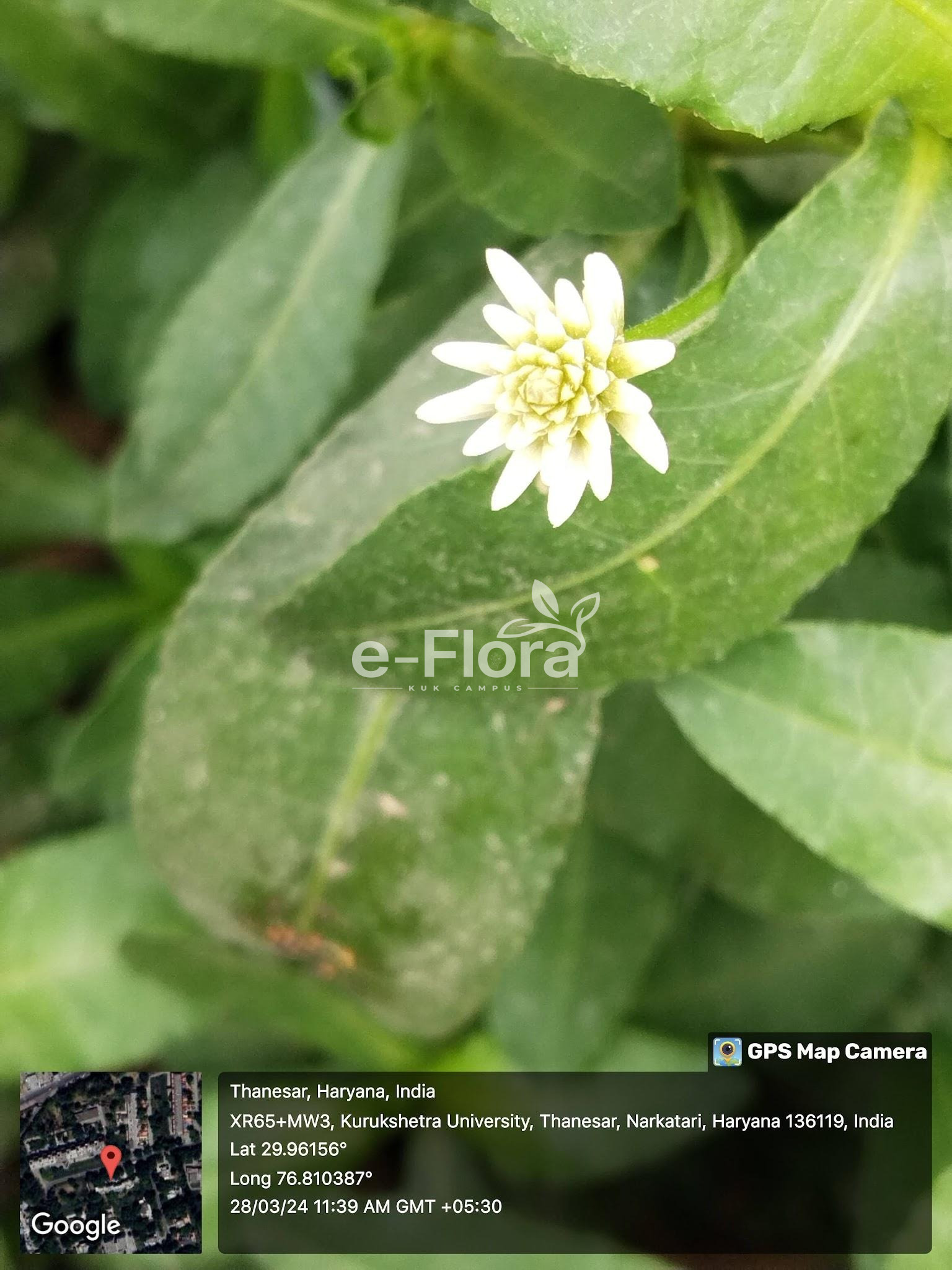
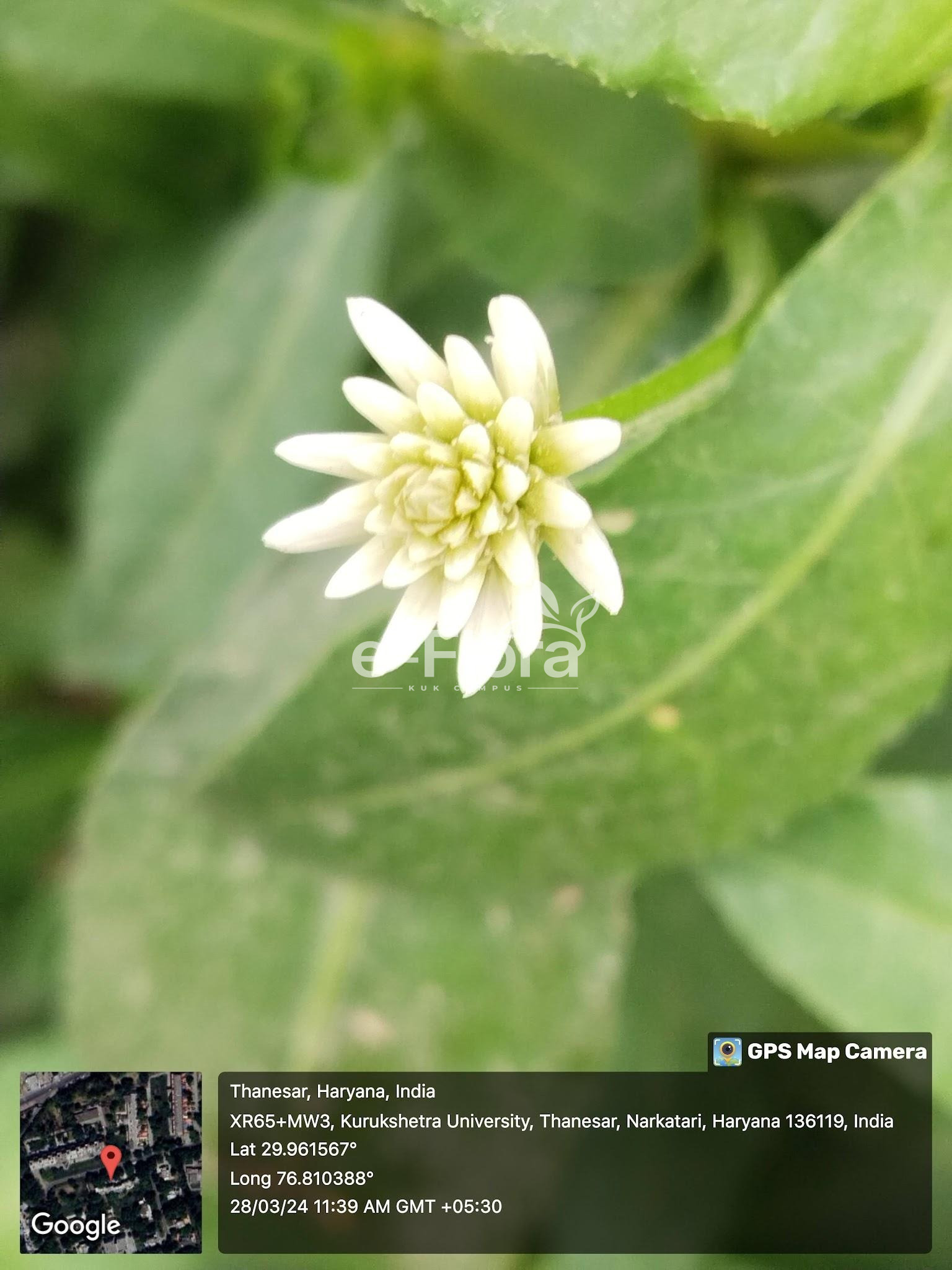
Alternanthera philoxeroides (Mart.) Griseb.
Vernacular name : Alligator Weed
Species Name: Alternanthera philoxeroides (Mart.) Griseb.
Family: Amaranthaceae
Habit: Creeping perennial forb/herb
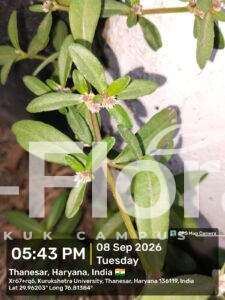
Stem: Hollow, sprawling, branched, green turning pink/red under stress, rooting at nodes, up to 10 m long stolons.
Leaf: Opposite, elliptical-ovate 4-10 cm × 0.5-2 cm, glabrous, sessile or short-petioled.
Flowering: Spring–Fall
Flowers: Axillary dense spikes (spicate inflorescence – clustered sessile heads); small white papery tepals 1-2 mm, rarely seeds (sterile outside native range).
Fruit: Rarely produced; utricle with small lens-shaped seeds
Uses:
- Leaves eaten as vegetable in Bangladesh (“Malancha”).
- Plant is used in traditional remedies for diarrhea, inflammation, night blindness.
- Plant has antioxidants in its extracts.
- Aggressive invader forming floating mats that block waterways, reduce biodiversity, promote sedimentation; regenerates from fragments; biocontrol via insects used.
- On the contrary, plant has high absorption property and used in filtration of waste water and aquacultures.
- Potential toxicity; invasive management priority over utilization.
- A very minor percentage of this plant is added in fodder and human food to enhance immunity.
- Plant has antiviral and antibacterial properties.
- Plant extract is used to treat anemia in some regional medicines.